Explorez les villes et le désert du Maroc lors de ce grand voyage de 12 jours. Commencez et terminez dans la ville moderne de Casablanca et voyagez dans les villes impériales de Rabat, Meknès, Fès et Marrakech, ainsi que dans la ville de Chefchaouen, située à flanc de colline. Vous ferez du trekking dans le Sahara, camperez sous les étoiles, visiterez des villes du désert et des kasbahs, et randonnerez sur les contreforts des montagnes de l'Atlas.
Programme du circuit
Day 1
Jour 1 : Arrivée et Casablanca
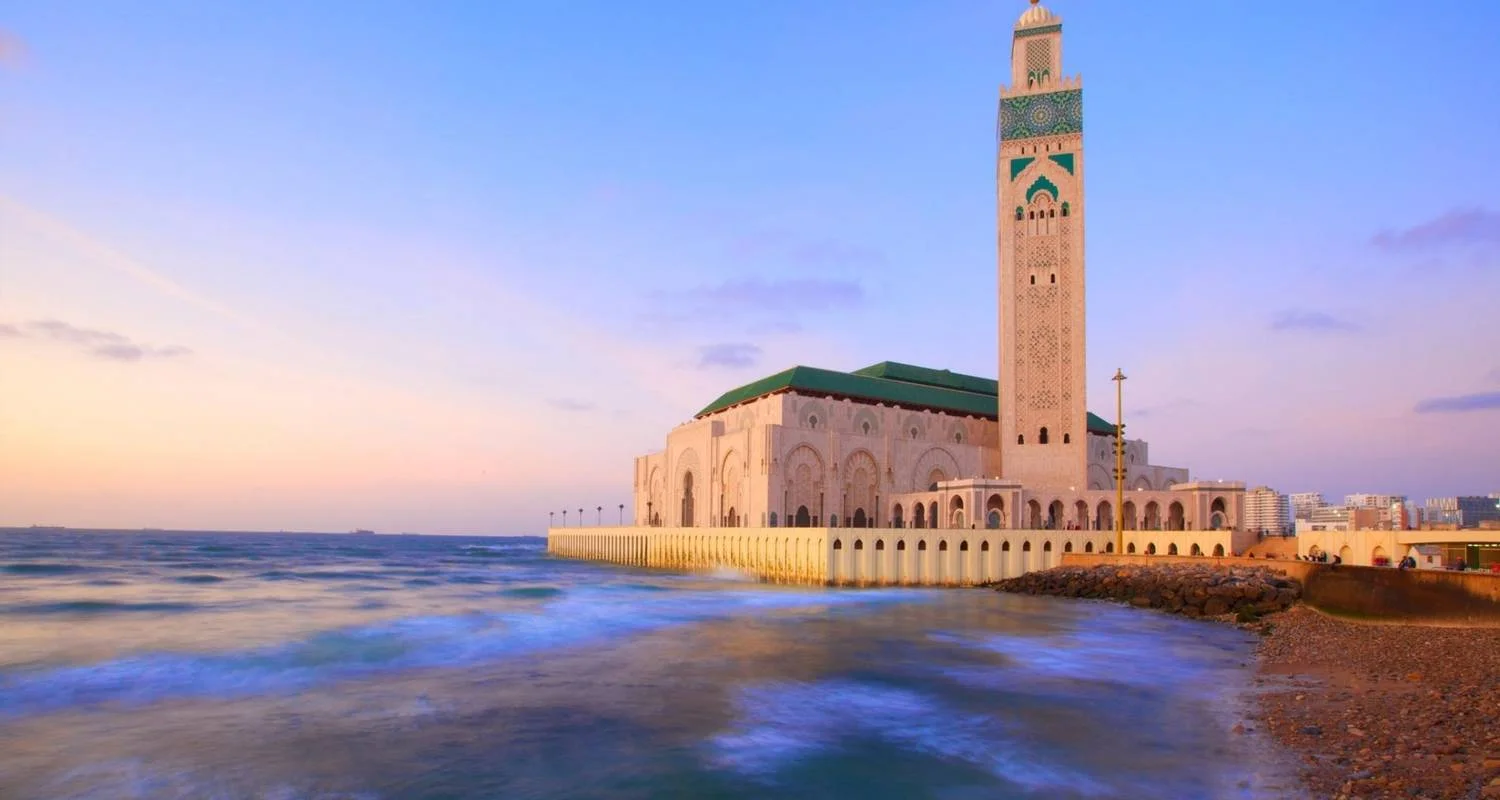
Welcome to Morocco's west coast! Welcome to Casablanca. The largest city in Morocco, Casablanca is a modern city with major French influence. An architectural treat, visit the popular Hassan II Mosque and admire its exquisite craftsmanship. Sitting pretty on an outcrop over the Atlantic Ocean, the Hassan II Mosque is estimated to house 25,000 worshippers inside with additional room for 80,000 in its courtyard. Unique to Morocco, Hassan II is one of few mosques where non-Muslims are permitted to enter. Feast your eyes on the intricate marble work, wood and stone carving, and gilded cedar ceilings.
Explore Parc de la Ligue Arabe and check out the Casablanca Cathedral (no longer in use) for a fine example of mid-19th-century Mauresque architecture (a mix of European art deco and Moorish style). Visit the Old Medina (old quarter), the only part of the city pre-dating the French protectorate, before touring the Hobous, or new medina. Built in the 1930s by the French, Hobous is a great place to seek out olive, vegetable, and spice markets, as well as admire more examples of Mauresque buildings. Take a stroll along the Boulevard de la Corniche, often referred to as the "Miami of Morocco."
Point de départ
Casablanca, Casablanca-Settat, Morocco
Day 2
Jour 2 : Vers Rabat et Chefchaouen
Continue north to your first imperial city and the present-day capital of Rabat, a bustling city with rich history. Explore the medieval fortification of the Chellah Necropolis in the heart of Rabat and explore its Roman and Islamic ruins. Find the Kasbah Des Oudaias, a grand door that leads to Rabat's original city center, and quietly wander the peaceful white and blue-washed streets. Visit the 20th-century Andalusian Gardens before discovering the Hassan Tower, a minaret of the incomplete mosque and Mausoleum of Mohamed V., a 12th-century project that was abandoned shortly after construction.
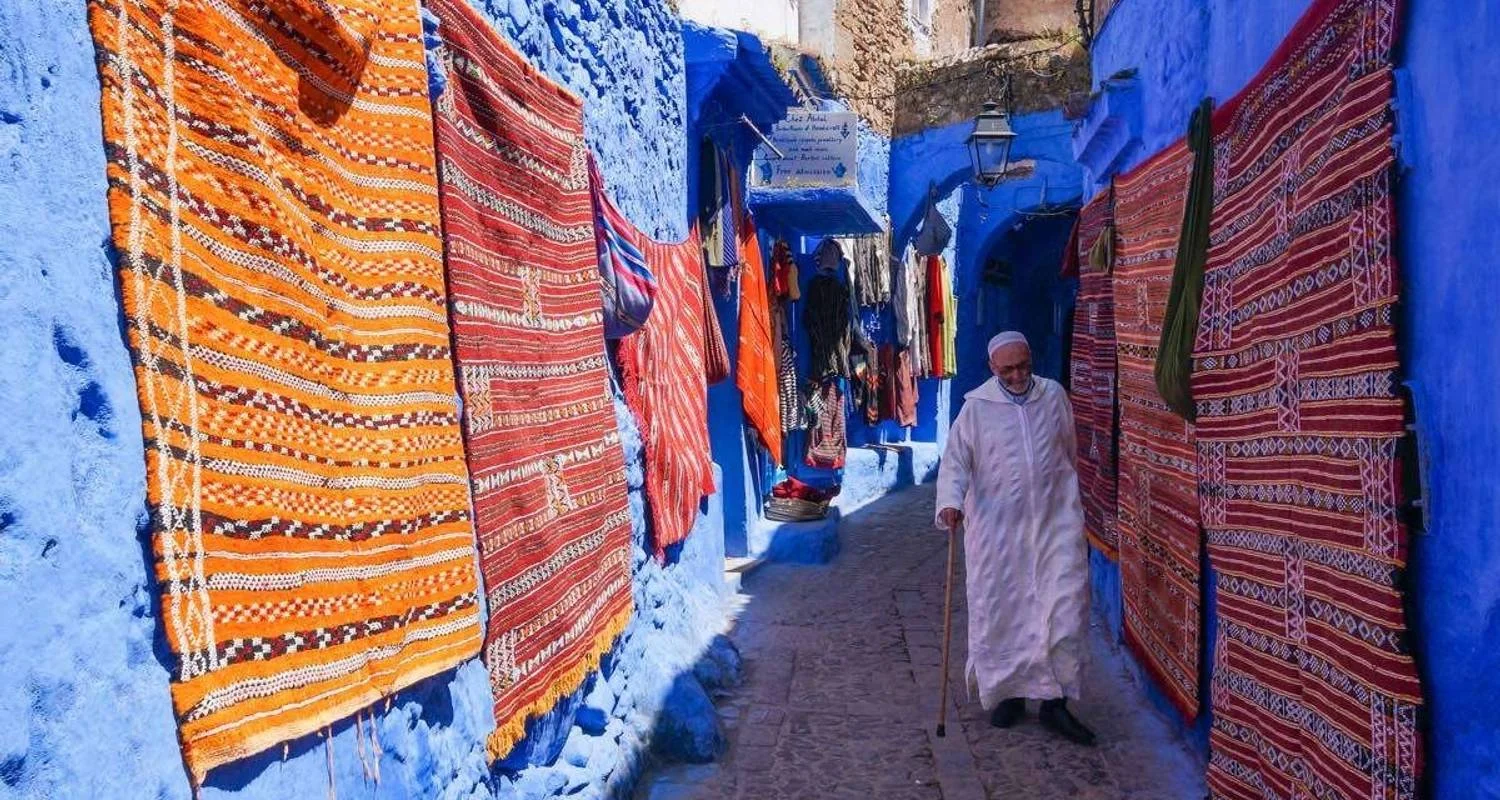
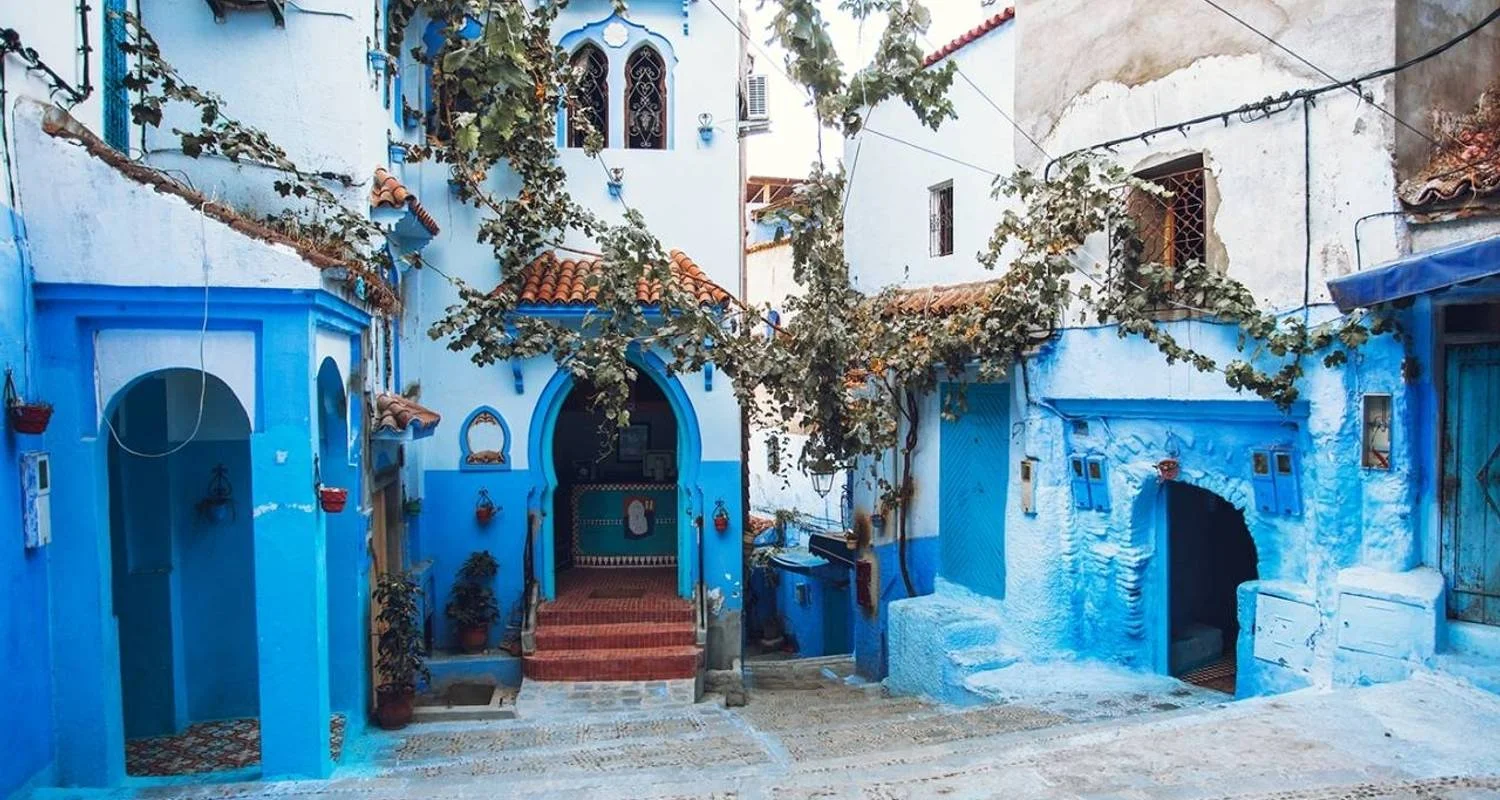
Carry on northward and watch the landscape change from flat plains and rolling hills to the rocky terrain of the Rif Mountains. Known as the "Blue City," Chefchaouen is made up of narrow, winding streets and blue-hued buildings, enjoy the relaxed atmosphere and friendly locals. Spend your time in the compact medina along the northern hillside and enjoy a meal in Plaza Outa el Hammam, before touring the kasbah (old fortification). As the day draws to an end, make your way to the Spanish Mosque to enjoy one last view over Chefchaouen as the sun sets behind the mountains.
Day 3
Jour 3 : Ruines romaines de Volubilis et villes impériales de Meknès et Fès
Rise early to snap unobstructed photos before you head out to the Roman city of Volubilis. A UNESCO protected site, Volubilis is home to Morocco's best preserved Roman ruins. Wander the expansive complex, exploring the still-intact columns of former buildings, large merchant homes, temples, and the colorful mosaics, including the Labors of Hercules.
Continue south to your second imperial city, Meknes. Spend a little time exploring Ville Impériale (Imperial City) and the medina. Be sure to check out the grand Bab al-Mansour gate and the Mausoleum of Moulay Ismail.
Carry on eastward to Fes and your third imperial city. With its impressively large (and somewhat confusing) old medina, Fes is a city worth getting lost in. Before venturing into the medina on foot (the largest urban car-free zone in the world), drive uphill to the ruins of the Merenid Tombs for an all-encompassing view of the medieval city. Or, for another vantage point, find your way to the Mellah (old Jewish quarter and cemetery) in Fes el Jdid. Return to your traditional riad for a warm meal.
Day 4
Jour 4 : Fès : Découverte de la cité impériale et de la médina médiévale
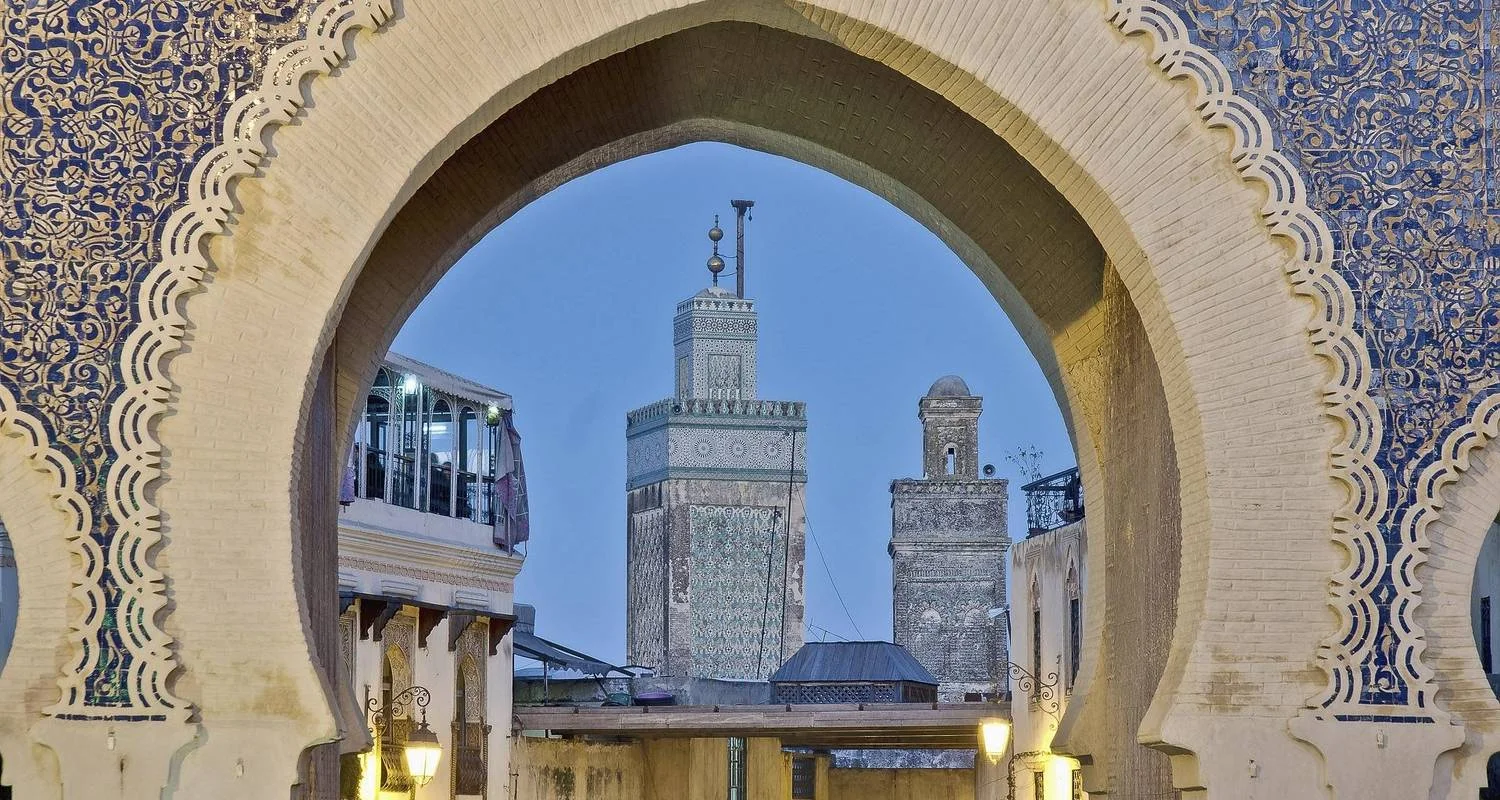
Fes is the oldest of the four Imperial Cities in Morocco and perhaps the most interesting and exciting to explore. It has the most complete medina in the Arab world and is relatively untouched since it was founded over 1000 years ago. Often considered the country's cultural capital, it is made up of three parts, two medina quarters, Fes el Bali and Fes el Jdid, and the more modern, French colonial influenced, Ville Nouvelle. Meet your guide and spend a half day learning about the history and culture as you navigate the narrow streets of the medinas.
Start in Fes el Bali at the Bab Boujeloud gate and enter the main thoroughfare of Talâa Kebira. Notice the Spanish and Tunisian influenced architecture as you make your way past shops and souks (markets). One of the most unique sights in the old Medina is the tanneries and Chouara Tannery is no exception. Climb to the rooftop of a nearby leather shop for a better view of the 11th-century stone pots filled with dye and the men at work still using centuries-old techniques.
Next, make your way to the 14th-century Al Attarine Madrasa, a beautiful example of Moroccan architecture and artisanship showcasing intricate zellij tilework. From there, find your way to one of the oldest still-operating universities in the world, Al-Qarawiyyin University (859 CE) next to the Al-Qarawiyyin Mosque. Though the mosque is only open to Muslims, there are a few places where you can glimpse inside to its decorated interior. Cooking enthusiasts may also wish to join a cooking class and learn how to prepare a typical Moroccan meal before retiring for the evening.
Day 5
Jour 5 : Dans le désert : Erfoud, Merzouga et le Sahara
You'll be covering a lot of ground today as you work your way south toward your final destination outside the desert town of Merzouga. Ascend the Middle Atlas mountains through fragrant cedar forests, and over the Col du Zad pass. Stop and stretch your legs in the "Apple City" of Midelt—known for its fruit orchards—and lunch near the Moulouya River. Continue to the palm forests of the Ziz Valley by way of the Tizi n'Talremt pass, noting the many fortified ksars merchants built to protect and stock their precious goods (gold, salt, and spices).
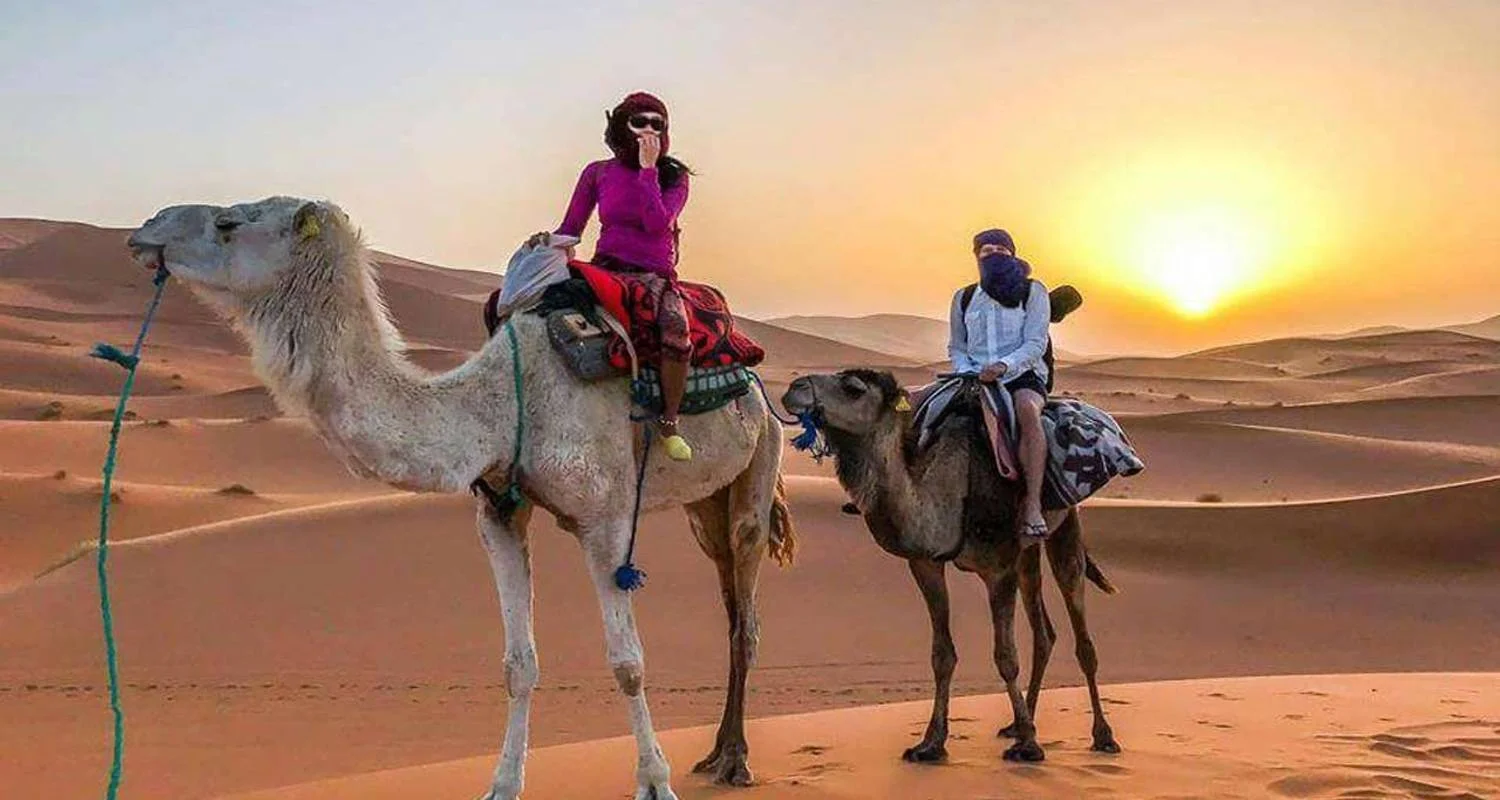
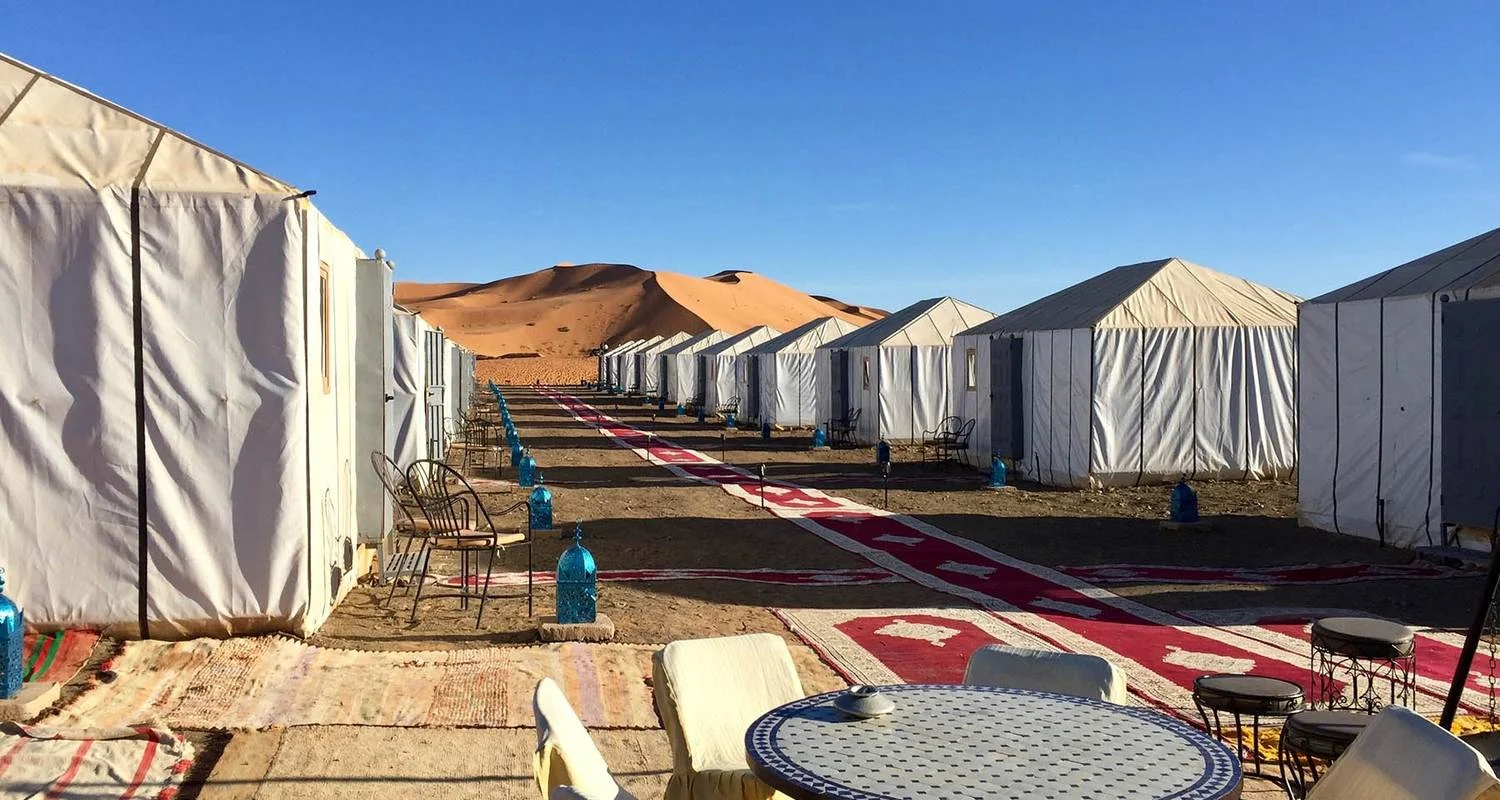
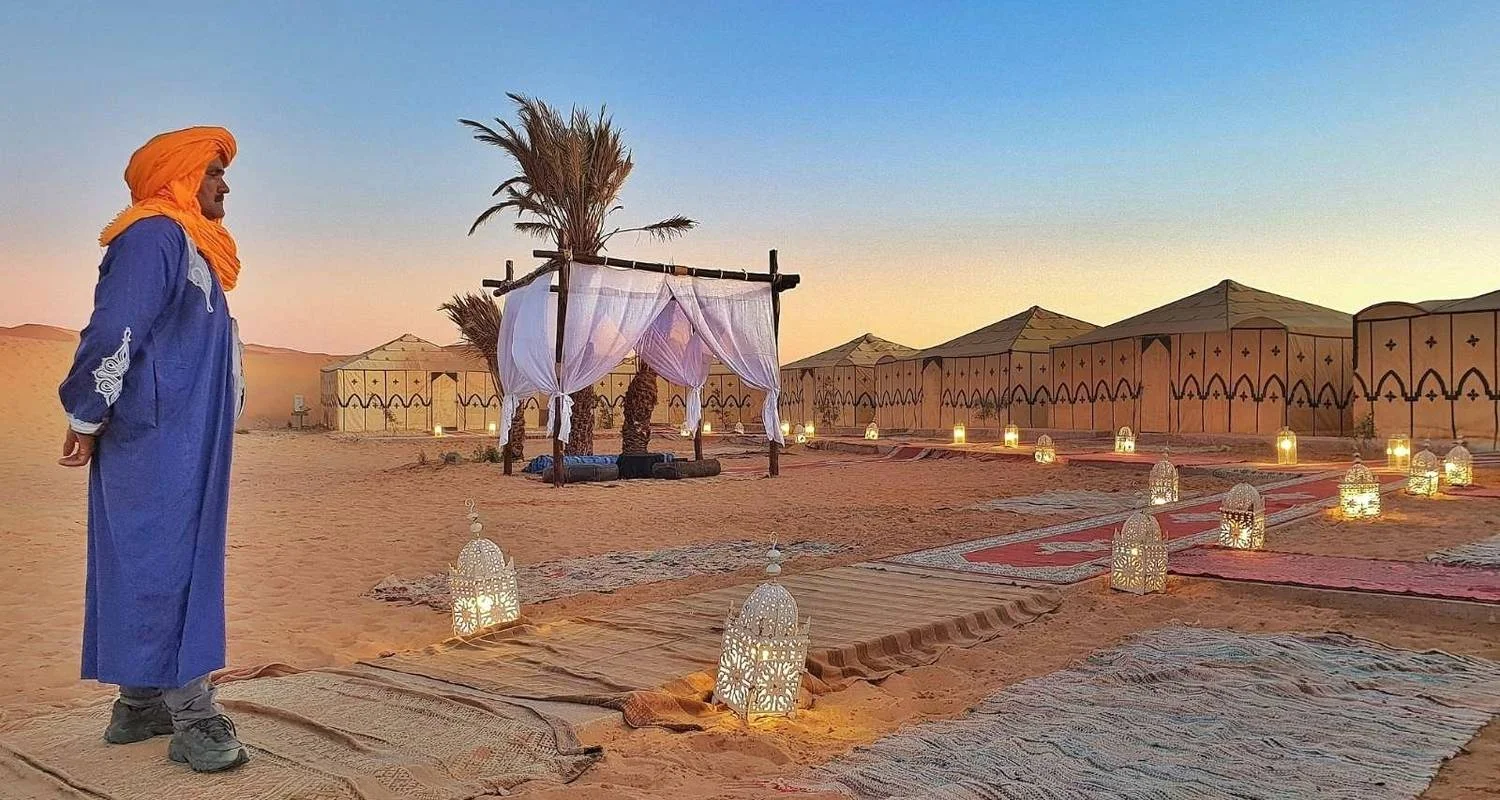
Reach Erfoud, known for dates and fossils, and stop at a local artisan collective to learn everything there is to know about the types of fossils found in the area. Head toward the sea of sand of Erg Chebbi, where some dunes are more than 600 feet tall (183 m). In Merzouga, meet your camel and hop aboard to trek to your evening's accommodation: a Bedouin-style tent. Race to the top of a nearby sand dune to watch the desert sunset over the dunes before returning to your site for dinner and a campfire under the starry night sky.
Day 6
Jour 6 : Aventures dans le désert autour de Merzouga, marché de Rissani, gorges de Todra
Wake early to catch the rising sun before readying yourself to go sand boarding. You will also have the option of joining an ATV tour or the Erg Shibbi (sand dune) tour. Or, if you prefer lounging poolside in Merzouga, this can be arranged.
Leave the dunes behind and discover the traditional Saharan village of Khemliya—its people originally from Mali. Experience traditional music, drumming and dancing before taking a light walk around the village and its farmed plots in the sand. From there, visit the market town of Rissani to explore the live animal auction and nearby 'donkey parking lot'. Continue west to Tinerhir and admire the extensive stretch of oasis and the community of buildings that follow the greenery. Stop at the Todra Gorge and climb down to the water's edge to relax in the refreshing water of the Todra River.
Day 7
Jour 7 : Vallée du Dadès, Ouarzazate et Kasbah d'Aït Benhaddou
Travel along the Valley of a Thousand Kasbahs to Morocco's most famous kasbah, Aït Benhaddou. Pass through the Dades Valley and Boumalne Dades. Stop in Kela'a M'gouna to admire the cultivated rose bushes. Visit a rose collective to see the process of converting rose petals into rose water and oil. Continue west to stop in Ouarzazate and discover how its nearby regions have been featured in movies, including Lawrence of Arabia, Gladiator, and Black Hawk Down. Join a movie studio tour and visit the Musée du Cinema to learn more about the filmmaking process and history of the area.
Travel to nearby Aït Benhaddou. A UNESCO World Heritage site, the old ksar dates from the 11th century when it held an important position along the trans-Saharan trade route. Settle into your accommodation in the old town, before wandering the near-empty alleys and passageways in the late afternoon. Climb up to the old Granary—an excellent vantage point to see the kasbah and surrounding area. Game of Thrones fans may want to trek down to the river to see the gates featured in the popular HBO series. Long after the day crowds have left, enjoy a quiet dinner overlooking the valley.
Day 8
Jour 8 : Passage du col du Tizi n'Tichka à travers les montagnes du Haut Atlas jusqu'à Marrakech
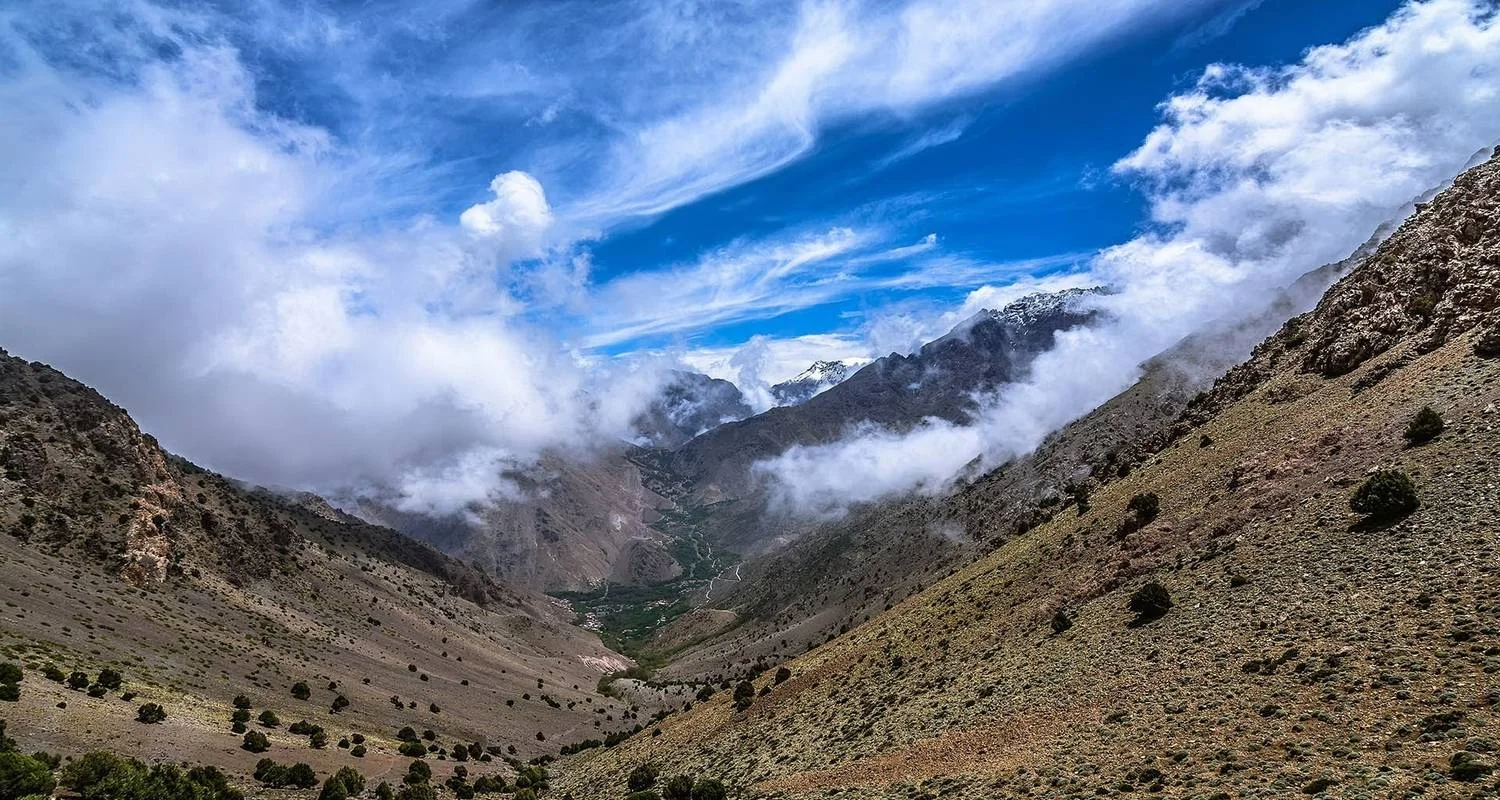
Leave Aït Benhaddou behind to begin the ascent over the High Atlas mountains. Spot Mount Toubkal, the mountain range's highest peak, at 13,671 feet (4,167 m). Near the top, stretch your legs for a great panoramic view of the mountains. Stop in Taddert to visit an Argan Oil Cooperative and learn, as well as sample, how the argan nut and fruit are processed for various uses. As you descend the High Atlas, you will notice a dramatic change in the climate and landscape. Soon you will be a part of the noise and clamor of Marrakech.
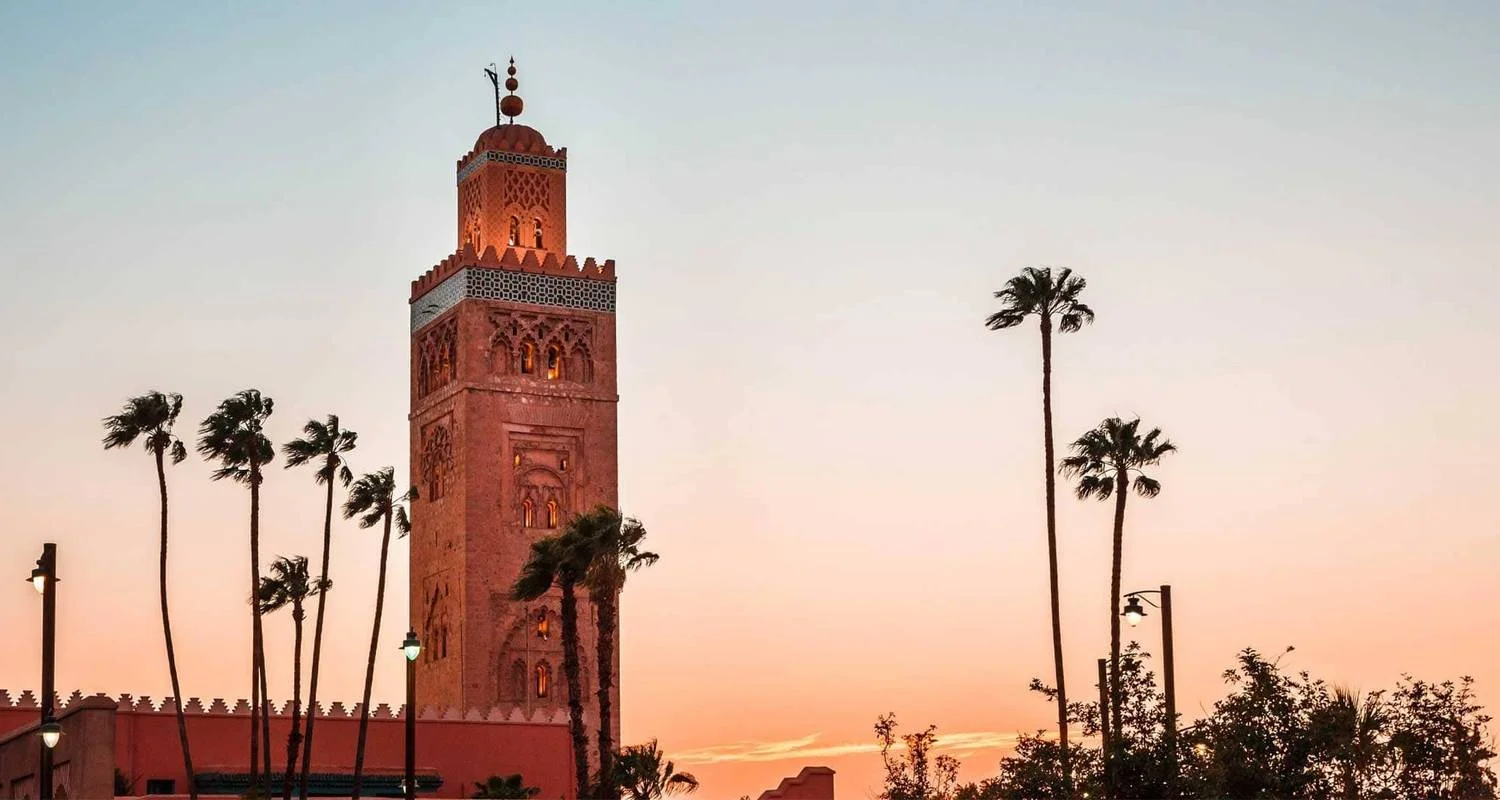
After a long day on the road, settle into your hotel and spend the rest of the afternoon as you like. In the early evening, the main square—and busiest square in all of Africa—Jemaa el-Fna, comes alive with musicians, performers, snake charmers, games, and food stalls, a catch-all of entertainment! If you want to enjoy the spectacle from a distance, choose one of the many cafés surrounding the square and enjoy a cup of mint tea and a meal. From there, take an evening stroll to admire the floodlit Koutoubia Mosque—the minaret influenced the Hassan Tower in Rabat.
Day 9
Jour 9 : Marrakech : Découverte de la ville rouge
Nicknamed the "Red City" for its red sandstone walls and buildings, Marrakech was once an important trading capital for Atlas mountain tribes and remains an exciting former imperial city. Begin exploring Marrakech's ancient medina, starting with discovering the Koutoubia Mosque and Gardens in the daylight. Though the mosque cannot be entered by non-muslims, it's worth checking out its 12th-century foundations and 253 feet (77 m) minaret. Visit the fountains and pools in the adjoining garden.
Indulge your senses as you explore the complicated labyrinth of souks, tucked behind ordinary restaurants and shops. Check out Souk el Attarin, Souk Chouari, and Souk Smata for a selection of spices, woodwork, and babouche (traditional Moroccan slippers). Visit Souk des Teinturiers or the dyers’ souk to see how cloth and yarn are dyed using traditional methods. Next, admire the fine example of Moroccan Islamic architecture of the Ben Youssef Madrasa, a 16th-century Koranic school, and note the ornate detail of its interior: carved cedar ceilings, sculpted plaster, and zellij tiling.
Day 10
Jour 10 : Randonnée autour d'Amizmiz et du Haut Atlas
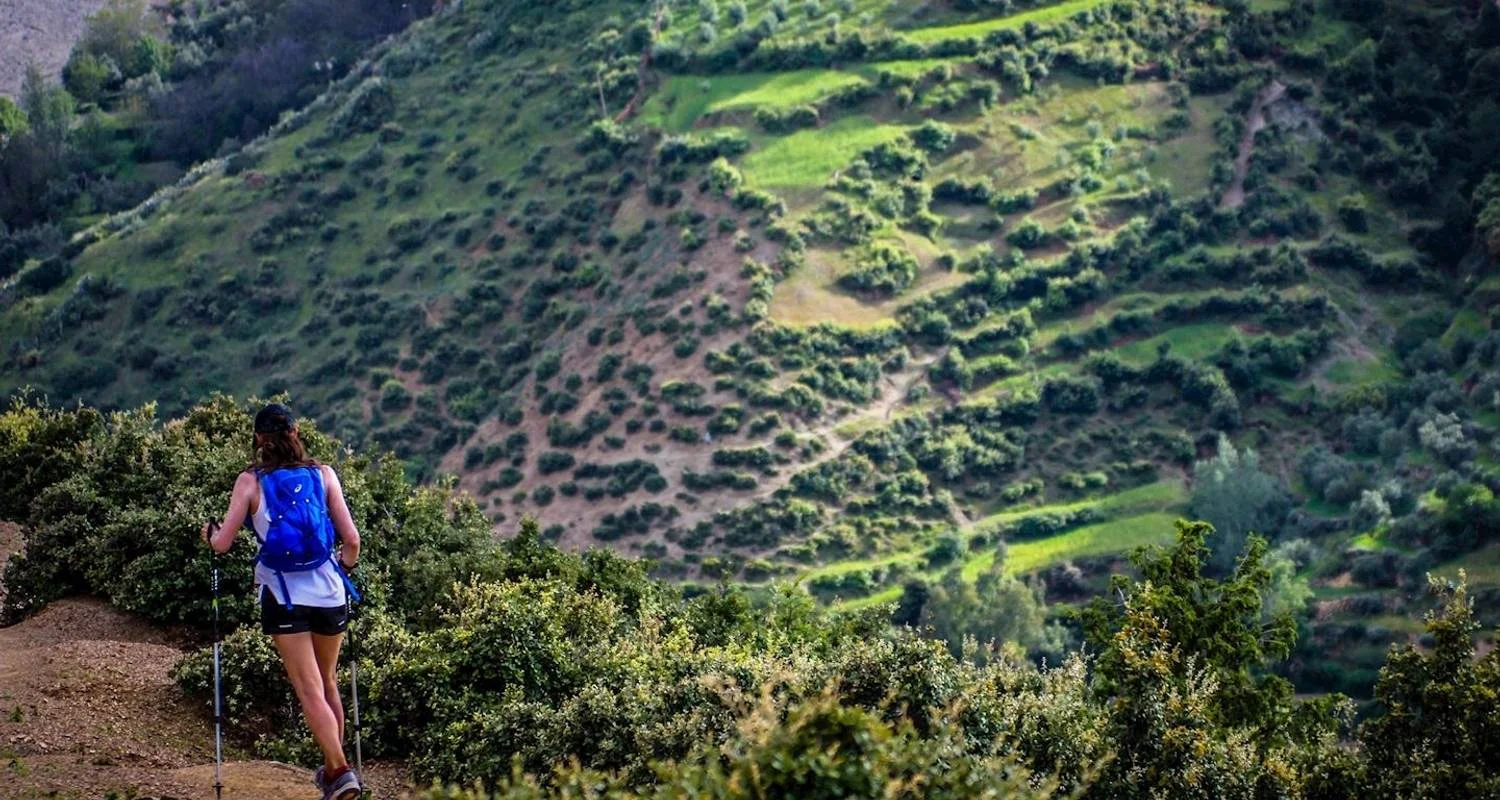
Today you will venture south of Marrakech to the small town of Amizmiz in the foothills of the High Atlas mountains (about one hour south). Spend time exploring the modest market in the old town before joining your mountain guide to trek the narrow roads and mule paths in the surrounding hills. Hike between small Berber villages and observe the local farmers and shepherds as they tend to their animals and the landscape. You may even see children on their way to or from school, which are typically shared between a few nearby villages.
Stop and enjoy lunch with a local family and gain insight into their daily lives as you learn how to make homemade bread. Continue your hike into the afternoon before returning to another local Berber home where you will be welcomed for dinner and provided with a room to retire for the evening.
Day 11
Jour 11 : Retour d'Amizmiz à Marrakech
Have breakfast with your hosts before saying goodbye and heading out on the trail. Continue to explore the local scenery and other nearby towns before returning to Marrakech.
Upon arriving in Marrakech, explore the kasbah area south of Jemaa el-Fna and check out the Saadian Tombs and discover the 500-year old craftsmanship that went into its construction. Visit the sunken gardens of the 17th-century El Badi Palace as you work your way through the mellah and to the 19th-century Bahia Palace. If there's time, you may wish to check out the Dar Di Said Museum (also known as the Museum of Moroccan Arts) to see exhibits of clothing, antiques, jewelry, and beautifully carved Hispano-Moorish decorations of carved cedar wood.
Day 12
Jour 12 : Retour à Casablanca et départ
Rise early and complete any last minute gift and souvenir shopping before finding the 12th-century Almoravid Koubba. The only surviving Almoravid monument, the Koubba was rediscovered in 1948. Transfer to Casablanca. Depending on your departure details, you may wish to stroll along the Boulevard de la Corniche to Rick's Café, a bar, restaurant, and café influenced by the movie classic, Casablanca, and grab a bite to eat before your return flight home.
Point d’arrivée
Casablanca, Casablanca-Settat, Morocco
Politique d'annulation
In case of cancellation:
A deduction from the total amount will be made:
free of charge for More than 21 days
25% for a cancellation From 21 to 15 days before the date of arrival.
50% for a cancellation From 14 to 7 days before the date of arrival.
75% for cancellation for less than 7 days before the date of arrival.
100% for cancellation in 48h before the date of arrival.
Détails du circuit
Transport
Voiture /minivan à l'abri de l'air
Repas
Tous les dîners et petits déjeuners mentionnés
Guide
Guide chauffeur anglais/français
Guide local dans les villes impériales
Bon à savoir
Devise
MAD
Moroccan Dirham
Maroc
Customer reviews
Operator
4.7
Faq Tour
How can I book a tour?
You can order a tour on our website by selecting the desired dates and clicking the “Confirm dates” button. You can also contact our sales department by phone or email.
Which payment options are available?
We accept credit cards, bank transfers and other popular payment methods.
Can I change or cancel my reservation?
Yes, changes or cancellations are possible, however penalties may apply depending on the time before the tour starts.
What documents are required to participate in the tour?
You will need a passport with a valid visa (if required) to visit countries along the tour route.
Photo gallery
Is your language not Français?
Your browser language is different from the page language. Switch?