Explore 10-Day Morocco Tour: Imperial Cities, Atlas Mountains & Sahara Desert for 10 days with Desertbrise Travel and discover unforgettable experiences - Photo 2

10-Day Morocco Tour: Imperial Cities, Atlas Mountains & Sahara Desert

Country:

Morocco

Flight:

Not included

Favorite

Tour id:

234853

Share:

  • Operator:

    Desertbrise Travel

  • Length:

    10 days

  • Group size:

    80 pax

  • Age:

    3 to 10

  • Difficulty:

    Difficulty levels:
    • Relaxing
    • Easy
    • Moderate
    • Serious
    • Heart-pumping
  • 28.07-06.08.26 guaranteed icon
  • 29.07-07.08.26 guaranteed icon
  • 30.07-08.08.26 guaranteed icon
  • 31.07-09.08.26 guaranteed icon
  • 01.08-10.08.26 guaranteed icon
  • 02.08-11.08.26 guaranteed icon
  • 03.08-12.08.26 guaranteed icon
  • 04.08-13.08.26 guaranteed icon
  • 05.08-14.08.26 guaranteed icon
  • 06.08-15.08.26 guaranteed icon
  • 07.08-16.08.26 guaranteed icon
  • 08.08-17.08.26 guaranteed icon
  • 09.08-18.08.26 guaranteed icon
  • 10.08-19.08.26 guaranteed icon
  • 11.08-20.08.26 guaranteed icon
  • 12.08-21.08.26 guaranteed icon
  • 13.08-22.08.26 guaranteed icon
  • 14.08-23.08.26 guaranteed icon
  • 15.08-24.08.26 guaranteed icon
  • 16.08-25.08.26 guaranteed icon
  • 17.08-26.08.26 guaranteed icon
  • 18.08-27.08.26 guaranteed icon
  • 19.08-28.08.26 guaranteed icon
  • 20.08-29.08.26 guaranteed icon
  • 21.08-30.08.26 guaranteed icon
  • 22.08-31.08.26 guaranteed icon
  • 23.08-01.09.26 guaranteed icon
  • 24.08-02.09.26 guaranteed icon
  • 25.08-03.09.26 guaranteed icon
  • 26.08-04.09.26 guaranteed icon
  • 27.08-05.09.26 guaranteed icon
  • 28.08-06.09.26 guaranteed icon
  • 29.08-07.09.26 guaranteed icon
  • 30.08-08.09.26 guaranteed icon
  • 31.08-09.09.26 guaranteed icon
  • 01.09-10.09.26 guaranteed icon
  • 02.09-11.09.26 guaranteed icon
  • 03.09-12.09.26 guaranteed icon
  • 04.09-13.09.26 guaranteed icon
  • 05.09-14.09.26 guaranteed icon
  • 06.09-15.09.26 guaranteed icon
  • 07.09-16.09.26 guaranteed icon
  • 08.09-17.09.26 guaranteed icon
  • 09.09-18.09.26 guaranteed icon
  • 10.09-19.09.26 guaranteed icon
  • 11.09-20.09.26 guaranteed icon
  • 12.09-21.09.26 guaranteed icon
  • 13.09-22.09.26 guaranteed icon
  • 14.09-23.09.26 guaranteed icon
  • 15.09-24.09.26 guaranteed icon
  • 16.09-25.09.26 guaranteed icon
  • 17.09-26.09.26 guaranteed icon
  • 18.09-27.09.26 guaranteed icon
  • 19.09-28.09.26 guaranteed icon
  • 20.09-29.09.26 guaranteed icon
  • 21.09-30.09.26 guaranteed icon
  • 22.09-01.10.26 guaranteed icon
  • 23.09-02.10.26 guaranteed icon
  • 24.09-03.10.26 guaranteed icon
  • 25.09-04.10.26 guaranteed icon
  • 26.09-05.10.26 guaranteed icon
  • 27.09-06.10.26 guaranteed icon
  • 28.09-07.10.26 guaranteed icon
  • 29.09-08.10.26 guaranteed icon
  • 30.09-09.10.26 guaranteed icon
  • 01.10-10.10.26 guaranteed icon
  • 02.10-11.10.26 guaranteed icon
  • 03.10-12.10.26 guaranteed icon
  • 04.10-13.10.26 guaranteed icon
  • 05.10-14.10.26 guaranteed icon
  • 06.10-15.10.26 guaranteed icon
  • 07.10-16.10.26 guaranteed icon
  • 08.10-17.10.26 guaranteed icon
  • 09.10-18.10.26 guaranteed icon
  • 10.10-19.10.26 guaranteed icon
  • 11.10-20.10.26 guaranteed icon
  • 12.10-21.10.26 guaranteed icon
  • 13.10-22.10.26 guaranteed icon
  • 14.10-23.10.26 guaranteed icon
  • 15.10-24.10.26 guaranteed icon
  • 16.10-25.10.26 guaranteed icon
  • 17.10-26.10.26 guaranteed icon
  • 18.10-27.10.26 guaranteed icon
  • 19.10-28.10.26 guaranteed icon
  • 20.10-29.10.26 guaranteed icon
  • 21.10-30.10.26 guaranteed icon
  • 22.10-31.10.26 guaranteed icon
  • 23.10-01.11.26 guaranteed icon
  • 24.10-02.11.26 guaranteed icon
  • 25.10-03.11.26 guaranteed icon
  • 26.10-04.11.26 guaranteed icon
  • 27.10-05.11.26 guaranteed icon
  • 28.10-06.11.26 guaranteed icon
  • 29.10-07.11.26 guaranteed icon
  • 30.10-08.11.26 guaranteed icon
  • 31.10-09.11.26 guaranteed icon
  • 01.11-10.11.26 guaranteed icon
  • 02.11-11.11.26 guaranteed icon
  • 03.11-12.11.26 guaranteed icon
  • 04.11-13.11.26 guaranteed icon
  • 05.11-14.11.26 guaranteed icon
  • 06.11-15.11.26 guaranteed icon
  • 07.11-16.11.26 guaranteed icon
  • 08.11-17.11.26 guaranteed icon
  • 09.11-18.11.26 guaranteed icon
  • 10.11-19.11.26 guaranteed icon
  • 11.11-20.11.26 guaranteed icon
  • 12.11-21.11.26 guaranteed icon
  • 13.11-22.11.26 guaranteed icon
  • 14.11-23.11.26 guaranteed icon
  • 15.11-24.11.26 guaranteed icon
  • 16.11-25.11.26 guaranteed icon
  • 17.11-26.11.26 guaranteed icon
  • 18.11-27.11.26 guaranteed icon
  • 19.11-28.11.26 guaranteed icon
  • 20.11-29.11.26 guaranteed icon
  • 21.11-30.11.26 guaranteed icon
  • 22.11-01.12.26 guaranteed icon
  • 23.11-02.12.26 guaranteed icon
  • 24.11-03.12.26 guaranteed icon
  • 25.11-04.12.26 guaranteed icon
  • 26.11-05.12.26 guaranteed icon
  • 27.11-06.12.26 guaranteed icon
  • 28.11-07.12.26 guaranteed icon
  • 29.11-08.12.26 guaranteed icon
  • 30.11-09.12.26 guaranteed icon
  • 01.12-10.12.26 guaranteed icon
  • 02.12-11.12.26 guaranteed icon
  • 03.12-12.12.26 guaranteed icon
  • 04.12-13.12.26 guaranteed icon
  • 05.12-14.12.26 guaranteed icon
  • 06.12-15.12.26 guaranteed icon
  • 07.12-16.12.26 guaranteed icon
  • 08.12-17.12.26 guaranteed icon
  • 09.12-18.12.26 guaranteed icon
  • 10.12-19.12.26 guaranteed icon
  • 11.12-20.12.26 guaranteed icon
  • 12.12-21.12.26 guaranteed icon
  • 13.12-22.12.26 guaranteed icon
  • 14.12-23.12.26 guaranteed icon
  • 15.12-24.12.26 guaranteed icon
  • 16.12-25.12.26 guaranteed icon
  • 17.12-26.12.26 guaranteed icon
  • 18.12-27.12.26 guaranteed icon
  • 19.12-28.12.26 guaranteed icon
  • 20.12-29.12.26 guaranteed icon
  • 21.12-30.12.26 guaranteed icon
  • 22.12-31.12.26 guaranteed icon
  • 23.12-01.01.27 guaranteed icon
  • 24.12-02.01.27 guaranteed icon
  • 25.12-03.01.27 guaranteed icon
  • 26.12-04.01.27 guaranteed icon
  • 27.12-05.01.27 guaranteed icon
  • 28.12-06.01.27 guaranteed icon
  • 29.12-07.01.27 guaranteed icon
  • 30.12-08.01.27 guaranteed icon
  • 31.12-09.01.27 guaranteed icon
  • 01.01-10.01.27 guaranteed icon
  • 02.01-11.01.27 guaranteed icon
  • 03.01-12.01.27 guaranteed icon
  • 04.01-13.01.27 guaranteed icon
  • 05.01-14.01.27 guaranteed icon
  • 06.01-15.01.27 guaranteed icon
  • 07.01-16.01.27 guaranteed icon
  • 08.01-17.01.27 guaranteed icon
  • 09.01-18.01.27 guaranteed icon
  • 10.01-19.01.27 guaranteed icon
  • 11.01-20.01.27 guaranteed icon
  • 12.01-21.01.27 guaranteed icon
  • 13.01-22.01.27 guaranteed icon
  • 14.01-23.01.27 guaranteed icon
  • 15.01-24.01.27 guaranteed icon
  • 16.01-25.01.27 guaranteed icon
  • 17.01-26.01.27 guaranteed icon
  • 18.01-27.01.27 guaranteed icon
  • 19.01-28.01.27 guaranteed icon
  • 20.01-29.01.27 guaranteed icon
  • 21.01-30.01.27 guaranteed icon
  • 22.01-31.01.27 guaranteed icon
  • 23.01-01.02.27 guaranteed icon
  • 24.01-02.02.27 guaranteed icon
  • 25.01-03.02.27 guaranteed icon
  • 26.01-04.02.27 guaranteed icon
  • 27.01-05.02.27 guaranteed icon
  • 28.01-06.02.27 guaranteed icon
  • 29.01-07.02.27 guaranteed icon
  • 30.01-08.02.27 guaranteed icon
  • 31.01-09.02.27 guaranteed icon
  • 01.02-10.02.27 guaranteed icon
  • 02.02-11.02.27 guaranteed icon
  • 03.02-12.02.27 guaranteed icon
  • 04.02-13.02.27 guaranteed icon
  • 05.02-14.02.27 guaranteed icon
  • 06.02-15.02.27 guaranteed icon
  • 07.02-16.02.27 guaranteed icon
  • 08.02-17.02.27 guaranteed icon
  • 09.02-18.02.27 guaranteed icon
  • 10.02-19.02.27 guaranteed icon
  • 11.02-20.02.27 guaranteed icon
  • 12.02-21.02.27 guaranteed icon
  • 13.02-22.02.27 guaranteed icon
  • 14.02-23.02.27 guaranteed icon
  • 15.02-24.02.27 guaranteed icon
  • 16.02-25.02.27 guaranteed icon
  • 17.02-26.02.27 guaranteed icon
  • 18.02-27.02.27 guaranteed icon
  • 19.02-28.02.27 guaranteed icon
  • 20.02-01.03.27 guaranteed icon
  • 21.02-02.03.27 guaranteed icon
  • 22.02-03.03.27 guaranteed icon
  • 23.02-04.03.27 guaranteed icon
  • 24.02-05.03.27 guaranteed icon
  • 25.02-06.03.27 guaranteed icon
  • 26.02-07.03.27 guaranteed icon
  • 27.02-08.03.27 guaranteed icon
  • 28.02-09.03.27 guaranteed icon

Itinerary

Discover the best of Morocco on this immersive 10-day loop, combining vibrant cities, ancient ruins, majestic mountains, and the magic of the Sahara Desert. Explore the imperial cities of Rabat, Meknes, Fes, and Marrakech, wander through ancient medinas, ride a camel across golden dunes, and stay in a luxury desert camp under a canopy of stars. Along the way, enjoy Morocco’s rich cultural heritage, stunning landscapes, and warm hospitality.


­

Tour program

Day 1

Arrival in Casablanca – Gateway to Morocco’s Cultural Heart

Welcome to Morocco’s vibrant west coast, where the Atlantic Ocean meets centuries of culture and tradition. Upon your arrival in Casablanca, the country’s largest and most modern metropolis, you’ll be welcomed and transferred to your hotel. As Morocco’s economic and cultural center, Casablanca offers a unique blend of contemporary energy and historic charm, shaped by French colonial heritage and Moorish influences.


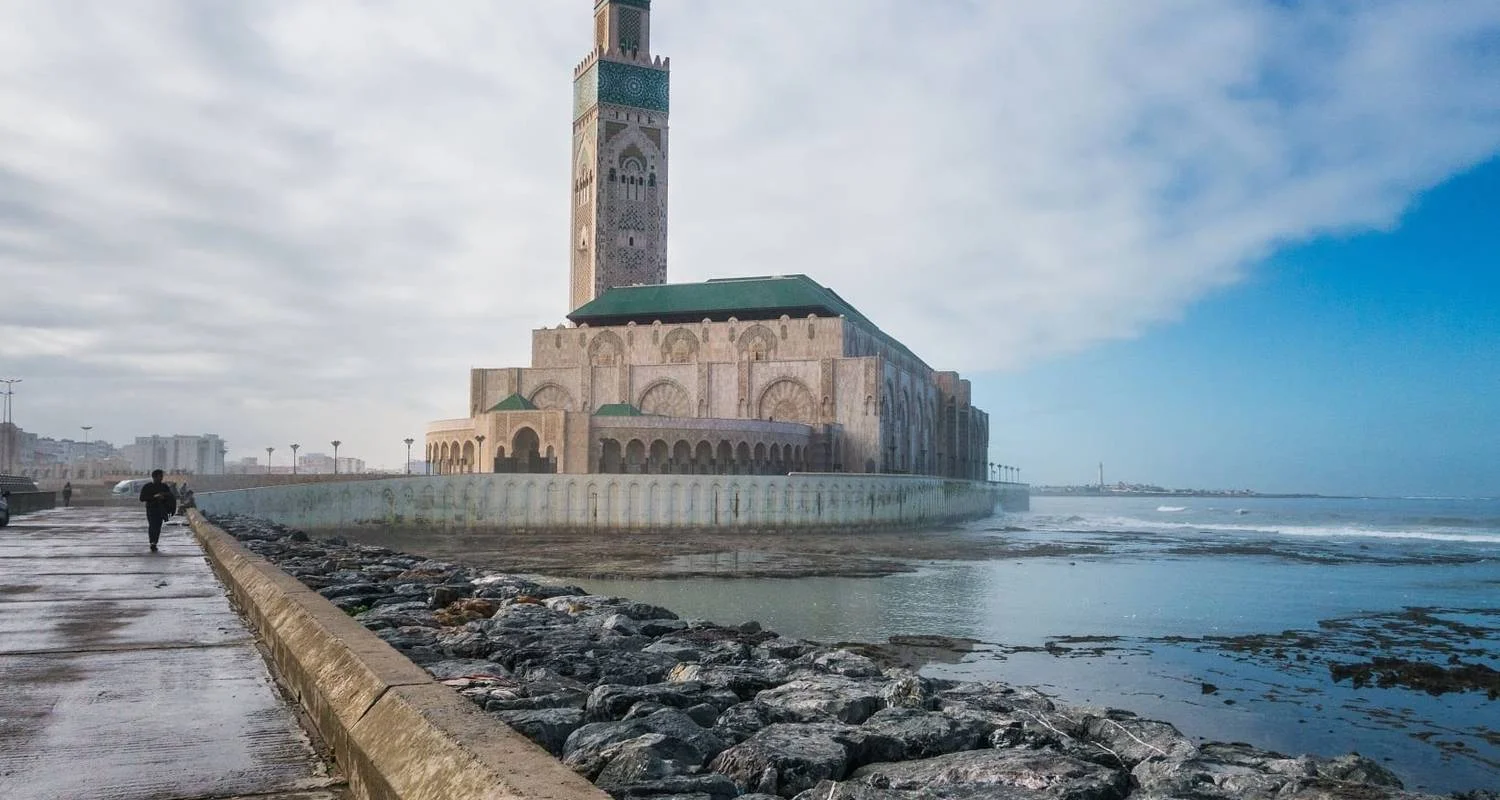
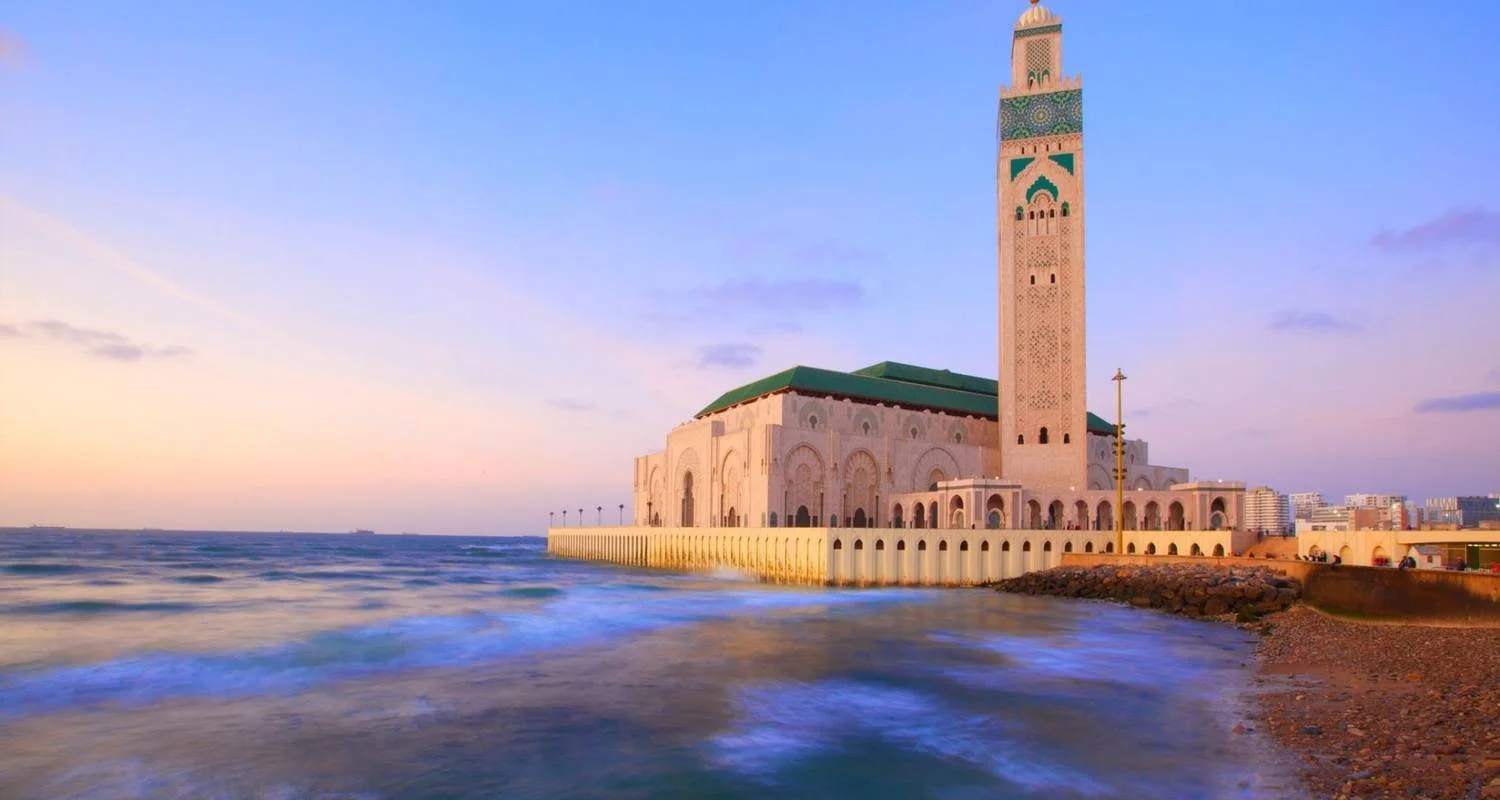
Begin your exploration with a visit to the majestic Hassan II Mosque, an architectural marvel and one of the largest mosques in the world. Set dramatically on a promontory above the crashing Atlantic waves, the mosque’s soaring 210-meter minaret dominates the skyline. Step inside to marvel at the hand-carved marble floors, elaborate wood and stone carvings, and intricately gilded cedar ceilings. This is one of the few mosques in Morocco where non-Muslims are permitted entry, offering a rare opportunity to appreciate its grandeur up close.


Afterward, take time to relax and explore Parc de la Ligue Arabe, Casablanca’s largest public garden, lined with palm trees and vibrant fountains—a peaceful escape in the heart of the city. Nearby, admire the exterior of the Casablanca Cathedral (Sacré-Cœur), a stunning example of Mauresque architecture, where Art Deco elegance meets Islamic design. Though no longer in religious use, the structure is a testament to the city’s artistic evolution during the early 20th century.


Wander through the Old Medina, the only area of Casablanca that predates French rule, where narrow alleys and traditional markets capture the spirit of Morocco’s past. Then step into the Hobous Quarter, also known as the new medina, built by the French in the 1930s. Here you can browse lively olive and spice markets, sample local delicacies, and admire more examples of hybrid European-Moorish architecture.


As evening approaches, take a leisurely stroll along the Boulevard de la Corniche, a scenic seaside promenade often dubbed the “Miami of Morocco.” This stretch of coast, dotted with restaurants, cafes, and beach clubs, is the perfect place to relax with an ocean view as you reflect on the beginning of your Moroccan adventure.
Start point

Casablanca, Casablanca-Settat, Morocco

Day 2

From Royal Splendor in Rabat to the Blue Tranquility of Chefchaouen

After breakfast, your journey begins as you depart the modern streets of Casablanca and head north along Morocco’s Atlantic coastline. Your destination is Rabat, the current capital of Morocco and one of its four imperial cities. Unlike the bustling metropolis of Casablanca, Rabat presents a serene blend of regal grandeur and coastal charm, offering visitors a glimpse into Morocco’s royal past and present-day sophistication.


Your first stop is the Chellah Necropolis, a hauntingly beautiful site enclosed within ancient walls. Once a thriving Roman city, Chellah later became a medieval Islamic necropolis, and today it is an enchanting mix of crumbling Roman ruins, Islamic tombs, and lush gardens. As you walk among the weathered columns and archways, watch for storks nesting atop the ruins, adding to the ethereal atmosphere.


Continue to the Kasbah des Oudaias, Rabat’s original fortified city center, perched above the mouth of the Bou Regreg River. Enter through its grand gateway and stroll through narrow, peaceful streets, painted in brilliant shades of white and blue. This kasbah offers breathtaking views of the river and ocean, and its tranquil ambiance feels like stepping into another world. Nearby, explore the Andalusian Gardens, a peaceful oasis filled with fragrant orange trees and vibrant flowers, reflecting the influence of southern Spain on Moroccan horticulture and design.


Before leaving Rabat, visit the Hassan Tower, an unfinished minaret of what was meant to be the world’s largest mosque in the 12th century. Adjacent lies the Mausoleum of Mohammed V, the final resting place of the beloved king and his sons. This site is a masterpiece of Moroccan craftsmanship, with white marble walls, green tiled roofs, and intricate zellige mosaics, honoring the royal legacy of modern Morocco.


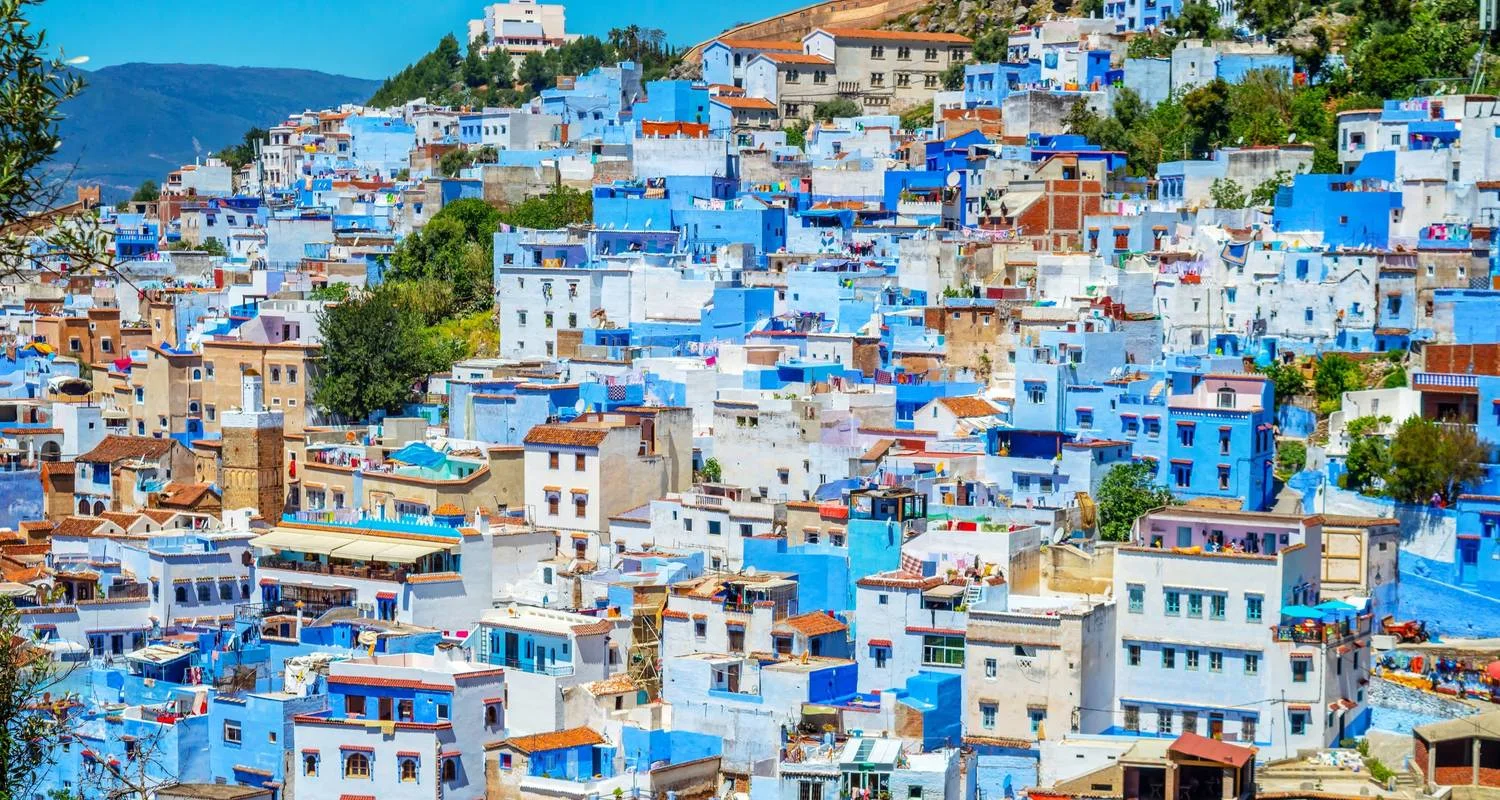
Leaving Rabat behind, your journey continues northward as the landscape shifts from rolling plains to the rugged beauty of the Rif Mountains. As you ascend, the air becomes crisper, and the scenery transforms into rocky cliffs, valleys, and forested hills. Nestled in these mountains is your destination: Chefchaouen, affectionately known as the “Blue City”.


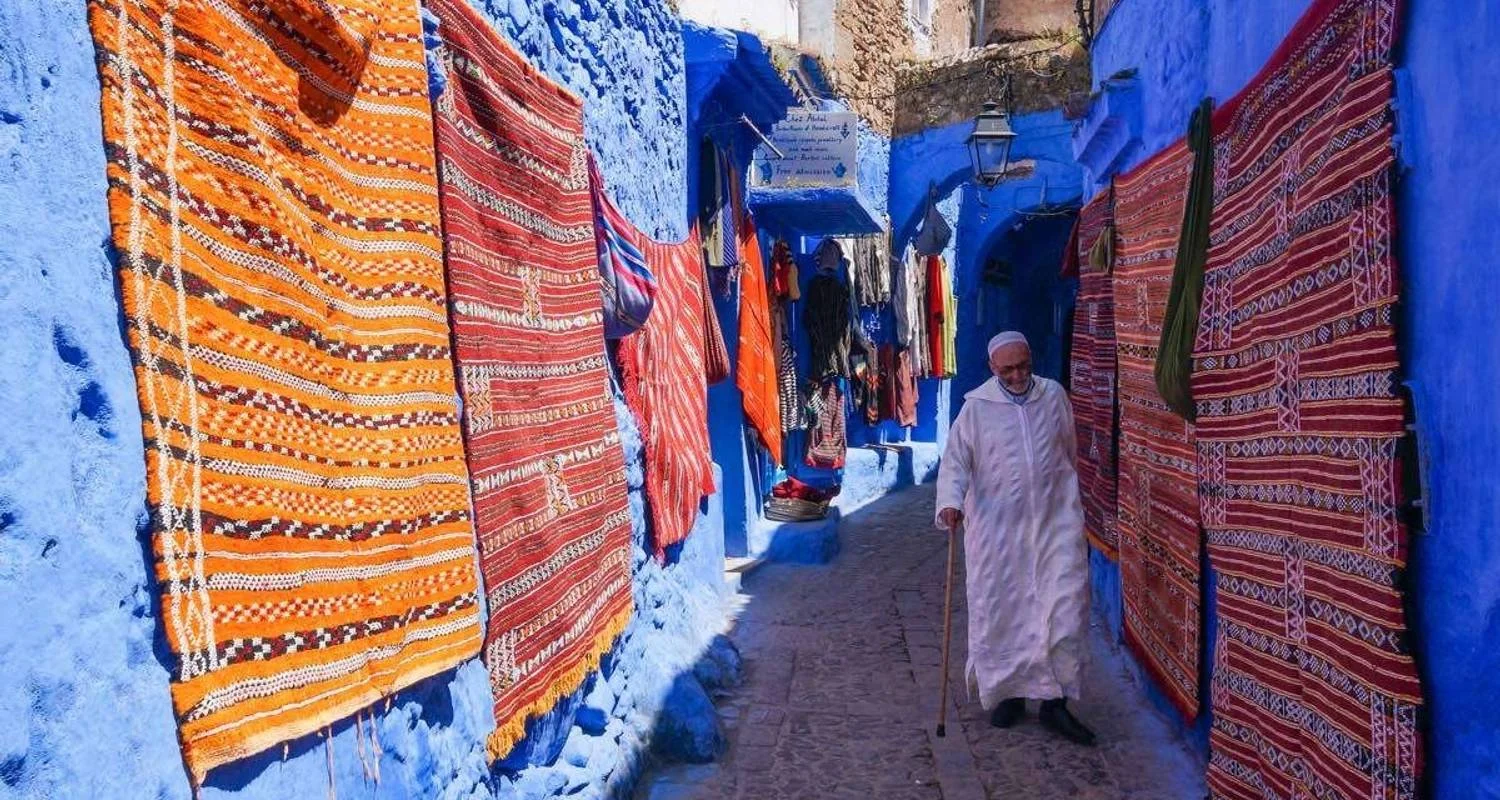
Arriving in the late afternoon, you’ll be welcomed by narrow, winding streets adorned in every shade of blue, from soft pastels to vibrant indigo. Chefchaouen’s blue-painted medina exudes a calm, almost magical atmosphere, far removed from the noise of larger cities. Take time to meander through its peaceful alleys, lined with artisan shops, cafes, and boutique riads. Locals are warm and welcoming, and the pace of life here is refreshingly slow.

Enjoy a traditional Moroccan meal in Plaza Outa el Hammam, the town’s central square, framed by the 15th-century kasbah and the Grand Mosque. After dinner, a gentle hike to the Spanish Mosque, perched on a nearby hilltop, offers a spectacular panoramic view of the blue city and surrounding mountains. As the sun dips behind the Rif peaks, the town is bathed in golden light — a truly unforgettable scene.


Overnight in Chefchaouen, where the silence of the mountains and the beauty of blue walls create a peaceful night’s rest.

Day 3

Ancient Echoes – Roman Ruins of Volubilis, Imperial Splendor of Meknes & Arrival in Timeless Fes

As morning light spills over the blue-washed alleyways of Chefchaouen, rise early to enjoy a peaceful walk through the medina before the town awakens. This is the perfect time to capture stunning photos of the serene streets, adorned with vibrant doors, cascading flowerpots, and intricate tilework—all glowing softly in the morning sun.


After breakfast, your journey south begins, taking you through scenic foothills and fertile plains to one of Morocco’s most treasured historical sites — the ancient Roman city of Volubilis. As you approach, the ruins rise from the surrounding olive groves, hinting at a time when this city was a thriving outpost of the Roman Empire.


Volubilis, now a UNESCO World Heritage Site, offers one of North Africa’s most impressive archaeological experiences. Stroll among well-preserved columns, basilicas, and triumphal arches, marveling at the artistry of the mosaics that still adorn the floors of former villas. Scenes such as the Labors of Hercules, Orpheus charming animals, and intricate geometric designs speak to the sophistication and wealth of Volubilis’s past inhabitants. With the Rif Mountains in the distance, the setting is as striking as the history it holds.


From Volubilis, continue to the nearby imperial city of Meknes, once the capital of Morocco under Sultan Moulay Ismail in the 17th century. A proud and powerful ruler, Moulay Ismail left an enduring architectural legacy. Begin with a visit to the imposing Bab al-Mansour, widely regarded as Morocco’s most magnificent city gate, decorated with zellige tiles, marble columns, and intricate Arabic calligraphy.


Step into Ville Impériale (Imperial City), where the remnants of Moulay Ismail’s grand vision are still visible. Explore the Royal Stables and Granaries (Heri es-Souani), which once housed thousands of horses and stored grain to sustain the city through long sieges. Then, pay your respects at the Mausoleum of Moulay Ismail, a sacred and serene space that reflects Moroccan artistry with ornate stucco work, colorful mosaics, and a tranquil courtyard.


Leaving Meknes behind, journey east toward Fes, the spiritual and cultural capital of Morocco. As you near the city, the skyline emerges—minarets, rooftops, and hills dotted with ancient structures, all encircled by medieval walls.


Before entering the bustling heart of Fes, ascend a nearby hill to visit the ruins of the Merenid Tombs, which overlook the medina of Fes el Bali. From this elevated vantage point, watch the city come to life as the sun sets, casting a golden glow over the sea of rooftops. The sounds of the muezzin’s call to prayer drift across the valley, a melodic and haunting introduction to this timeless city.

Alternatively, explore the Mellah, the Jewish Quarter of Fes el Jdid, with its unique architecture and historical significance. Discover the Jewish cemetery, with its whitewashed tombs, and gain insights into the once-thriving Jewish community that contributed richly to Fes’s cultural tapestry.


As night falls, settle into your traditional riad—an elegant guesthouse tucked away in the medina, where intricate tilework, carved wood, and courtyard fountains create an atmosphere of calm and authenticity. Enjoy a warm Moroccan dinner and prepare for tomorrow’s deeper journey into Fes’s medieval labyrinth.

Day 4

Exploring Fes – A Journey into Morocco’s Living History

­oday is dedicated to discovering Fes, Morocco’s oldest imperial city and a UNESCO World Heritage Site. Stepping into its ancient medina is like stepping back in time—a sensory immersion into a world of winding alleys, vibrant souks, centuries-old madrasas, and spiritual landmarks. Fes is considered the cultural, spiritual, and intellectual heart of Morocco, and its medieval charm has been preserved through the ages, with little influence from colonial development.


After a traditional Moroccan breakfast, meet your local guide and enter the labyrinth of Fes el Bali, the oldest part of the city. Your journey begins at the Bab Boujeloud (Blue Gate), an ornate entrance that welcomes you into the Talâa Kebira, the main artery of the medina. This vibrant street teems with life — merchants calling out, spices and leather wares on display, and the rich aroma of fresh bread, herbs, and incense filling the air.


As you weave through the narrow alleyways, each turn reveals a new wonder. Pass by carved cedar wood doors, hidden courtyards, and colorful tiled fountains, while your guide shares stories of the city's Andalusian and Tunisian influences, visible in the architecture and craftsmanship around you.


One of the most unique experiences in Fes is visiting the Chouara Tannery, a sight unchanged since the 11th century. Climb to a nearby leather shop rooftop for a breathtaking (and aromatic) view of the tannery’s stone vats filled with natural dyes, and the workers below, knee-deep in the process of turning raw hides into fine leather. This ancient craft is a testament to the enduring traditions of Fes’s artisans.


Continue your tour to the Al-Qarawiyyin Mosque and University, founded in 859 CE and recognized as one of the oldest operating universities in the world. While non-Muslims are not allowed to enter the prayer halls, you may be able to glimpse the stunning interior from the doorway, where elaborate arches, mosaics, and calligraphy speak to centuries of learning and devotion.


Nearby is the Bou Inania Madrasa, one of the most beautiful Islamic schools in Morocco. Its stucco carvings, zellige tilework, and cedar lattice windows offer a visual feast. As you admire its serene courtyard, you’ll gain insight into the scholarly and spiritual life that once thrived here.


Throughout the day, your guide will take you to hidden gems tucked away in the medina, from artisan workshops and weavers’ souks, to carpet shops, copperware markets, and spice stalls. Along the way, enjoy traditional Moroccan street food, such as freshly baked msemen (flatbread) or syrupy chebakia (honey pastries).


You may also visit the Nejjarine Museum of Wooden Arts & Crafts, housed in a former caravanserai (fondouk), showcasing intricate wood carvings, instruments, and historic tools, or relax at a hammam (traditional bathhouse) to unwind after your exploration.


As the day winds down, return to your riad for a home-cooked dinner. The soft glow of lanterns, the trickle of the courtyard fountain, and the aromas of Moroccan spices create a tranquil and authentic end to your day. Fes will have left its mark—not only through its architecture and history but through the spirit of the city itself, which feels as alive today as it did centuries ago.

Day 5

Into the Desert – Through the Middle Atlas to Erfoud, Merzouga & the Sahara

­Today marks a spectacular shift in your Moroccan adventure, as you leave behind the historic walls of Fes and journey south toward the timeless sands of the Sahara Desert. This is a day of dramatic contrasts — from forested mountains to arid plains, bustling towns to empty dunes — culminating in an unforgettable camel trek at sunset and a night under the stars in a luxury desert camp.


Depart Fes in the morning and begin your ascent into the Middle Atlas Mountains. The road winds through cedar forests, jagged peaks, and picturesque Berber villages, offering panoramic views and frequent chances to stop and explore. You’ll cross the Col du Zad Pass (2,178 meters), where the landscape becomes rugged and the air refreshingly crisp.


Pause in the alpine town of Ifrane, often called the “Switzerland of Morocco” for its chalet-style houses, clean streets, and lush gardens. A popular destination for skiing in winter, Ifrane offers a pleasant contrast to the desert landscapes ahead. Continue on to Azrou, where you may encounter Barbary macaques in the cedar woodlands just outside the town — a fun and spontaneous wildlife experience.


By midday, you’ll arrive in Midelt, nestled between the Middle and High Atlas ranges and famous for its fruit orchards, especially apples. Here, you’ll enjoy lunch near the banks of the Moulouya River, where you can stretch your legs and take in the peaceful natural surroundings.


Continuing south, the road cuts through the impressive Ziz Valley, one of Morocco’s largest oasis valleys. For miles, the landscape is a contrast of lush palm groves and red desert cliffs, dotted with ancient ksars (fortified villages), where merchants once stored gold, salt, and spices along the trans-Saharan trade route. This region, rich in history, provides excellent photo opportunities and a deeper appreciation for oasis life in the desert.


Your next stop is Erfoud, a small but lively town famed for its date palms and fossil workshops. Visit a local artisan collective, where you’ll see how fossil-rich stone is transformed into decorative pieces, tabletops, and jewelry. You’ll also gain insight into the prehistoric life that once thrived in this region when it was covered by ancient seas.


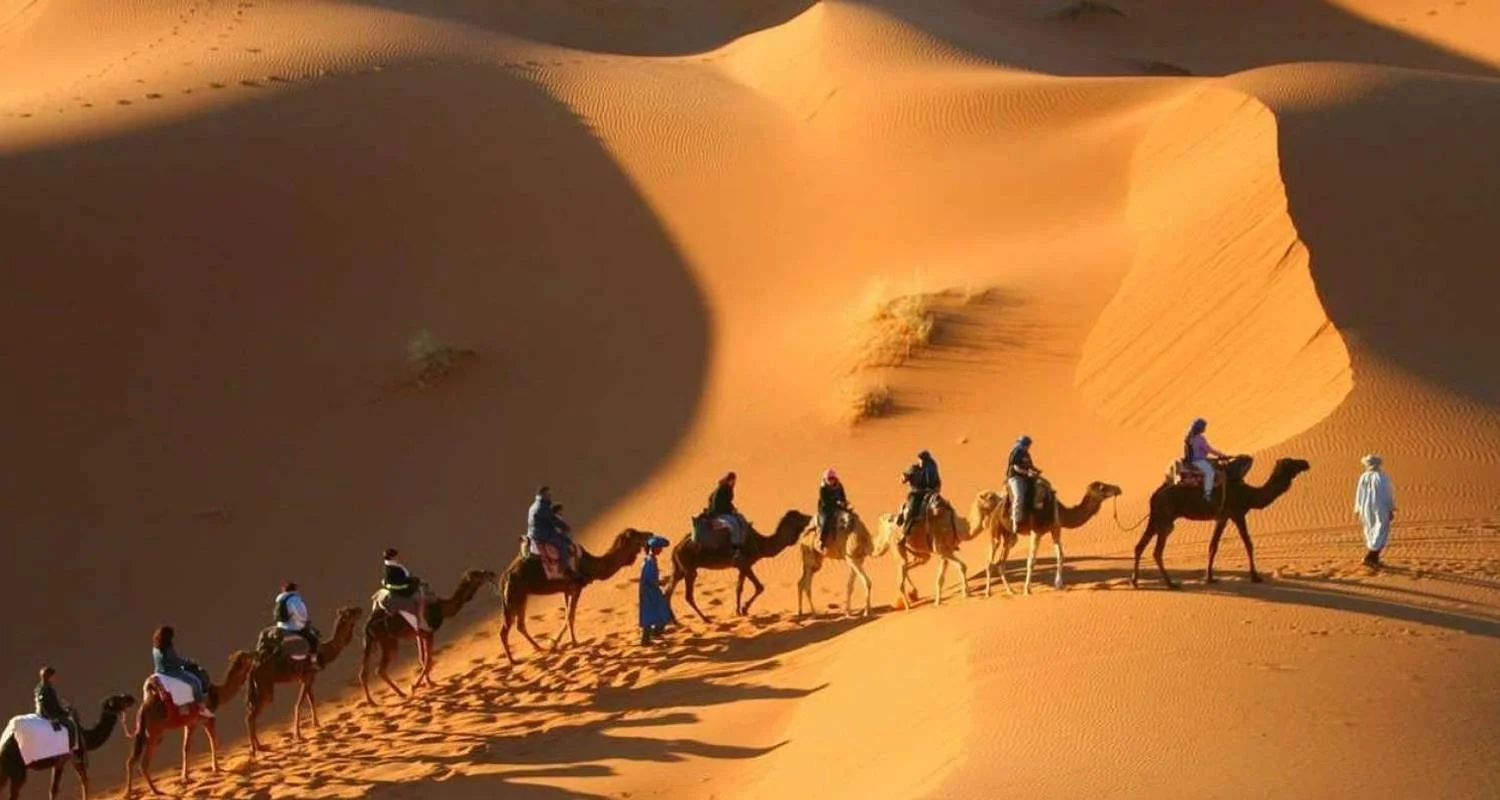
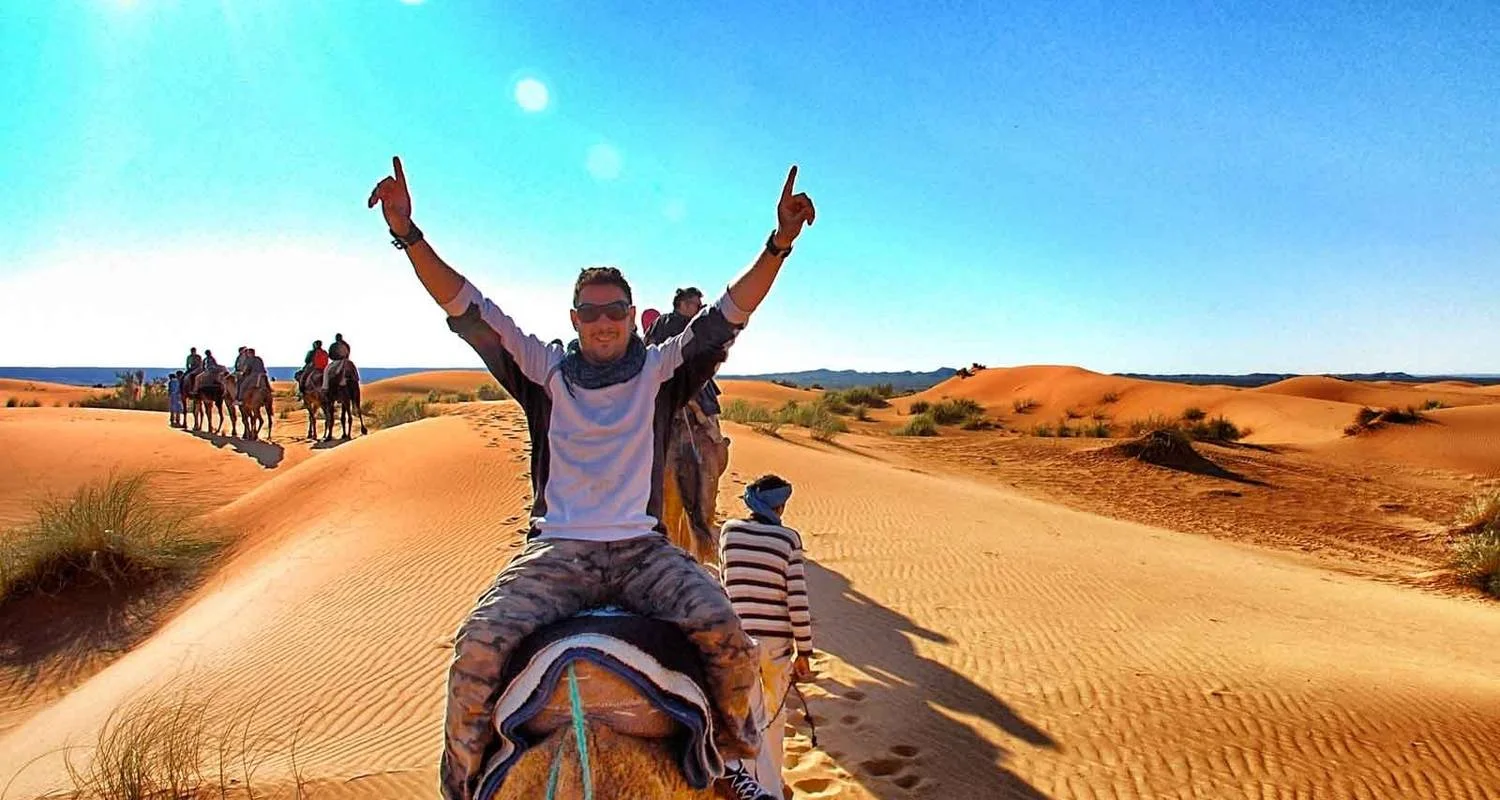
As you near Merzouga, the gateway to the Sahara, the landscape transforms into rolling sand dunes that seem to stretch endlessly toward the horizon. The Erg Chebbi dunes, some rising over 150 meters (500 feet), are among the most beautiful in Morocco. Here, you’ll meet your camel caravan and begin an evocative sunset trek into the desert.


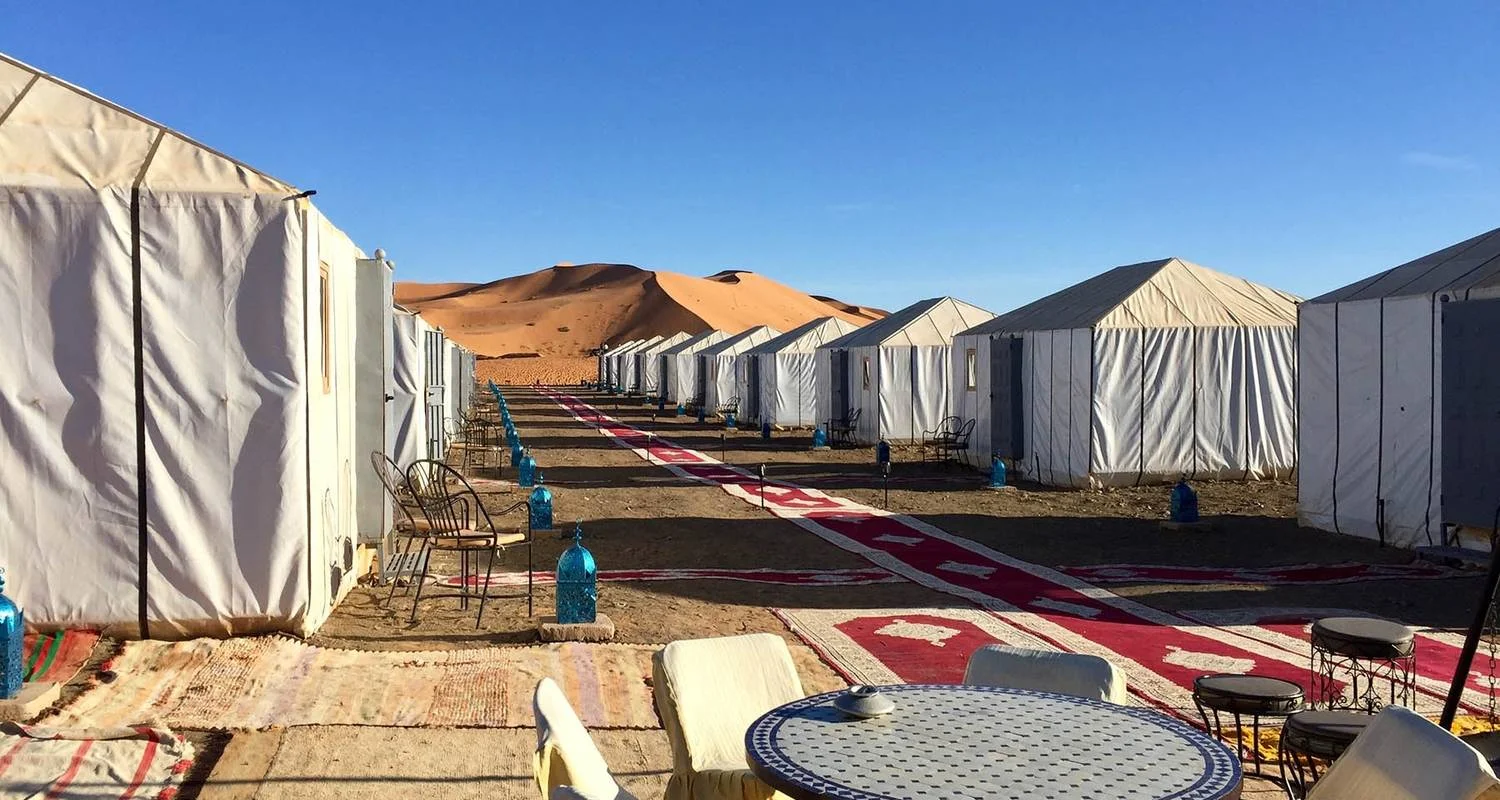
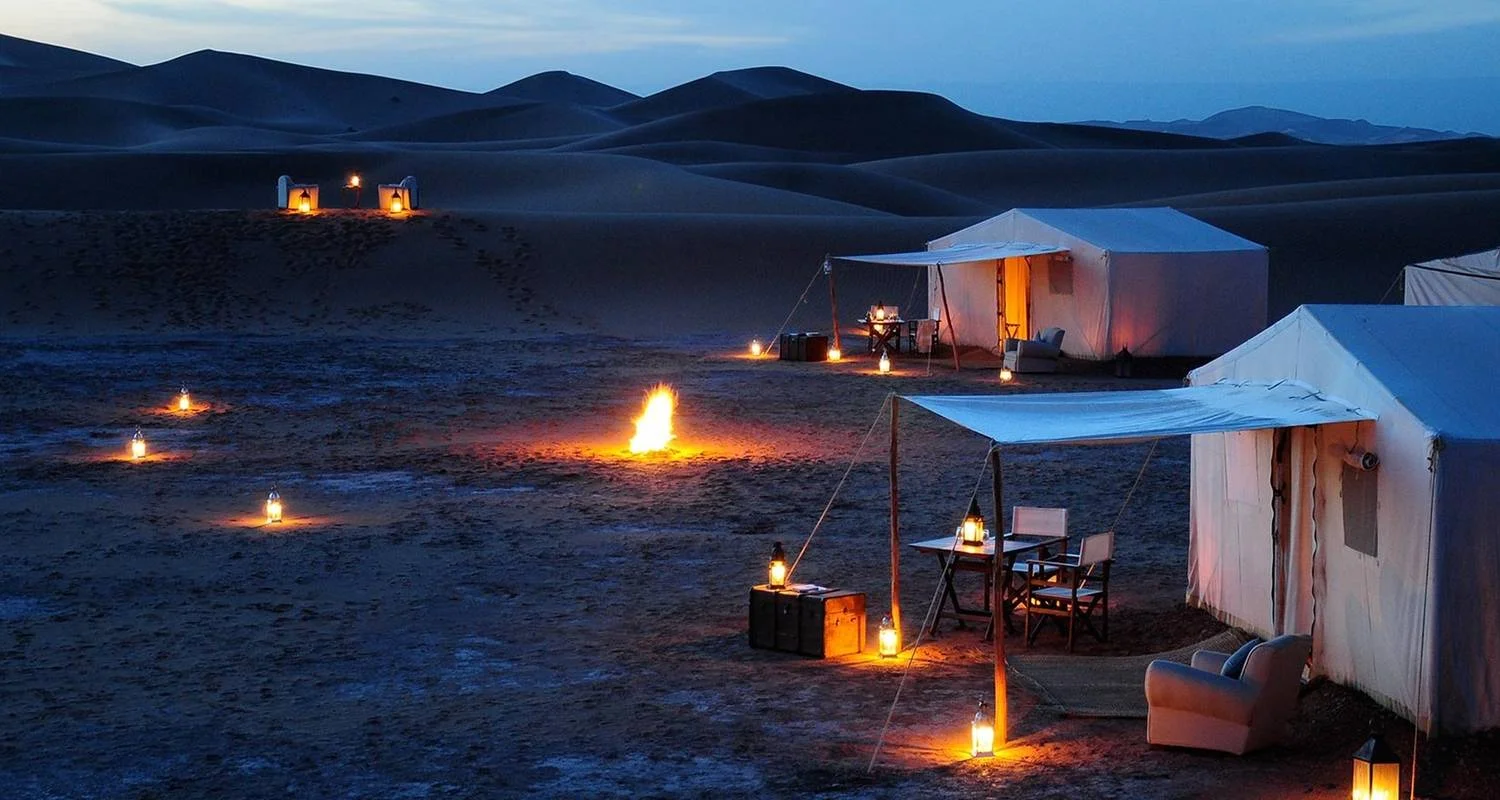
As your camel gently carries you over the golden waves of sand, the colors of the sky shift from blue to orange to deep crimson. Arriving at your luxury desert camp, you’ll be welcomed with mint tea and warm hospitality. Settle into your private tent, beautifully appointed with Berber rugs, cozy bedding, and en-suite facilities.


After nightfall, enjoy a traditional Moroccan dinner served beneath a canopy of stars, followed by live Berber music around the campfire. The silence of the desert, punctuated only by rhythmic drumming and laughter, creates a soul-stirring atmosphere you’ll never forget. Far from the noise of modern life, this is your chance to truly disconnect and immerse yourself in the serenity of the Sahara.

Day 6

Desert Dawn, Saharan Villages & Oasis Life – From Merzouga to Todra Gorge

Awaken before dawn to witness a sunrise unlike any other, as the first light of day illuminates the Erg Chebbi dunes in a kaleidoscope of gold, pink, and soft amber. Climb a nearby dune for panoramic views as the desert awakens in silence and light—a truly soul-stirring moment that will stay with you long after your journey ends.


After breakfast at camp, take time to relax or explore. You may choose to try sandboarding, a fun and exhilarating way to glide down the dunes. For those seeking a more adrenaline-fueled morning, ATV or 4x4 dune tours can be arranged, allowing you to ride over the vast waves of sand for an entirely different perspective of the Sahara’s grandeur.


Leaving the dunes behind, head toward the traditional Saharan village of Khemliya, a small community with deep West African roots. Here, you’ll be welcomed with the hypnotic rhythms of Gnaoua music, performed by locals whose ancestors were brought to the region centuries ago. Enjoy the drumming, singing, and dancing, which are integral to their spiritual and cultural identity, and take time to explore the village and its farm plots carved from sand, a testament to their resilience and harmony with the desert.


Next, continue to the market town of Rissani, once a bustling caravan center on the trans-Saharan trade route. Visit the lively souk, where you can explore stalls offering spices, fabrics, pottery, and dates—the region’s specialty. The experience of the live animal market, with its auctioning of sheep, goats, and donkeys, offers an authentic slice of local life. Don’t miss the “donkey parking lot,” an amusing yet practical element of the town’s traditional economy.


As you journey westward, the scenery gradually transforms from rolling desert to fertile oases, where palm groves stretch for miles, interspersed with mud-brick villages. Arrive in the town of Tinerhir, situated on the edge of a vast oasis that follows the Todgha River. Here, life is centered around date palms, pomegranate trees, and olive groves, sustained by the life-giving water that flows through the valley.


The day culminates with a visit to the awe-inspiring Todra Gorge, one of Morocco’s most stunning natural wonders. As you approach, towering limestone cliffs rise up to 300 meters (nearly 1,000 feet) on either side, creating a dramatic corridor through which the river flows. The gorge’s narrowest point is a mere 10 meters wide, creating a cathedral-like atmosphere where the light dances off the rock walls, changing color as the sun moves across the sky.

Descend to the river’s edge, where you can dip your feet in the cool, clear water and relax amidst the serenity of nature. The soothing sound of the river, the rustle of palms, and the immense scale of the cliffs provide a moment of peaceful reflection after the day’s rich experiences.


As evening sets in, check into your guesthouse or hotel nestled in the Dades or Todra Valley, where dinner is served with views of the gorge or surrounding palm groves. Tonight, under a sky full of stars, you’ll rest between desert and mountain, with the memories of a day steeped in authenticity and natural wonder.

Day 7

Along the Valley of a Thousand Kasbahs – From Dades to Ouarzazate & Aït Benhaddou

After breakfast amidst the serene beauty of the Todra or Dades Valley, continue your voyage westward, following the fabled route through the Valley of a Thousand Kasbahs. This journey unfolds across a landscape that feels timeless, where the remnants of mud-brick fortresses, palm-fringed oases, and rugged canyons tell the tale of Morocco’s desert heritage and ancient trade routes.


As you drive through the Dades Valley, take in views of towering rock formations and verdant fields nourished by the Dades River. Along the way, pause to admire the peculiar rock formations known as the “Monkey Fingers” — bizarre, rounded sandstone outcrops sculpted by wind and time. The valley’s winding roads and colorful scenery offer numerous opportunities for photography and short walks to soak in the raw natural beauty.


Continuing along the Route of the Kasbahs, you’ll encounter centuries-old fortresses, once the homes of powerful tribal leaders and now standing as majestic ruins etched into the desert hillsides. Some are still inhabited, others crumbling, but all evoke the romance and mystery of the desert frontier.


Your journey brings you to the town of Kela’a M’gouna, set in a valley renowned for its cultivation of Damask roses. Depending on the season (particularly in May, during the Rose Festival), the air here is fragrant with rose petals, and the surrounding fields are a patchwork of pink blooms. Visit a local distillery to learn how rose water and essential oils are produced using traditional methods, and perhaps pick up a scented souvenir.


From here, the landscape begins to shift again, becoming more arid and cinematic as you approach Ouarzazate, known as “the Hollywood of Africa.” This desert hub has served as a backdrop for iconic films and series, including Gladiator, Lawrence of Arabia, Kingdom of Heaven, and Game of Thrones. If you’re a film enthusiast, a visit to the Atlas Film Studios or the Musée du Cinéma offers fascinating insight into how Morocco’s dramatic landscapes have been captured on screen. Costumes, sets, and props tell the story of how fantasy and history come alive in this desert town.


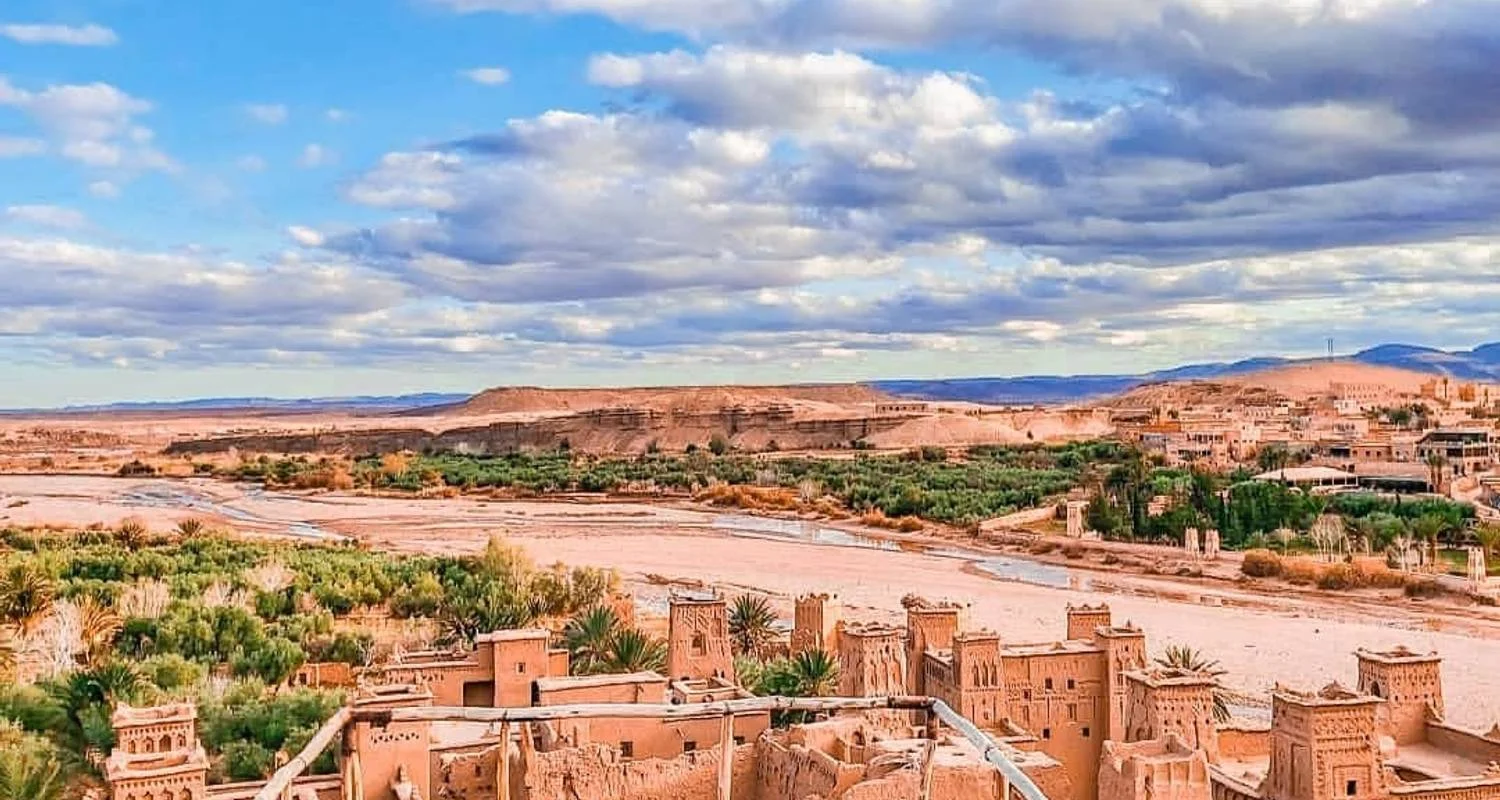
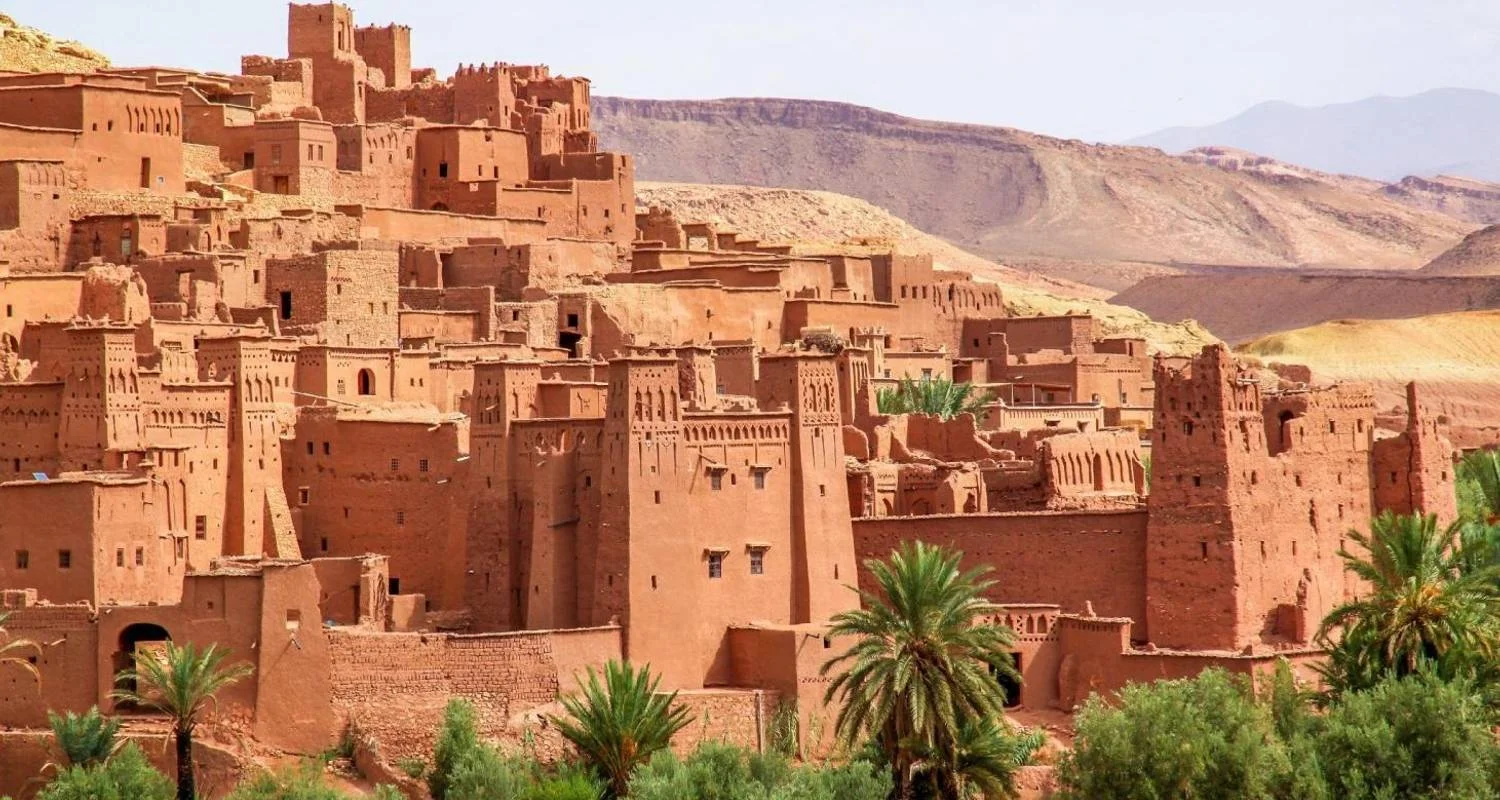
In the afternoon, journey to the nearby Aït Benhaddou, one of Morocco’s most iconic and best-preserved ksars (fortified villages). Set against a backdrop of rocky hills and palm trees, the earthen walls of Aït Benhaddou seem to rise organically from the desert floor, glowing amber and gold in the afternoon light. This UNESCO World Heritage Site has stood for centuries as a vital stop along the ancient caravan route between the Sahara and Marrakech.


Wander through narrow, winding alleys flanked by clay homes, watchtowers, and granaries, each offering stunning vistas over the Ounila River and valley below. The ksar’s traditional architecture, made entirely of rammed earth and straw, showcases Moroccan ingenuity adapted to the desert climate. Climb to the hilltop granary, where panoramic views stretch out over the valley, and imagine the caravans of traders who once passed this very way, bearing salt, gold, spices, and stories from across the Sahara.


For those interested, visit one of the historic kasbahs within the ksar, often still home to local families, to gain a deeper sense of daily life in this ancient desert stronghold.


As the sun begins to set, the golden hues of Aït Benhaddou’s walls intensify, casting long shadows that enhance the atmospheric beauty of the ksar. Check into your charming guesthouse or kasbah hotel, where you’ll enjoy a delicious traditional dinner, perhaps on a rooftop terrace with views of the ksar, now bathed in the soft glow of lanterns and starlight.


Day 8

Across the High Atlas – From Aït Benhaddou to Marrakech via the Tizi n’Tichka Pass

As the morning light warms the earthen walls of Aït Benhaddou, enjoy a peaceful breakfast in your guesthouse, with final views of this timeless desert stronghold. Soon, you’ll leave the quiet of the desert behind and journey into a completely different world—the bustling streets, vibrant souks, and palatial wonders of Marrakech. But first, the High Atlas Mountains await.


Depart Aït Benhaddou and head northwest toward Marrakech, ascending into the rugged and majestic High Atlas Mountains, Morocco’s highest range. This route offers one of the most scenic drives in North Africa, with a landscape that changes dramatically as you climb from the arid plains into green valleys, rocky escarpments, and snow-capped peaks during colder months.


The road winds through Berber villages clinging to the mountainsides, where traditional stone and adobe houses blend seamlessly into the landscape. Herds of goats and sheep graze on the hillsides, and terraces carved into the slopes are used to cultivate barley, olives, and almonds. This is a region where life has remained largely unchanged for centuries.


You’ll cross the Tizi n’Tichka Pass, the highest paved road in Morocco at 2,260 meters (7,415 feet) above sea level. At the summit, pause to stretch your legs and take in breathtaking panoramic views over deep valleys, winding roads, and distant peaks. The pass was historically a caravan route, used by traders and nomads moving between the Sahara and Marrakech, and today it remains a gateway between two worlds.


As you begin the descent on the northern side of the mountains, stop in the village of Taddert to visit a women’s argan oil cooperative. Here, you’ll see firsthand how argan nuts are hand-cracked and pressed to produce the precious oil used in Moroccan cooking and cosmetics. It’s a chance to support local artisans and sample pure argan oil products, from cosmetic balms to culinary oils.


Continuing the descent, you’ll notice the climate and scenery shift—from arid and rugged to humid and lush. The red earth becomes dotted with palm groves, orchards, and small farms, signaling your approach to Marrakech, the Red City, known for its distinctive ochre-hued buildings and pulsating energy.


Arriving in Marrakech in the afternoon, you’ll check into your riad or boutique hotel. Take time to unwind and refresh, or head straight into the heart of the city—the legendary Jemaa el-Fna square, a UNESCO-listed cultural space and the beating heart of Marrakech.


As the sun begins to set, the square bursts to life. Snake charmers, storytellers, musicians, and street performers gather, captivating audiences with ancient traditions and spontaneous shows. The scent of grilled meats, saffron, and spices fills the air as rows of food stalls offer everything from freshly squeezed orange juice to tagines and couscous. Wander among the throngs of locals and visitors, absorbing the rhythm of Marrakech, where history, spectacle, and everyday life blend seamlessly.


Nearby, you can admire the Koutoubia Mosque, the city’s tallest structure, whose illuminated minaret serves as a beacon over the medina. Whether you choose to dine in the square, relax at a rooftop café with views of the chaos below, or retreat to your riad for a quiet dinner, tonight marks your arrival into the vibrant soul of Morocco.

Day 9

Discovering Marrakech – Palaces, Gardens & the Heartbeat of the Red City

Wake to the soft light filtering through the lattice windows of your riad, accompanied by the distant echo of the muezzin’s call to prayer—a timeless sound that stirs the senses and signals the start of your exploration of Marrakech, a city where centuries of history pulse beneath modern energy.


Founded in the 11th century by the Almoravid dynasty, Marrakech earned its nickname “The Red City” from the natural red clay used to build its walls and homes, glowing like embers under the Moroccan sun. Today, you’ll delve into Marrakech’s living history, where Berber roots, Islamic tradition, and Andalusian artistry have intertwined to create a city like no other.


Accompanied by a local guide, begin in the medina, a UNESCO-listed maze of narrow alleyways, bustling souks, hidden courtyards, and centuries-old monuments. Step through the monumental gates into a world alive with color and activity. Artisans hammer copper, weavers craft vivid textiles, and spice merchants tempt you with saffron, cumin, and fragrant blends unique to Morocco.


Your first stop is the Koutoubia Mosque, the city’s most prominent landmark, its 77-meter-high minaret towering above the medina. Though non-Muslims cannot enter, the mosque’s stunning exterior and surrounding gardens offer a serene introduction to Moroccan Islamic architecture at its finest.


Next, visit the Ben Youssef Madrasa, a former Islamic college founded in the 14th century and one of Marrakech’s most exquisite architectural jewels. Inside, marvel at the ornate stucco work, hand-carved cedar wood ceilings, and geometric tile mosaics, reflecting the pinnacle of Moroccan artisanship. Imagine the lives of the students who once studied here, their voices echoing through the quiet courtyards.


Continue to the Bahia Palace, once the grand residence of a 19th-century vizier. Its lavish rooms, painted wooden ceilings, and lush courtyards shaded by orange trees reveal a world of luxury and refinement. Every inch of the palace seems designed to enchant the eye and soothe the soul, a testament to Moorish design mastery.


Nearby, step into history at the Saadian Tombs, hidden for centuries behind a wall and rediscovered in 1917. These tombs house the remains of Sultan Ahmed al-Mansour and his dynasty, adorned with intricate tilework, Arabic calligraphy, and marble columns — a silent yet powerful tribute to Morocco’s imperial past.


In the afternoon, escape the medina’s intensity with a visit to the Majorelle Gardens, a botanical oasis of cobalt blue buildings, exotic plants, and serene pools. Originally designed by French painter Jacques Majorelle, and later restored by Yves Saint Laurent, the gardens offer a cool, colorful retreat filled with bamboo groves, cacti, and fountains — a place where art and nature coexist in perfect harmony.


If time allows, consider visiting the nearby Yves Saint Laurent Museum, showcasing the designer’s creative legacy, or the Dar El Bacha Museum of Confluences, an elegant palace now housing Islamic, Jewish, and Christian artifacts, highlighting Morocco’s cultural richness.


As evening descends, return to the Jemaa el-Fna square, now ablaze with lamplight, sizzling food stalls, and entertainers captivating crowds. Let yourself wander freely, taste street food favorites like grilled meats, harira soup, or freshly baked msemen, and enjoy the vibrant melody of Marrakech by night.


Day 10

Farewell Morocco – Final Discoveries in Marrakech & Return to Casablanca

­ As your Moroccan adventure nears its end, enjoy a leisurely morning in Marrakech, with time to soak in the final sights, sounds, and scents of the Red City. The medina, still awakening under the morning light, offers a quieter, more intimate atmosphere—perfect for a final stroll through the souks, where merchants arrange their colorful wares, and the smell of fresh mint tea and baking bread drifts through the air.


You may wish to visit the Almoravid Koubba, the oldest surviving monument in Marrakech, dating back to the 12th century. This small yet architecturally significant structure, rediscovered in 1948, showcases the early foundations of Moroccan Islamic design, with intricate carvings and a sense of ancient reverence.


Another enriching stop could be the Marrakech Museum, housed in the beautifully restored Dar Mnebbi Palace. Here, explore a curated collection of traditional and contemporary Moroccan art, alongside Berber, Jewish, and Islamic artifacts. The palace itself is a work of art, with its stained-glass windows, zellige tile floors, and domed ceilings—a final tribute to the country’s artistic brilliance.


If time allows, you might visit the Museum of Moroccan Arts (Dar Si Said Museum), renowned for its extensive exhibits of carved wood, jewelry, textiles, and ceramics, offering one last dive into Morocco’s craftsmanship and cultural diversity.


For those who prefer a more relaxed morning, unwind at your riad, enjoy breakfast in the courtyard, or sip tea on a rooftop terrace, watching the medina come to life one last time.


After lunch, your journey returns you to Casablanca—a comfortable 3.5-hour drive through Morocco’s changing landscapes. Along the way, you’ll pass olive groves, rolling hills, and coastal plains, reflecting on the diverse terrains and experiences you’ve traversed over the past 10 days.


Upon arrival in Casablanca, cap off your trip with a visit to the legendary Rick’s Café, a stylish and atmospheric restaurant inspired by the classic film Casablanca. Whether you opt for a final drink or a light meal, the piano music, classic décor, and view of the Atlantic provide a nostalgic and fitting farewell.


As you make your way to the airport for your departure, take a moment to reflect on the people you’ve met, the landscapes you’ve explored, and the memories created—from the labyrinthine medinas of Fes and Marrakech, to the starry nights of the Sahara, and the cultural riches of Morocco’s imperial cities.


This is not just the end of a journey, but the beginning of a connection—to Morocco’s past, its living traditions, and its enduring spirit.

End point

Casablanca, Casablanca-Settat, Morocco

In case of cancellation:

A deduction from the total amount will be made:


free of charge for  More than 21 days 

25% for a cancellation From 21 to 15 days before the date of arrival.

50% for a cancellation From 14 to 7 days before the date of arrival.

 75% for cancellation for less than 7 days before the date of arrival.

100% for cancellation in 48h before the date of arrival.

Tour Details

Accommodation

• Authentic Quality Riads/Hotel • Berber luxury Tents in the Desert 

Transport

Air-conditional Car /minivan

Meals

All Dinners and breakfasts as mentionend

Guide

English /french Guide Driver 

local Guide in imperial cities 

Good to know

Currency

MAD

Moroccan Dirham

Morocco

Customer reviews

Overall Rating

5

Itinerary

5

Guide

5

Transport

5

Accommodation

5

Food

5

Operator

4.7

Faq Tour

How can I book a tour?
You can order a tour on our website by selecting the desired dates and clicking the “Confirm dates” button. You can also contact our sales department by phone or email.
Which payment options are available?
We accept credit cards, bank transfers and other popular payment methods.
Can I change or cancel my reservation?
Yes, changes or cancellations are possible, however penalties may apply depending on the time before the tour starts.
What documents are required to participate in the tour?
You will need a passport with a valid visa (if required) to visit countries along the tour route.
Home
Search
Profile