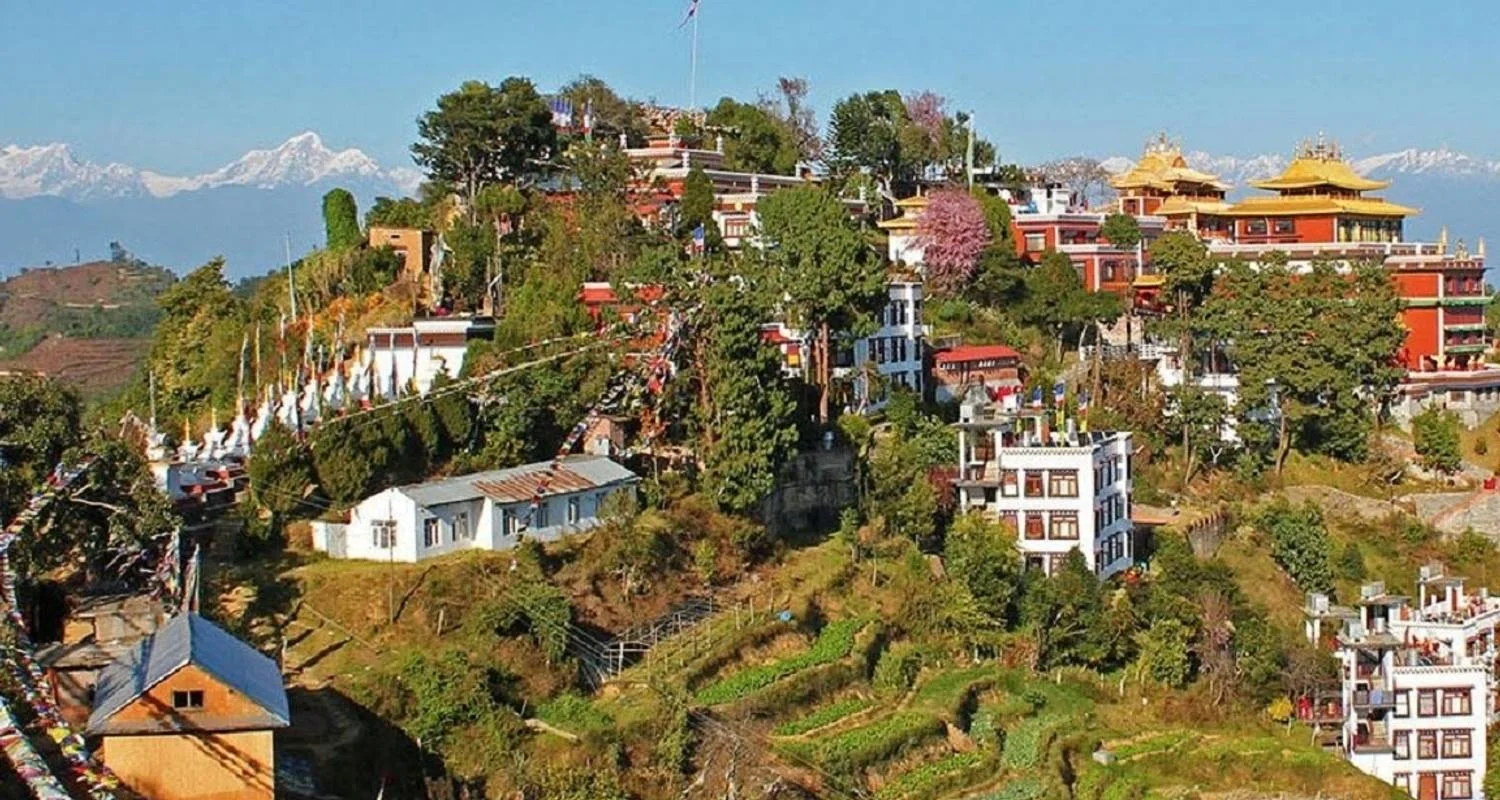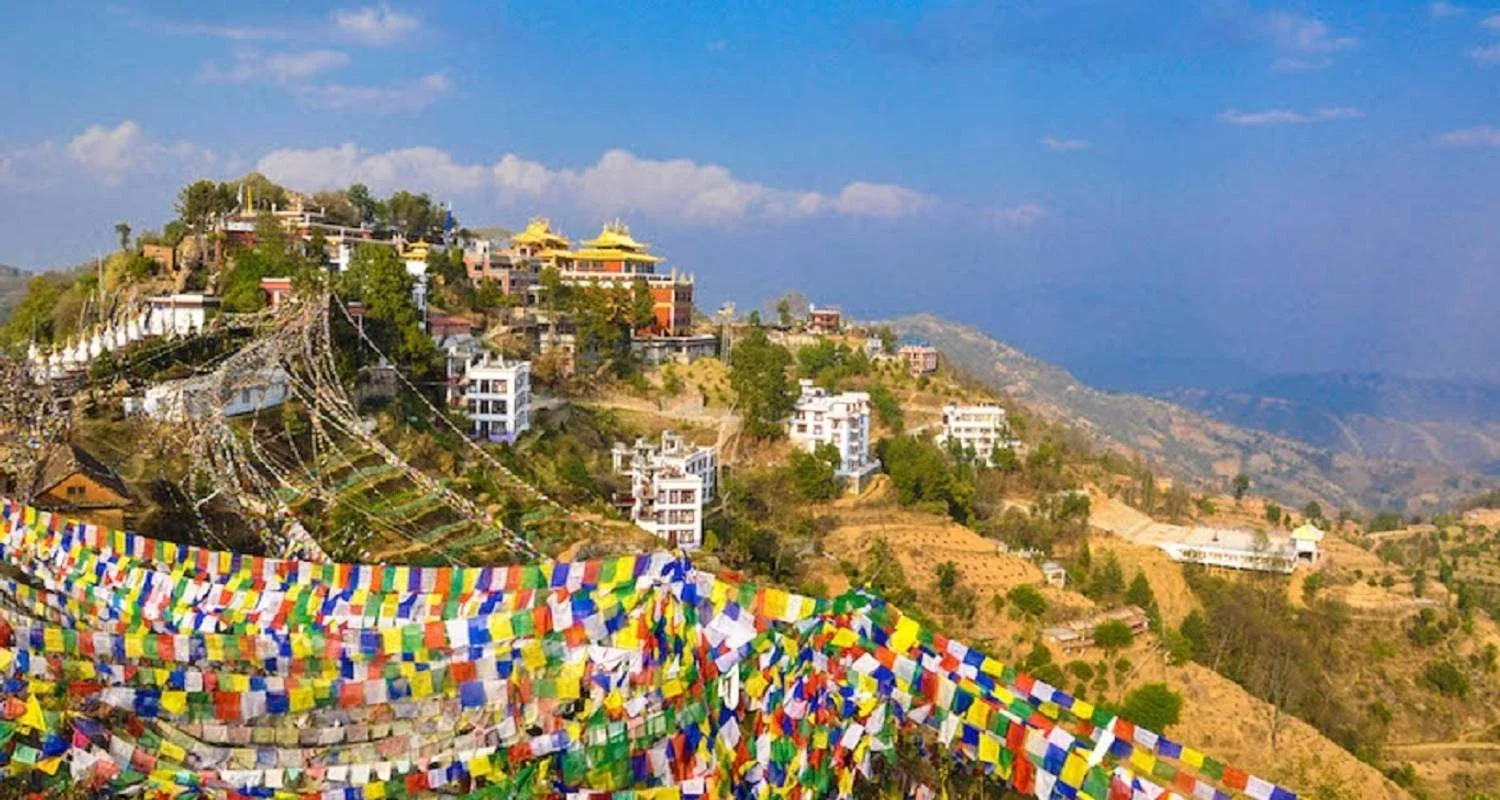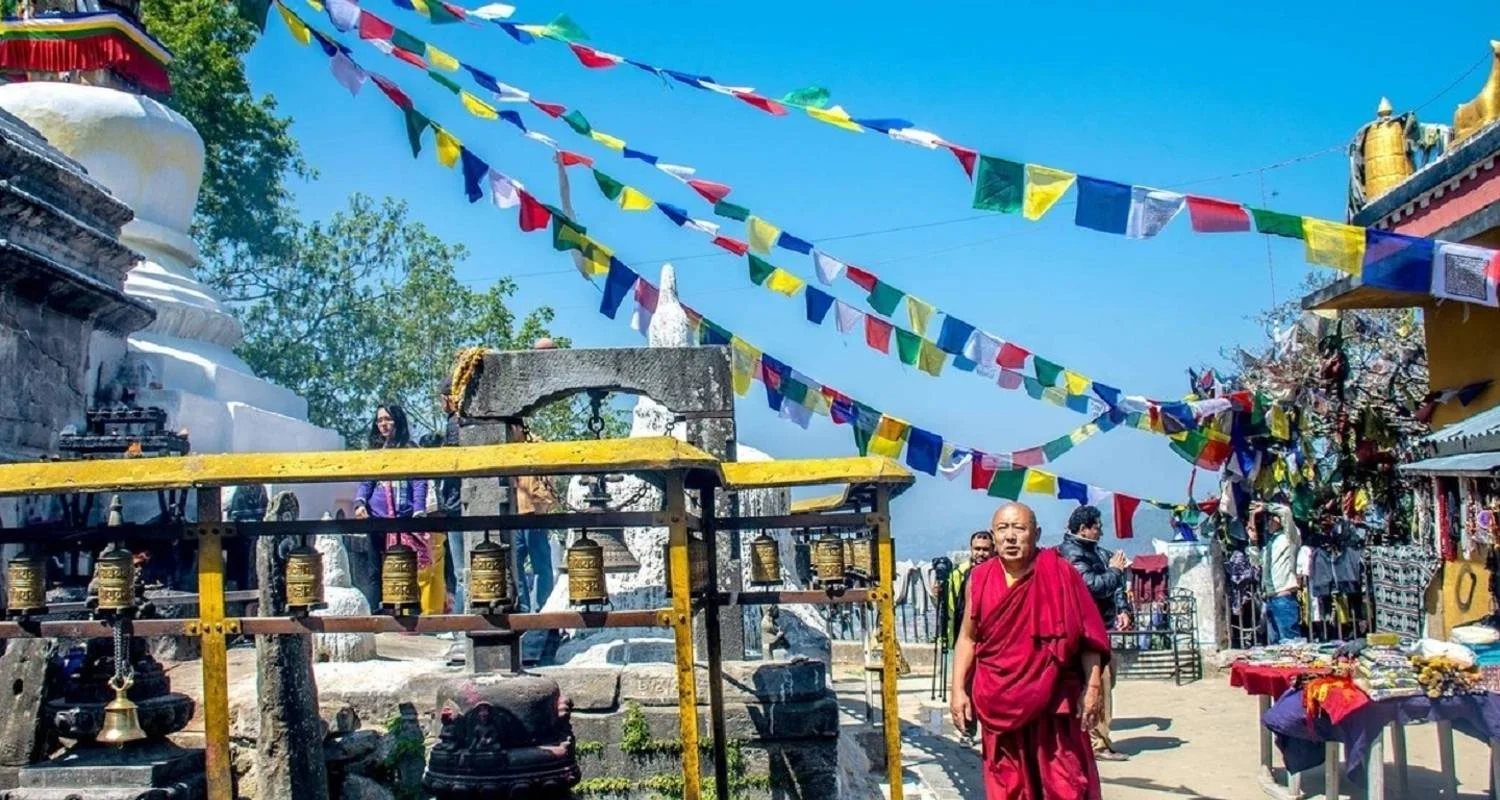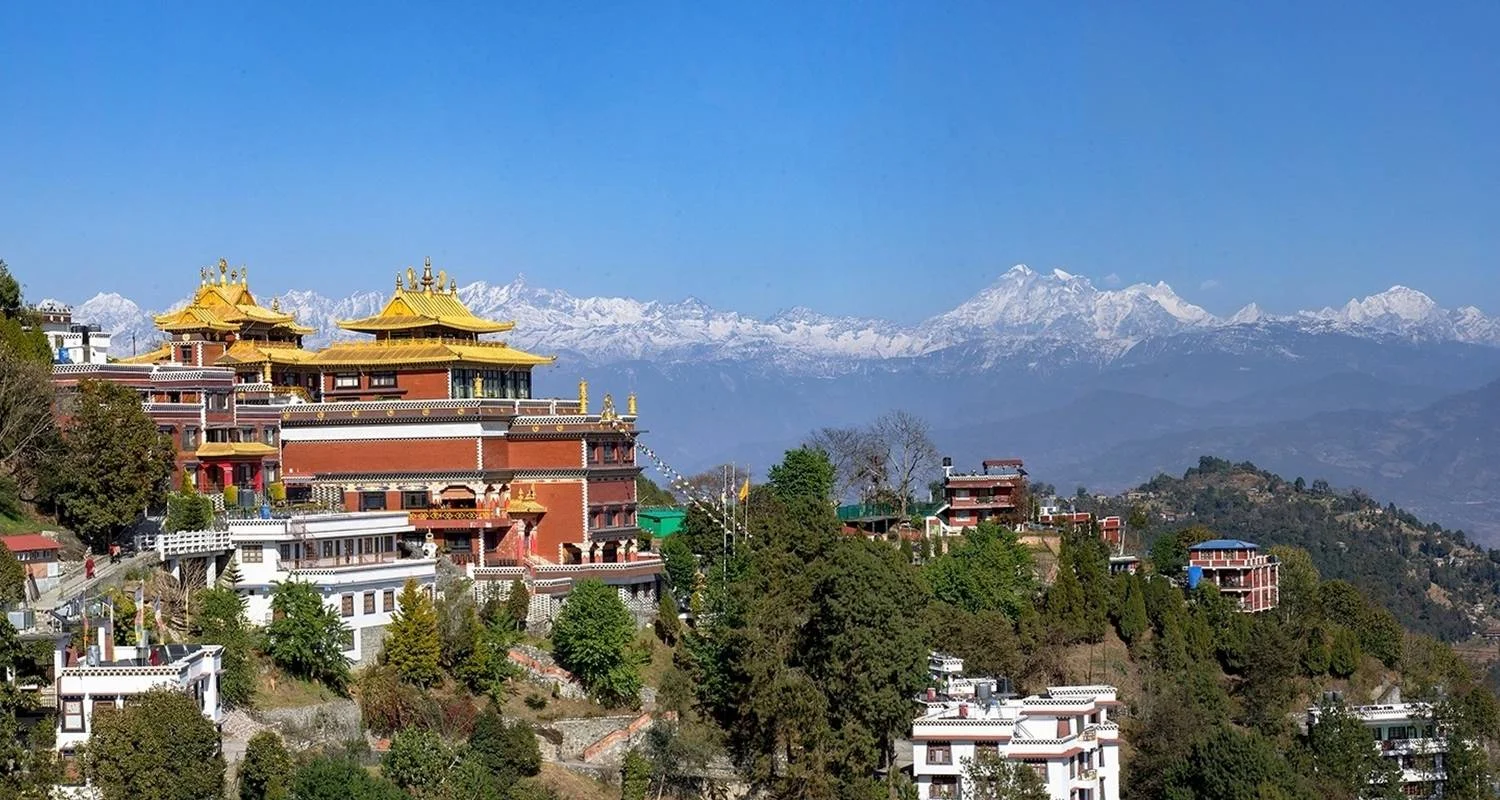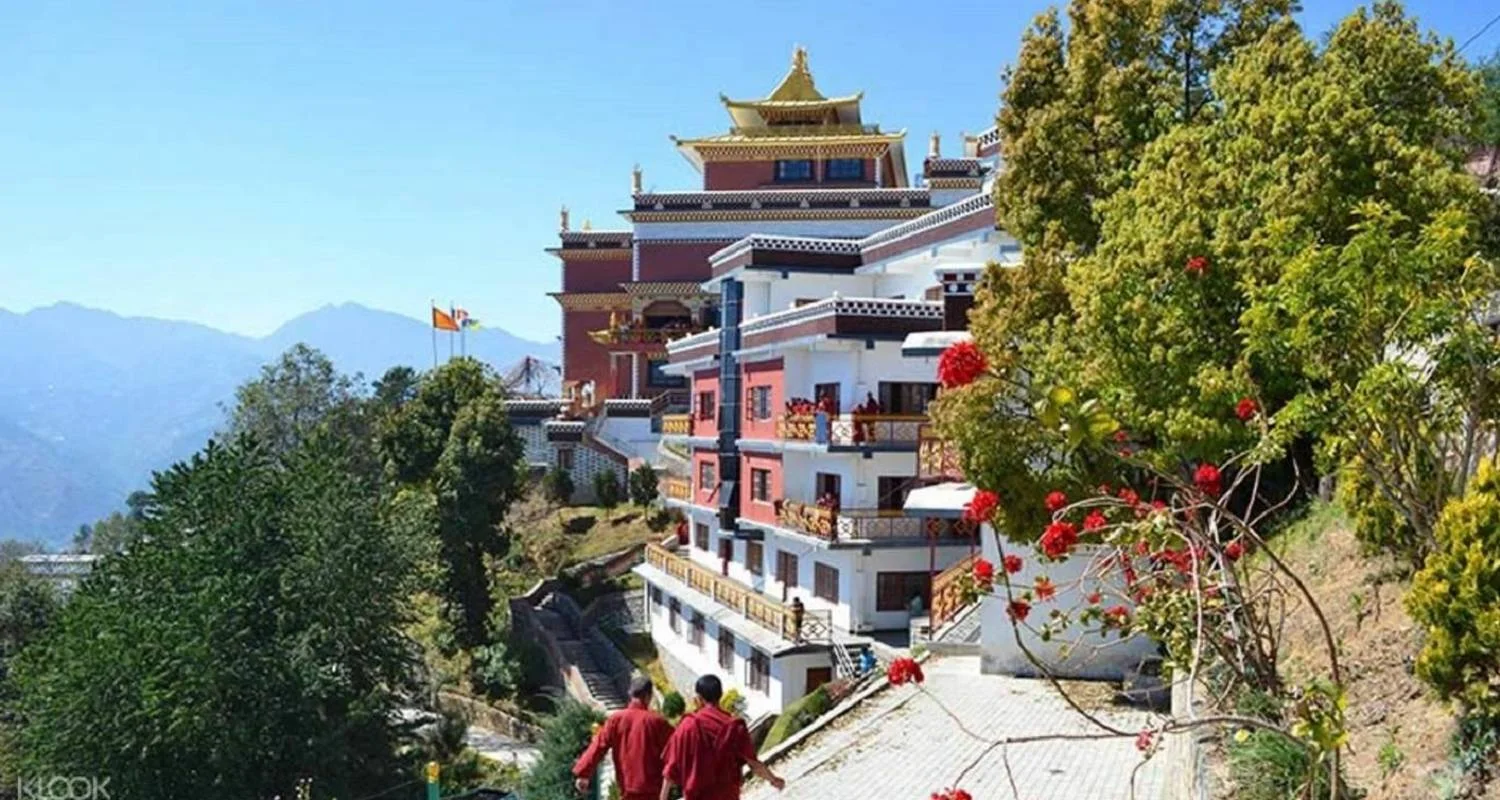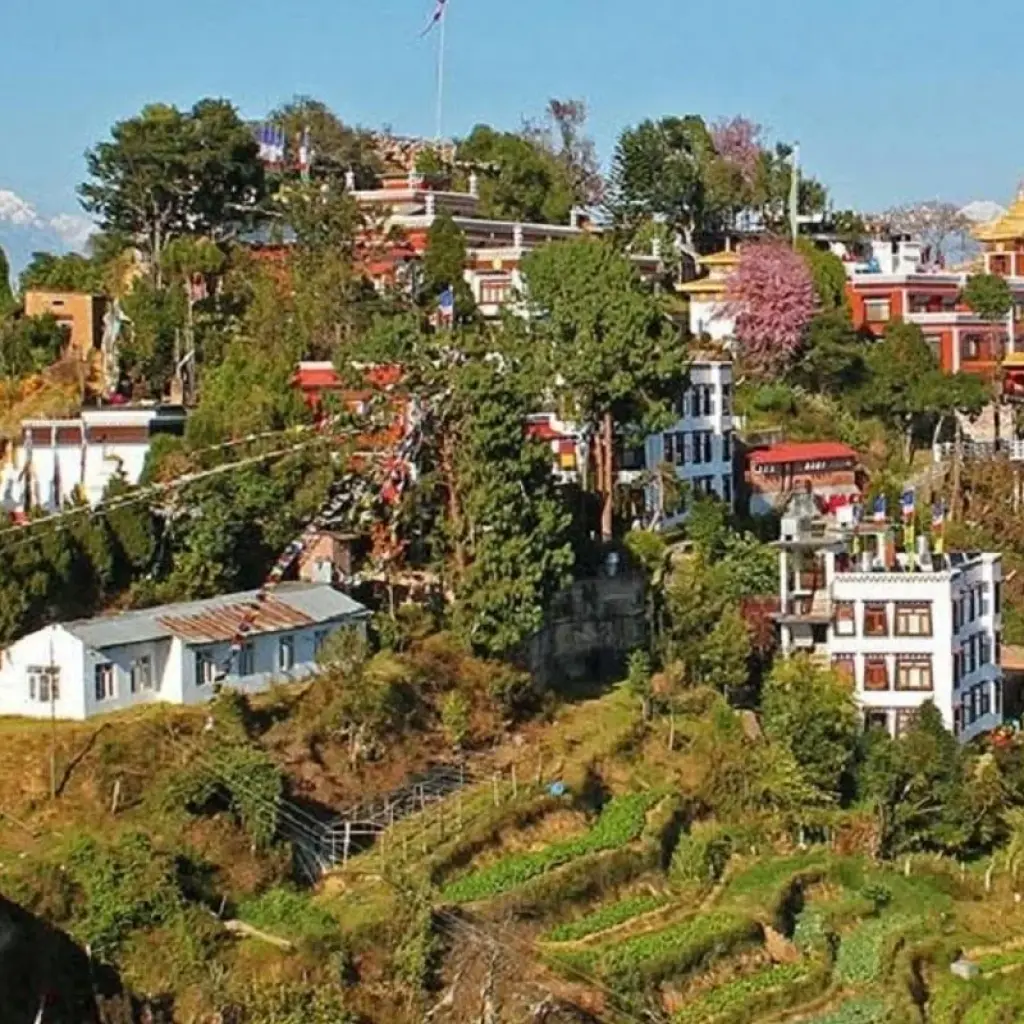
Kathmandu to Namo Buddha and over night there visit Namo buddha monastery and meditation, orintation with monks and nons.
Itinerary
A long time in the past, many immeasurable eons ago, our teacher the perfect Buddha was practicing on the path of learning. Below is the story of how he was overcome with compassion when he saw a tigress tormented by starvation and offered his body to her without a moment’s hesitation.
In the distant past, there lived in this world a king named Great Charioteer (Shingta Chenpo) who ruled over a small kingdom of some five thousand subjects. Due to the king’s accumulation of merit, all his subjects enjoyed happiness and well being; rains came at the right time while crops and livestock flourished. The king had three sons: the oldest was named Great Sound (Dra Chenpo), the middle Great Deity (Lha Chenpo), and the youngest Great Being (Semchen Chenpo). Powerful in the martial arts and radiating confidence, the two elder sons always helped the king in governing the kingdom. From his earliest years, the youngest son, Great Being, was very bright and endowed with spontaneous kindness and compassion. He gave freely and generously to others as if to his only child.
One day when the weather was fine, the king along with his queen, sons, and ministers left the town for a relaxing time in the country. The king and queen rode upon an elephant while the sons, ministers, and retinue were mounted on beautiful horses. After half a day’s ride, they arrived at a place of thickly wooded forests resonant with birdsong while nearby blossomed a tapestry of flowers in rich variety. The king was pleased with the scenery and ordered a large encampment to be prepared for everyone’s enjoyment. The servants immediately unpacked everything, set up tents, and laid out a hearth of stones for cooking. Soon the ground was covered with tents as clouds billowed in the sky above. The servants bustled about, preparing a variety of foods and offering tea and liquor to everyone. Then the young people began to sing, dance, and play, transforming the encampment into a celestial realm. The king, queen, and ministers watched the entertainment while enjoying an eighteen course meal accompanied by wine and sake.
Then the three princes, in the full flush of their youth, picked up their bows and arrows and headed for the forest. As they walked along, they noticed a den in the dense woods. They crept up to it and saw inside a tigress sleeping beside her cubs. Great Sound and Great Deity laid arrows on their bows, making ready to kill the tigress, but Great Being stopped his brothers, saying that killing was completely wrong. When he looked into the cave again, Great Being noticed that the tigress was not able to move, for she had just given birth and she also feared that if she left to hunt for food, another animal might harm her cubs. Tormented by hunger, she lay on the ground unable even to lift her head. Great Being was moved to tears with compassion that arose from the depths of his heart. He asked his brothers, “What
kind of food would save the tigress and her cubs?” They responded, “This kind of red Indian tiger eats the warm flesh and blood of a recent kill. So if you want to help her and the cubs, you must find flesh and blood that are fresh.”
Great Being thought for a moment: “It’s indeed true that to save the tigress and her cubs, warm flesh and blood are needed. But then I’d have to kill another living being, and that would mean killing one to save another. What else can I do?” He thought for a long while but did not find a solution. Then his brothers said, “We came out here to have a good time. It’s pointless to worry about this tigress and her cubs. It’s time to return to our parents.” And so they left.
As he followed his brothers back to the encampment, Great Being thought, “For a long time, I have been cycling in samsara, wasting countless lives, sometimes due to excessive desire, sometimes aversion, and sometimes ignorance. I have rarely met such an opportunity to accumulate merit. What real use is this body if not for the Dharma?” Finally he decided, “This time I must be truly generous.”
Before he had gone very far with his brothers, he said to them, “Brothers, you two go on ahead. I have something to take care of and will catch up with you soon.”
He took the path to the tigress’s den quickening his pace. When he found the collapsed tigress, she was so exhausted
that she could not even open her mouth. Great Living Being reached out his hand to touch her face, but she was so weakened she could not even bare her fangs. So the prince sharpened a splinter from a nearby tree and cut his body to draw blood, which he allowed the tigress to lick. Not long after, she opened her jaws and stood up. With a roar, she pounced on the prince and devoured him.
The two brothers waited a long time, but the youngest prince did not come, so they set out to find him. Reflecting on what he had said earlier, they had no doubt that he had returned to the tigress’s den. When they arrived and looked inside, there was nothing left of their brother but blood, bones, nails, and bits of clothing. The tigress had consumed him. At this sight, Great Sound and Great Deity immediately lost consciousness; it was a long time before they recovered their senses. The two gathered up the pieces of their brother’s clothing and, sobbing with deep sadness, set out for their parents’ encampment.
During this time, the queen was taking a nap and in a dream saw three doves flying high in the sky. As they fluttered around, a hawk struck and carried off the smallest one. Waking in terror, the queen immediately related her dream to the king. He replied, “Hearing your story, I believe the three doves are our three sons. The youngest of them, carried off by the hawk, is my most beloved son. I’m sure that something dreadful has happened to him.” So saying, the king immediately sent out servants to look everywhere for his son.
Soon, the two princes arrived and the king asked, “Did something bad happen to my beloved son? Do you have any news?” Choked with sadness, the two were unable to speak or even breathe for a while. Finally, they sighed deeply and told their parents that the tigress had eaten Great Being. Upon hearing this terrible news, the queen fainted right away. The king too was overwhelmed with immense sadness and tormented by sorrow. After a long while and with profound sighs, the two princes, the king, and the queen rushed to the place where the youngest prince had died. When they arrived at the opening of the den, what met their eyes were the bones and rivulets of blood left behind by the tigress. The queen recoiled, overcome with sobbing, and did not recover for a long while.
Meanwhile, the prince had been reborn as Great Courage (Nyingtob Chenpo). He wondered, “What did I do to be reborn here in the celestial realm of Tushita?” Through his divine eye, he thoroughly examined the five realms. Great Courage saw that, gathered around the bone fragments he had left behind, were his parents and two brothers. They were sunk in lamentation and completely miserable. He thought, “My parents are experiencing such unhappiness, it could threaten their very lives. To lighten their spirits, I’ll go talk to them.” He descended from space to the lofty sky and spoke words of encouragement to comfort his parents: “I’m the prince Great Being. After giving my body in generosity to the starving tigress, I was reborn in the celestial realm of Tushita.” With tears in their eyes, the king and queen said, “Son, you who are like our very heart, offering your body to the tigress was certainly most praiseworthy. But whom can we tell of our suffering in missing you?”
Great Courage replied, “Please do not be unhappy. The end of birth is disintegration, and the end of gathering is separation. No one can transcend this for it is the nature of things. It is the same for everyone. If you perform evil actions, you will fall into the hell realms; if you perform virtuous actions, you will be reborn in the higher realms. Therefore, diligently pursue virtue. Make aspiration prayers, and in the next life we will definitely meet in a celestial realm.” After a few more words, he disappeared. The king and queen became a little happier and made the commitment to pursue virtuous activity. They created a small casket covered with seven kinds of jewels in which they laid the bones of their son and a stupa was built over the place in which it was buried.
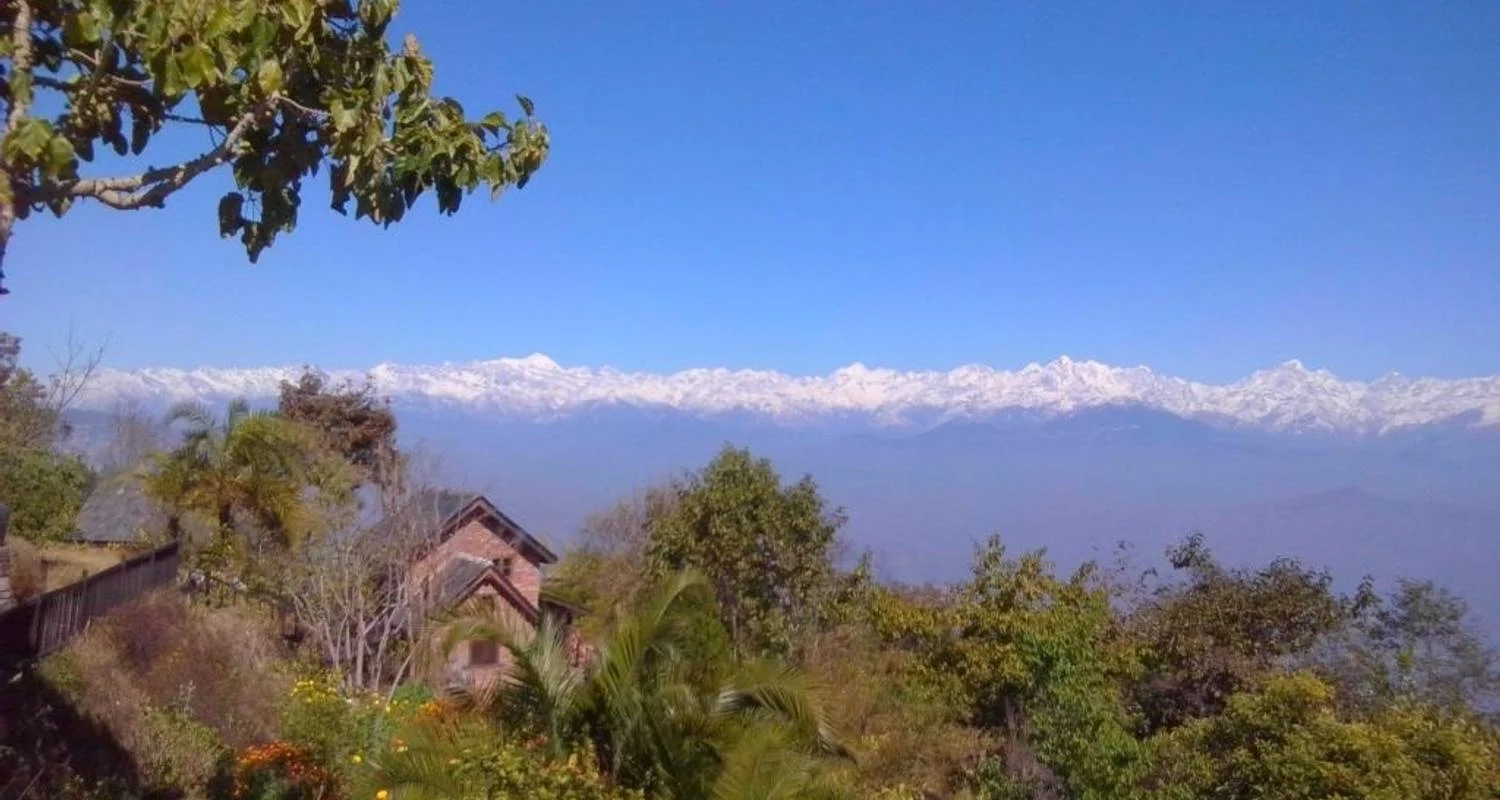
The pilgrimage site of Namo Buddha is about forty kilometers from the Boudhanath Stupa. Located on slightly elevated land, it is a pleasant and out-of-the way place. The landscape below resembles an eight-petaled lotus, and the sky above has the form of a wheel with nine spokes. In this wide panorama, some mountains glisten white like a conch shell or a crystal. On other mountains, the groves of trees seem to gleam with emerald and turquoise jewels. In summertime, southern winds bring coolness; in wintertime, the warm, gentle sun is like the clear and radiant face of youth. The flowers bloom bright and multicolored. In the blue vault of the sky, clouds gently gather and turn all shades of red at daybreak; they are beautiful in wondrous hues that fill space with their canopies and banners. Like a heap of white silk scarves, mists drift slowly from place to place. From the clouds, the drums of thunder resonate; lightning flashes like a slim dancer’s quick movement; and fine showers fall in brightness. In sum, all the harmonious conditions needed to practice samadhi are present at this sacred site. Merely coming here inspires one’s faith; renunciation and weariness with samsara naturally arise. As it is said: “In the supreme place of a solitary mountain retreat, any activity is virtuous.” In brief, Namo Buddha is a place of pilgrimage highly esteemed by people from all over the world, East and West.
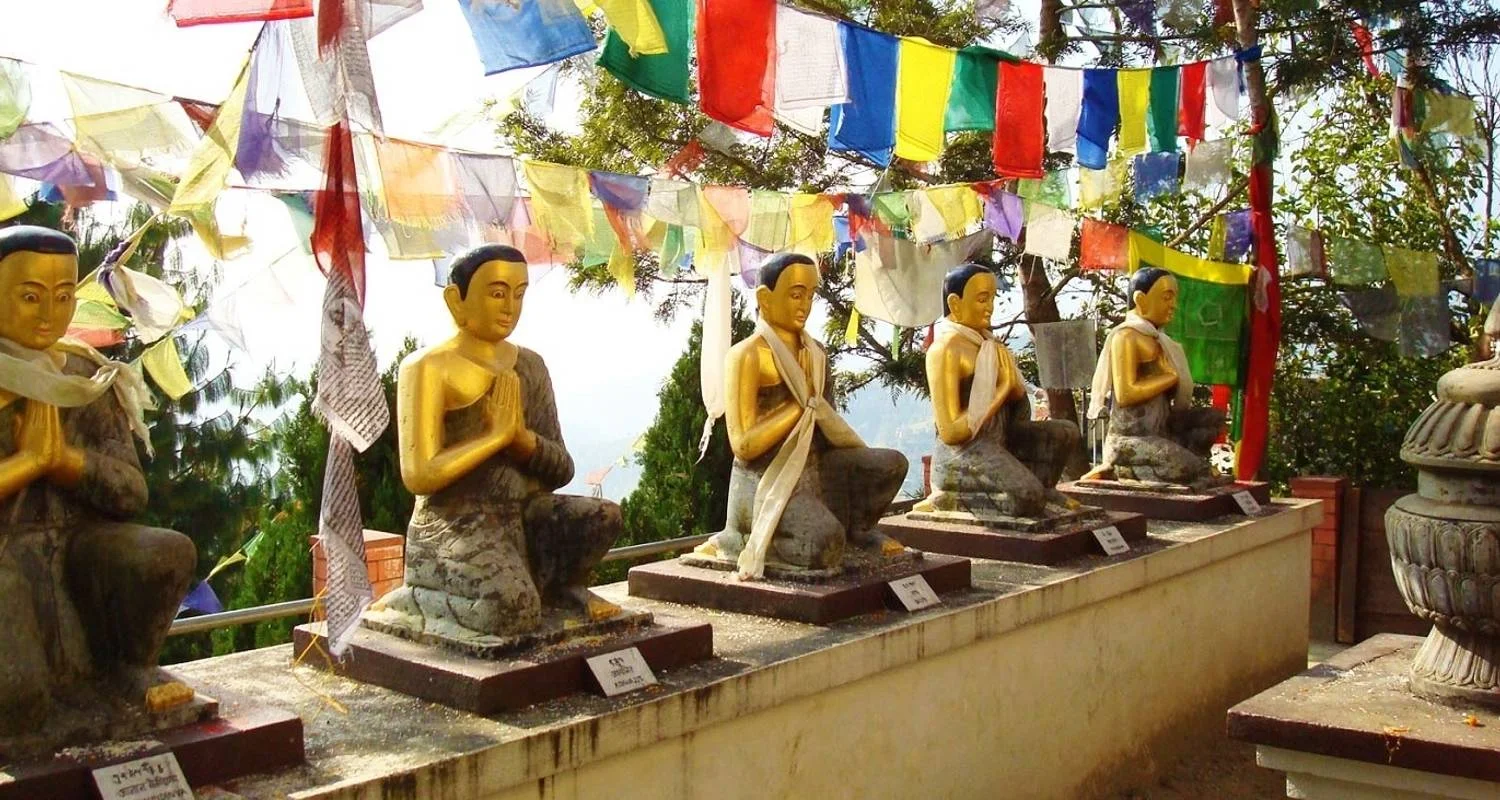
After Great Being offered his body in generosity to the tigress, people found it difficult to travel through the region for fear of all wild animals, so they developed the practice of reciting “Namo Buddhaya” (“I take refuge in the Buddha”) to dispel their anxiety. To this day, the local inhabitants call the area Namo Buddha. As time passed, villages gradually appeared, and cultivated fields extended from the houses. The ancient stupa has become a special place to accumulate merit through activities such as circumambulation and making offerings. People come from all corners of the world to visit the site and make the traditional offerings of butter lamps, a fresh coat of white paint for the stupa, and a pleated cloth that encircles the base of its spire and ripples in the wind. In the past, when there were no roads for cars, only a modest footpath led to the site, and it was very difficult to reach. Nowadays, cars of any size can make the trip without a problem. In olden times, on most nights when the moon was full, a tiger would appear near the stupa; the caretaker and many local people would see it. It is said that later when cars, electricity, and other modern technology arrived, the tiger was no longer seen. Most of the local people in this area are Buddhist, and even to this day some can read Sanskrit.
About eight kilometers below the stupa in the town of Panauti are ruins said to be the palace of the king Great Charioteer. Even today, on the fifteenth day of the fourth Tibetan month, the people of the region have the custom of setting out a gilded bronze statue of the Buddha and gathering to perform ceremonies all day. At another interesting site about three kilometers below the stupa, a small temple is said to contain the remains of the Prince Great Being’s mother. Inside one can see an image of her carved into stone. Further, in the woods below the stupa, a little spring gives what is known as blessed water. About a fifteen-minute walk up from the stupa, one can visit the place where the prince offered his body in great generosity.
Today, two caves are venerated, one near the monastery and another on a hill nearby. Since so many centuries have passed, the exact place is difficult to locate. It is certain, however, that the cave is in this locale. Many great individuals have set foot in Namo Buddha. From India came scholars and meditation masters such as the noble and supreme Vasubandhu and the unequaled Jowo Je, the glorious Atisha. From the Kagyu tradition, the protectors of beings, great lamas have visited such as Situ Chökyi Jungne and his attendant the great scholar Bero Lotsawa Tsewang Kunkhyab as well as the XVIth Gyalwang Karmapa, Rigpe Dorje; the Drugchen Khyabgon Rinpoche; and the Drikung Khyabgon Rinpoche. From the early tradition of the Nyingma, important lamas have traveled here, such as Khyabje Dudjom Rinpoche, Dilgo Khyentse Rinpoche, Drubwang Pema Norbu, Chatral Rinpoche, and Khenchen Jigme Phuntsok. From the glorious Sakyapa tradition, great individuals belonging to the Sakya, Ngorpa, and Tsawa schools have come, as well as major scholars and meditation masters from the Riwo Geden (Gelugpa) tradition, such as Khewang Gendun Chöphel. In sum, numerous important figures from all the traditions have walked this land.
Program zájezdu
Den 1
Kathmandu to Namobuddha
Místo startu
स्वप्न बगैंचा, Kantipath, Kathmandu, Bagmati, Nepal
09:00 - 09:30
Den 2
Namobuddha to kathmandu
After pray or puja at monastery visit stupa and sunrise view back to kathmandu via panauti or dhulikhel.
Koncové místo
स्वप्न बगैंचा, Kantipath, Kathmandu, Bagmati, Nepal
18:00 - 18:30
Podmínky storna
"Amazing Authentic Treks & Expedition (p) Ltd" is an incorporated company under the laws of Nepal Government and accepts your reservation / booking under the following terms and conditions. Before confirm the trip through our organization. Trekkers, Travelers, Mountaineers and adventure enthusiasts should know the following terms and conditions of Amazing Authentic Treks & Expedition (p) Ltd, we encourage you to read them carefully.
Payment Policy : - The trip price is quoted in US$. The payment can be made in “hard currency” at the current published rate against the US$. The payment can also be made in US$ cash or Travelers Cheque. Payment can also be made on Visa Card, Master Cards, PayPal, and in which cash the payment will be calculated and shown in Nepali rupees at the current rate against the US$. There is a surcharge of 7% against credit card payment. A deposit payment of 50% the trip cost is required at the time of booking or no later than 10 days before departure date. Your place on any trip will not be guaranteed or held unless the deposit is paid. Balance of payment or full payment is required 7 day prior to the trip departure.
For the payment by Credit Card, please contact us in mail or follow the procedure listed below. Please keep in mind that we only accept Visa or Master Card and a 7% levy, will be added for card processing fee on top of the package bills.
We Accept
Process of Credit Card Payment :
To pay the trip bill by offline credit card you need to submit the following documents to our company attesting in the mail:
A copy of passport.
A Copy of your Credit Card of either side.
An authorization letter mentioning the Bill Amount inclusive of bank charge.
An authorization letter mentioning the Bill Amount inclusive of bank.
A Passport size Photo.
Incase of failure of on-time payment, as required Amazing Authentic Treks will not be compelled to provide the services as per the bookings and agreement made between us.
In some cases, it may be possible for us to accept your last minute booking before 15 days prior to trekking, tour departure date, full payment is then required. (We do accept your last minute booking with 100% payment in cases of Nepal trip, but last minute booking may not be accepted for Tibet, Bhutan, Sikkim and India trips.
Cancellation Policy : Cancellation by Client: In case of my cancellation, 50% of my deposit paid is refundable only when notice of cancellation is clearly given and recorded by the Agent not less than 7 full days prior to the first departure from Kathmandu. Otherwise no payment is refundable. Transfer to an alternative departure date will be charged US$ 50 per person. Last minute cancellation and absence at departure will not be refunded.
Under no circumstance will there be a refund of any kinds if you don’t show up on the trip departure date or if you leave the trip after the trip has started for any reasons, voluntary or involuntary.
Cancellation by Agent: I accept that Amazing Authentic Treks & Expedition (p) Ltd reserves the right to cancel any trip without prior notice for any reasons deemed appropriate by them. In such a case I will receive full refund in local currency at the current rate against the currency I paid.
The trip’s Alteration or Termination by Reasons beyond control: During the trip in progress, I understood that my itineraries may be affected by reasons beyond control of Amazing Authentic Treks & Expedition (p) Ltd, in such event, I accept that Amazing Authentic Treks & Expedition (p) Ltd has the right to alter my itineraries or cut short my trip for the purpose of my own safety at Amazing Authentic Treks & Expedition (p) Ltd full direction. In such event, I shall not hold Amazing Authentic Treks & Expedition (p) Ltd liable in anyway to refund any money.
Personnel Affirmation and Agent’s Risk Disclosure : I am aware that the mountain trek or expedition, jungle tour, traveling in mountain terrain, on rivers and in forest, whitewater rafting, traveling by aircraft, car, coach, jeep, boat, canoe, raft, automobile, elephant, donkey, bicycle, or any other means of conveyance or any other journey or vacation under the aforementioned arrangements contains following but not limited to risks of accident or illness cased by or resulted in:
Accidents or illness in remote regions with little or no medical facilities and/ or without means of speedy communication and/ or evacuation.
Illness caused by Client’s inherent health condition or natural illness.
Accidents caused by the forces of nature.
Accidents caused by my own ignorance.
Accidents caused by reasons beyond control of Amazing Authentic Treks & Expedition (p) Ltd.
Insurance: - Personal travel insurance is not included in the holiday prices quoted. While every effort is made to ensure the safety of all participants, it is a condition of booking that you take out a personal travel insurance policy. To protect against unforeseen circumstances, it is advisable to take a "Trip cancellations and medical insurance policy" before your arrival into Kathmandu. Such medical policy should cover transportation costs in the event of helicopter or surface evacuation being required. This is especially mandatory for those taking treks in high altitude.
Booking and Payment : - To make a Booking you must send us a completely filled Booking Application Form minimum 30 days prior, with at least 25% of payment of the trekking/hiking/tour cost and 50% of the peak climbing/ expedition cost with additional full payment of climbing permit & other government charges. This will constitute acceptance by you of these Terms and Conditions. You need to submit a copy of each passport to our office via email or fax including two photos of passport size.
All payments are required per person as per trip. Please contact us once regarding direct deposit details. A bank charge to be paid by you at the time of payment from your bank. Below is our Bank account details if you are willing to transfer the payment via your bank account:
Bank Information : -
Option [ A ]
Amazing Authentic Treks & Expedition (P) Ltd.
Swift Code: GLBBNPKA
A / C No : - 0101020005067 ( USD )
Global Bank Limited
Branch office
Kantipath Thamel Kathmandu Nepal
IBAN Number : DE 14512305000018188406
Postal Address : G.P.O. Box No 12477 - Thamel, Katmandu, Nepal.
Amazing Authentic Treks and Expedition (P) Ltd.
Option [ B ]
Mim Das Tamang
Swift Code : - NEBLNPKA
A / C No : - 0002-10-0415823 ( NRS )
Nepal Bank Limited
Kathmandu Banking Office
New Road Kathmandu Nepal
Postal Address : G.P.O. Box No :- 12477 Thamel, Kathmandu, Nepal
Amazing Authentic Treks and Expedition (P) Ltd.
Option [ C ]
Mim Das Tamang
Swift Code :- HIMANPKA
A / C No :- 019-03197400017 ( NRS )
Himalayan Bank Limited
Tri Devi Marg Kathmandu Nepal
Postal Address : G.P.O. Box No :- 12477 Thamel, Kathmandu, Nepal
Amazing Authentic Treks and Expedition (P) Ltd.
Option [ D ]
Amazing Authentic Treks & Expedition (P) Ltd.
Swift Code: MBNLNPKA
A / C No : - 0570010107155 ( NRS )
Mega Bank Ltd.
Main Branch office
Thamel Kathmandu Nepal
Postal Address : G.P.O. Box No 12477 - Thamel, Katmandu, Nepal.
Amazing Authentic Treks and Expedition (P) Ltd.
Contact Person
MR, Mim das Tamang
Company Director
Amazing Authentic Treks & Expedition (P) Ltd.
Thamel Kathmandu Nepal
Tel Phone No : - +977-1- 6913457+977-1- 6913457 , 2291277
Cell No : - +977-9741089433
Skype : nepal-projects.com
Email : [email protected]
Web : www.amazingauthentictreks.com
Podrobnosti o zájezdu
Ubytování
1 night accommodation in Namo Buddha
Jídlo
BB.
Dobré vědět
Měna
NPR
Nepalese Rupee
Nepál
Zákaznické recenze
Operator
Faq Tour
Jak si mohu rezervovat zájezd?
Zájezd si můžete zarezervovat na našem webu výběrem požadovaného termínu a kliknutím na tlačítko „Rezervovat“. Naše obchodní oddělení můžete také kontaktovat telefonicky nebo emailem.
Jaké možnosti platby jsou k dispozici?
Přijímáme kreditní karty, bankovní převody a další oblíbené platební metody.
Mohu změnit nebo zrušit svou rezervaci?
Ano, změny nebo zrušení jsou možné, ale v závislosti na době před začátkem zájezdu mohou být účtovány sankce.
Jaké dokumenty jsou nutné k účasti na zájezdu?
K návštěvě zemí na trase zájezdu budete potřebovat cestovní pas s platným vízem (pokud je vyžadováno).
Fotogalerii