Get an early start today, because you'll be covering a lot of ground to reach the Sahara Desert!
You will start by crossing the Middle Atlas Mountains through the town of Azrou and its majestic cedar forests. Here, you can take a brief detour to the scenic Cèdre Gouraud Forest, where troops of Barbary Macaque monkeys lounge in ancient cedar trees near the road.
You’ll stop for lunch in Midelt, which sits on a cold, high desert plateau. Despite the harsh landscape, Midelt is known as Morocco's "Apple City" for its productive orchards. This is only possible because the Moulouya River (the third-longest river in Morocco) provides year-round water as it runs to the Mediterranean Sea.
Continuing on, you’ll cross a landscape of steep mountain ranges, wide valleys, and narrow canyon passes. You will follow the Ziz Valley, an important branch of the ancient Saharan Trade Route. You will start to see many fortified houses (known as ksars) that were built by merchants to protect the gold, salt, and spices that passed this way.
After crossing through the incredible Ziz Gorge, you will begin to see early signs of Saharan sand dunes. These wind-blown dunes are in constant motion, often leading them to encroach upon farms, roads, and buildings. You can also see an ancient method of water "mining” here, an ingenious way to transfer water from the mountains to farmland, which was employed before modern pumps were invented. Along the way, you'll notice nomadic shepherds and some tents in this area.
Erfoud is a bustling market town known for date fruits and fossils. En route, you will see hillside mines where large fossil rocks are taken from the earth. You can stop at a local artisan collective to learn about the types of fossils found in the area and to see the full process of how the fossil-rich rock is transformed into beautiful products, large and small. You will see the massive dunes of Erg Chebbi in the distance. This extensive sea of sand covers nearly 22 miles, with some dunes rising to over 650 feet high.
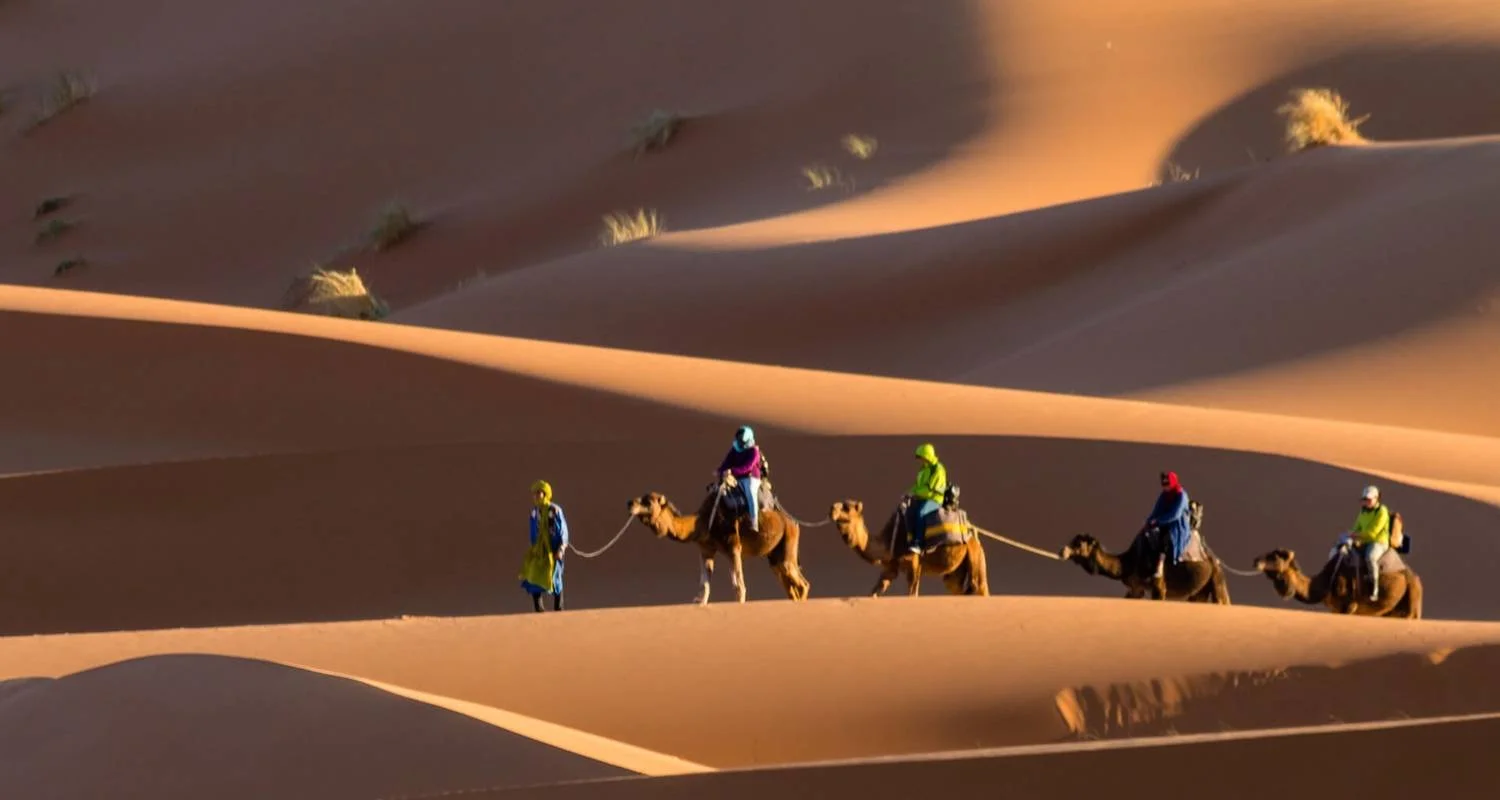
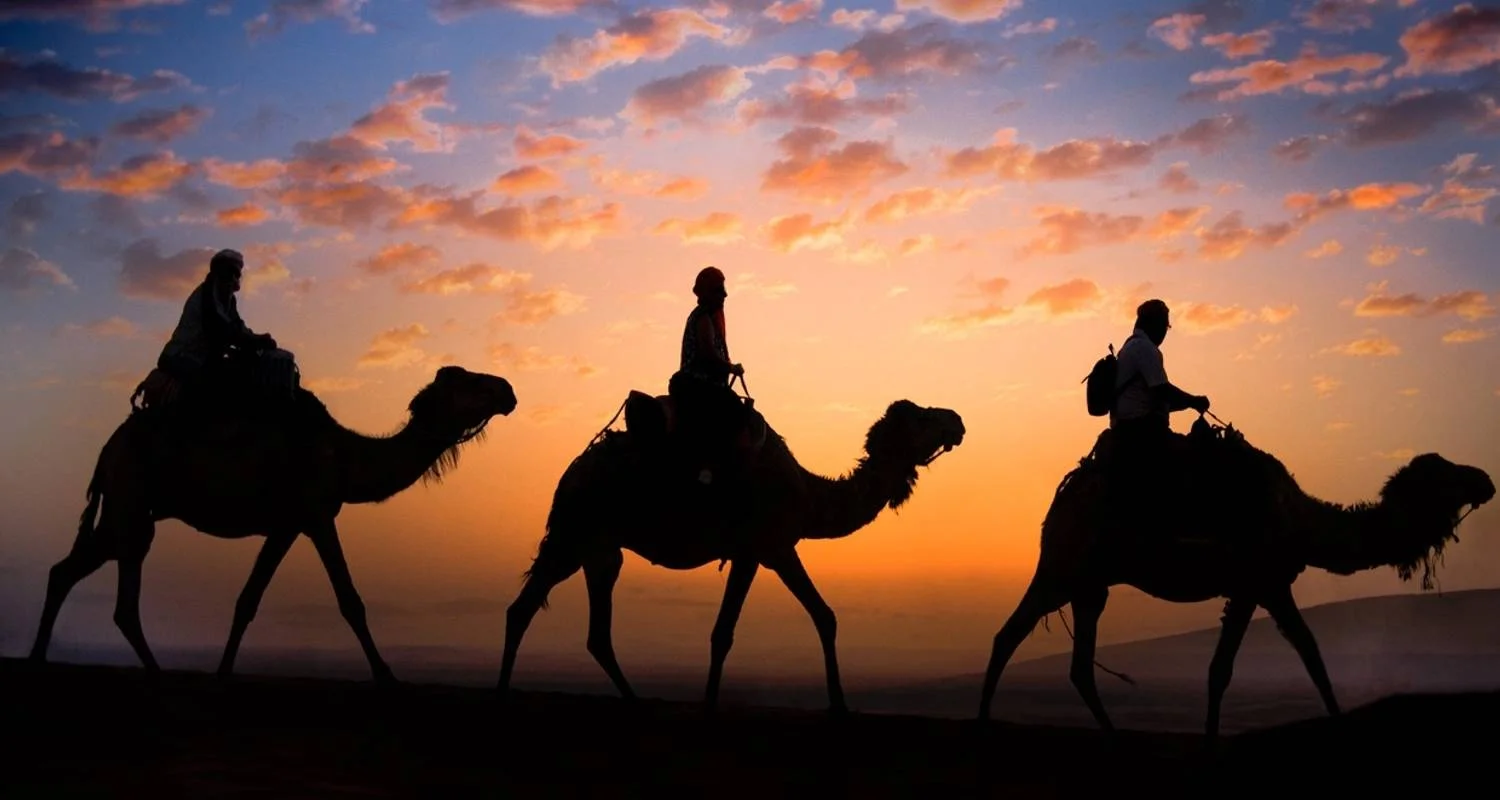
Near Merzouga, you can take a short break as you prepare for the trip to your desert camp. If you ride a camel, you will arrive at camp just before sunset. You can climb up to watch the colorful sunset reflecting on the sand dunes.
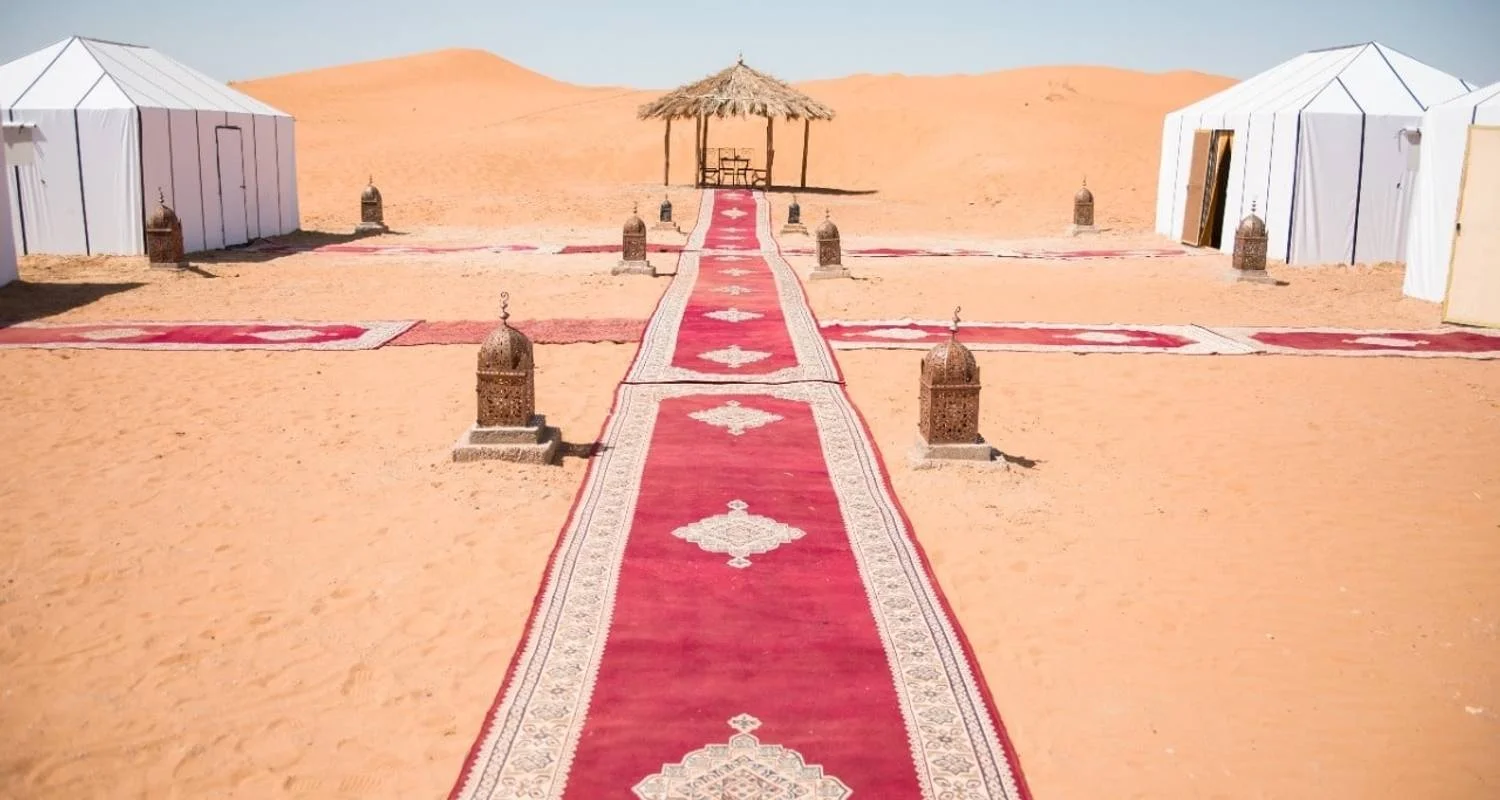
Head back to camp for dinner and a night of traditional Berber music by the fire. There is almost no light pollution in this region, so be sure to look at the starry night sky before you head to bed.