

Morning Pickup — Cairo or Giza Hotel
Your private Egyptologist and driver will meet you at your hotel for your full-day exploration of Islamic Cairo.
Stop 1 — The Citadel of Salah El Din
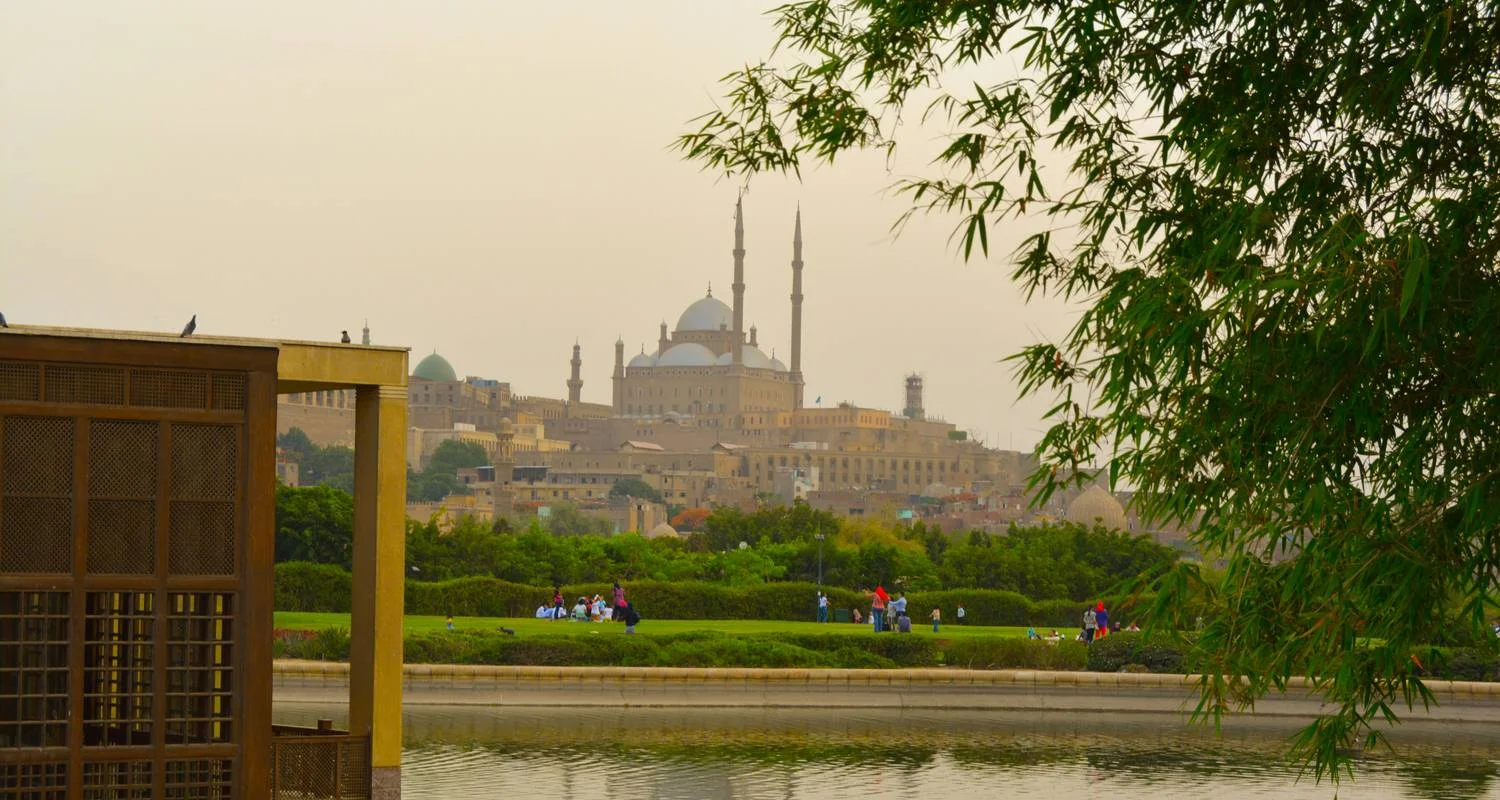
Cairo’s great medieval stronghold, rising atop Mokattam Hill on the city’s eastern edge. A fortified complex overlooking the old urban core, with sweeping views across Cairo’s historic districts, minarets, and rooftops. Built in the 12th century as the heart of the city’s defense system, the Citadel stands today as one of Egypt’s most commanding architectural landmarks — a clear vantage point for understanding the scale, history, and layered structure of Islamic Cairo.
Highlights
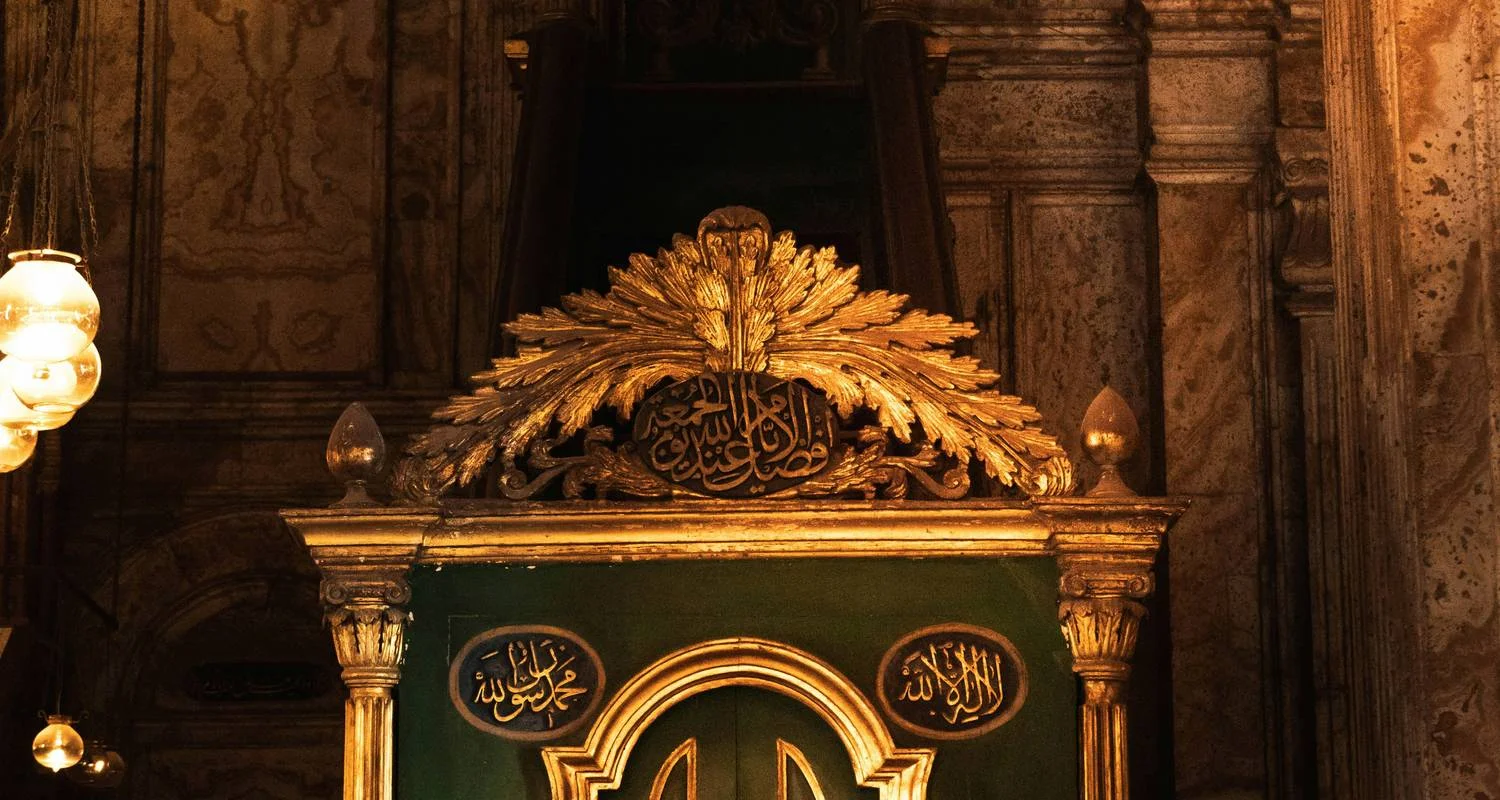
The Mohammed Ali Mosque
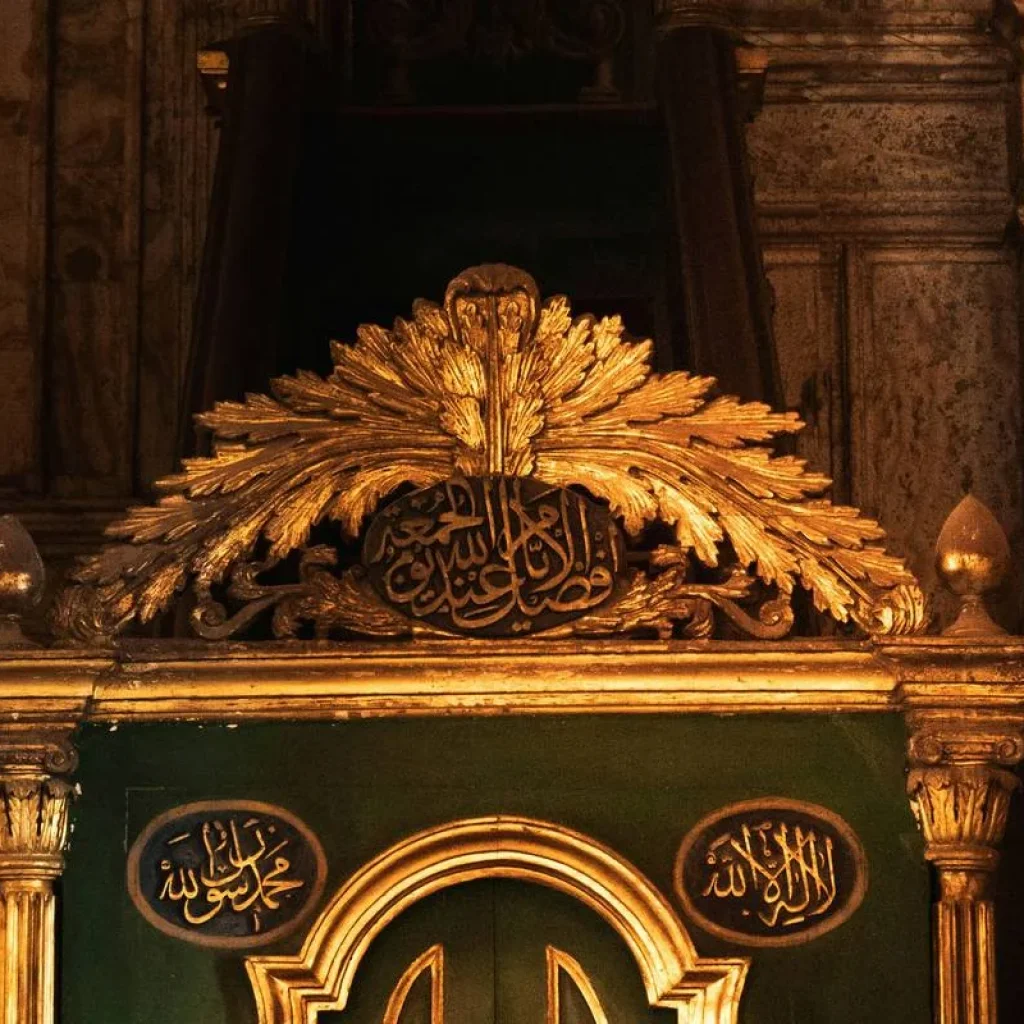
An Ottoman-era landmark within the Citadel — alabaster-clad interiors, high domes, delicate lanterns, and a vast prayer hall framed by panoramic views across the city. A defining silhouette in Cairo’s skyline and a central monument of Islamic architecture.
Mosque of al-Nasir Muhammad
The Mamluk royal mosque of the Citadel, built in 1318 and used for centuries as the sultans’ ceremonial Friday mosque. Distinguished by its green-tiled dome, carved stucco, and elegant minarets, it offers a direct link to Cairo’s medieval architectural core and the functional heart of the fortress.
Stop 2 — El Moez Street
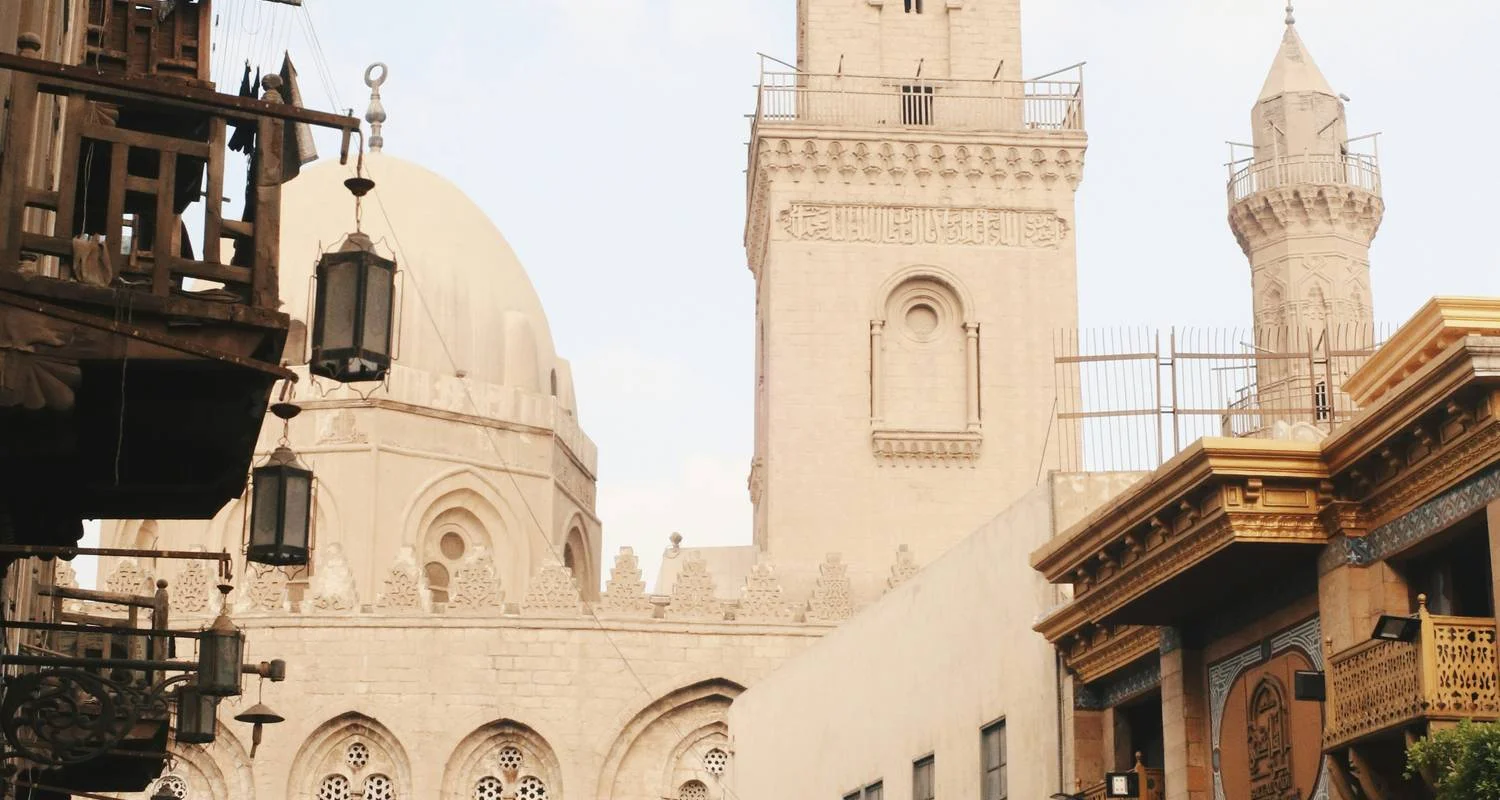
The historic spine of Islamic Cairo, running through the heart of the medieval city, an urban corridor lined with mosques, madrasas, sabils, caravanserais, and restored façades representing the Fatimid, Ayyubid, Mamluk, and Ottoman eras. The street functions as a living architectural museum, with dense layers of craftsmanship, urban history, and cultural continuity visible at every turn.
Highlights
Bab al-Futuh & Bab al-Nasr
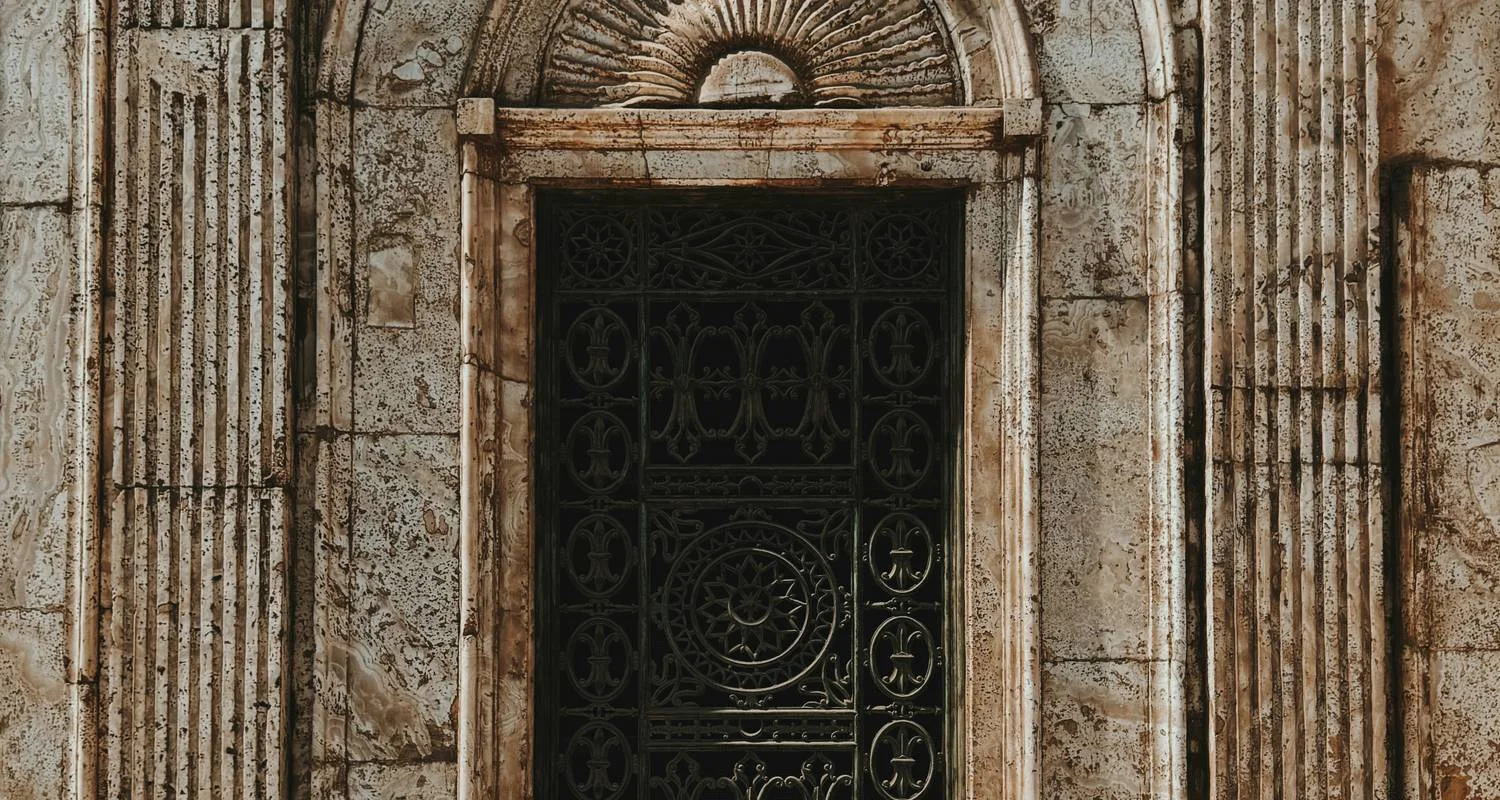
Monumental 11th-century gateways that once defined the northern edge of Fatimid Cairo. Their arched entrances, massive defensive towers, and carved stone programs reveal the scale and engineering of the medieval city at its height. These gates remain among the finest surviving examples of Fatimid military architecture.
Mosque-Madrassa of Sultan Barquq & Qalawun Complex
Two of the Mamluk period’s most refined ensembles, presenting a concentrated display of marble inlay, gilded wooden ceilings, geometric stonework, and carefully proportioned courtyards. Together they illustrate the sophistication of late-medieval Cairo, where religious, educational, and charitable functions were combined within unified architectural compositions.
El Aqmar Mosque
A compact Fatimid-era mosque distinguished by its richly carved stone façade. Its ornamentation — medallions, inscriptions, and interlaced patterns — reflects one of the most expressive and technically accomplished elevations in Islamic Cairo. Despite its modest size, it stands as a key reference point in the development of decorative stone architecture.
El Darb El Asfar Quarter
One of the oldest inhabited sections of historic Cairo, marked by narrow lanes, brass workshops, wooden mashrabiyya screens, and restored townhouses. The area preserves the lived texture of medieval urban life, where craftsmanship, residential architecture, and local commerce remain closely intertwined.
Stop 3 — Khan El Khalili Bazaar
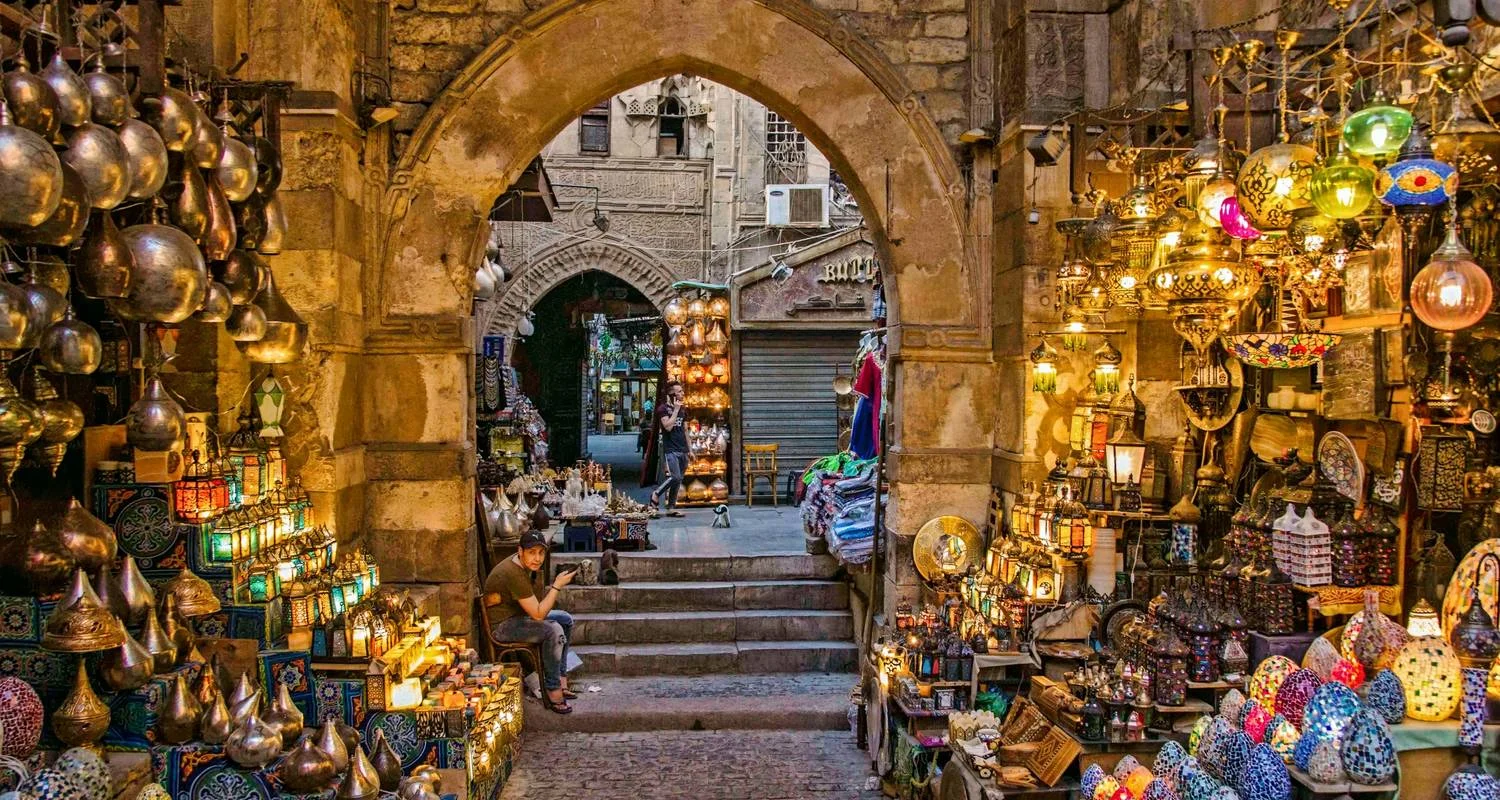
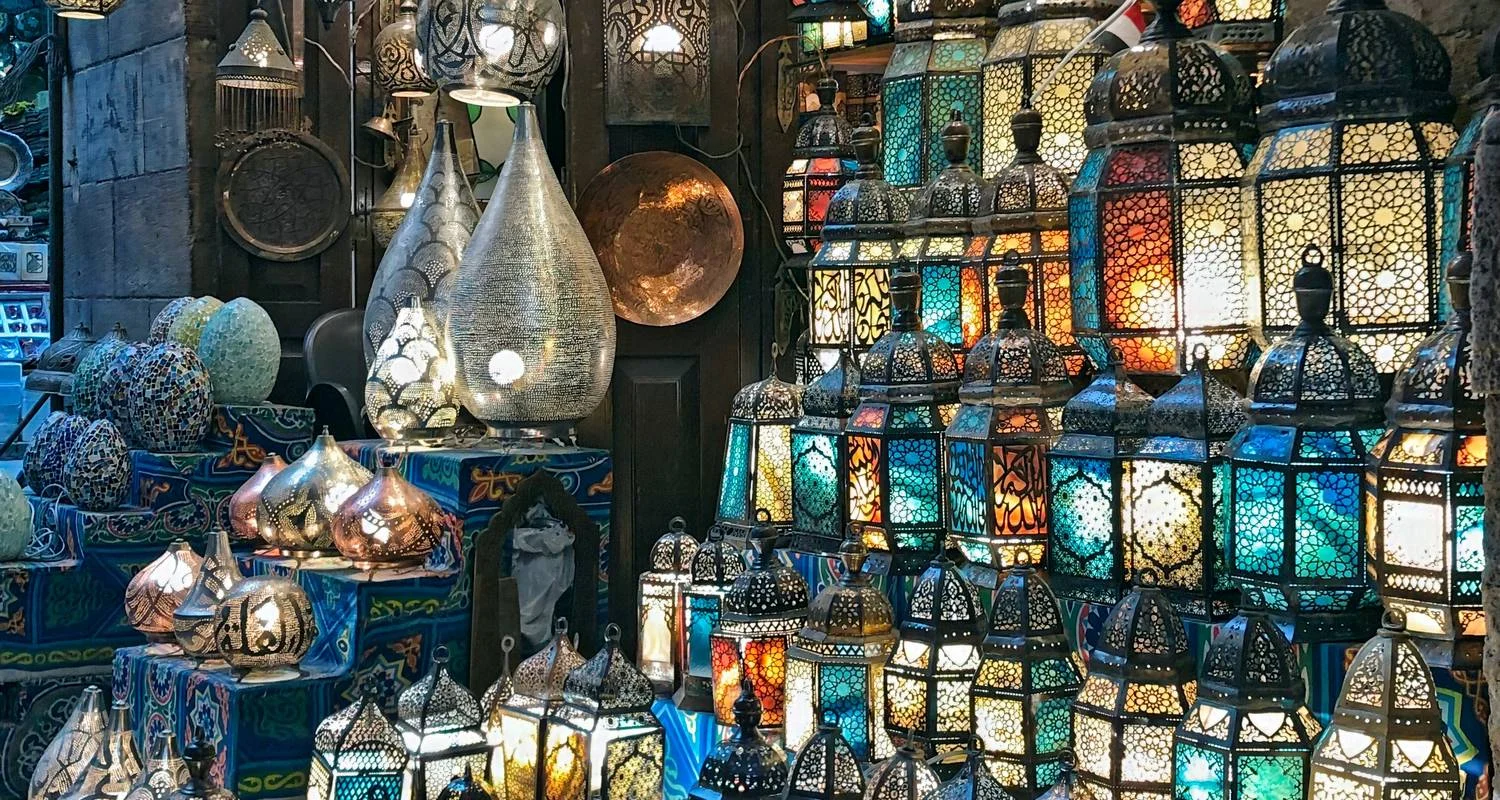
Cairo’s oldest and most atmospheric market — a labyrinth of narrow alleys lined with handmade crafts, jewelry, brass lamps, textiles, and fragrant spices. Historic cafés offering mint tea and Turkish coffee, long frequented by poets, merchants, and travelers. A setting dense with movement, color, and centuries of lived tradition.
Return Transfer — Cairo or Giza Hotel
After your visit, relax in your private air-conditioned vehicle as your driver takes you back to your hotel, carrying the impressions of Cairo’s spiritual and architectural heart.