Je aankomst in Kathmandu wordt gemarkeerd door de landing op het Tribhuvan International Airport (TIA). Een vertegenwoordiger van het bedrijf Himalayan Adventure Treks & Tours ontvangt je en brengt je naar je hotel. s Avonds kun je de deelnemers en de trekkers ontmoeten. Overnachting in een hotel in Kathmandu.
-
26.12-12.01.26 guaranteed

-
27.12-13.01.26 guaranteed
-
28.12-14.01.26 guaranteed
-
29.12-15.01.26 guaranteed
-
30.12-16.01.26 guaranteed
-
31.12-17.01.26 guaranteed
-
01.01-18.01.26 guaranteed
-
02.01-19.01.26 guaranteed
-
03.01-20.01.26 guaranteed
-
04.01-21.01.26 guaranteed
-
05.01-22.01.26 guaranteed
-
06.01-23.01.26 guaranteed
-
07.01-24.01.26 guaranteed
-
08.01-25.01.26 guaranteed
-
09.01-26.01.26 guaranteed
-
10.01-27.01.26 guaranteed
-
11.01-28.01.26 guaranteed
-
12.01-29.01.26 guaranteed
-
13.01-30.01.26 guaranteed
-
14.01-31.01.26 guaranteed
-
15.01-01.02.26 guaranteed
-
16.01-02.02.26 guaranteed
-
17.01-03.02.26 guaranteed
-
18.01-04.02.26 guaranteed
-
19.01-05.02.26 guaranteed
-
20.01-06.02.26 guaranteed
-
21.01-07.02.26 guaranteed
-
22.01-08.02.26 guaranteed
-
23.01-09.02.26 guaranteed
-
24.01-10.02.26 guaranteed
-
25.01-11.02.26 guaranteed
-
26.01-12.02.26 guaranteed
-
27.01-13.02.26 guaranteed
-
28.01-14.02.26 guaranteed
-
29.01-15.02.26 guaranteed
-
30.01-16.02.26 guaranteed
-
31.01-17.02.26 guaranteed
-
01.02-18.02.26 guaranteed
-
02.02-19.02.26 guaranteed
-
03.02-20.02.26 guaranteed
-
04.02-21.02.26 guaranteed
-
05.02-22.02.26 guaranteed
-
06.02-23.02.26 guaranteed
-
07.02-24.02.26 guaranteed
-
08.02-25.02.26 guaranteed
-
09.02-26.02.26 guaranteed
-
10.02-27.02.26 guaranteed
-
11.02-28.02.26 guaranteed
-
12.02-01.03.26 guaranteed
-
13.02-02.03.26 guaranteed
-
14.02-03.03.26 guaranteed
-
15.02-04.03.26 guaranteed
-
16.02-05.03.26 guaranteed
-
17.02-06.03.26 guaranteed
-
18.02-07.03.26 guaranteed
-
19.02-08.03.26 guaranteed
-
20.02-09.03.26 guaranteed
-
21.02-10.03.26 guaranteed
-
22.02-11.03.26 guaranteed
-
23.02-12.03.26 guaranteed
-
24.02-13.03.26 guaranteed
-
25.02-14.03.26 guaranteed
-
26.02-15.03.26 guaranteed
-
27.02-16.03.26 guaranteed
-
28.02-17.03.26 guaranteed
-
01.03-18.03.26 guaranteed
-
02.03-19.03.26 guaranteed
-
03.03-20.03.26 guaranteed
-
04.03-21.03.26 guaranteed
-
05.03-22.03.26 guaranteed
-
06.03-23.03.26 guaranteed
-
07.03-24.03.26 guaranteed
-
08.03-25.03.26 guaranteed
-
09.03-26.03.26 guaranteed
-
10.03-27.03.26 guaranteed
-
11.03-28.03.26 guaranteed
-
12.03-29.03.26 guaranteed
-
13.03-30.03.26 guaranteed
-
14.03-31.03.26 guaranteed
-
15.03-01.04.26 guaranteed
-
16.03-02.04.26 guaranteed
-
17.03-03.04.26 guaranteed
-
18.03-04.04.26 guaranteed
-
19.03-05.04.26 guaranteed
-
20.03-06.04.26 guaranteed
-
21.03-07.04.26 guaranteed
-
22.03-08.04.26 guaranteed
-
23.03-09.04.26 guaranteed
-
24.03-10.04.26 guaranteed
-
25.03-11.04.26 guaranteed
-
26.03-12.04.26 guaranteed
-
27.03-13.04.26 guaranteed
-
28.03-14.04.26 guaranteed
-
29.03-15.04.26 guaranteed
-
30.03-16.04.26 guaranteed
-
31.03-17.04.26 guaranteed
-
01.04-18.04.26 guaranteed
-
02.04-19.04.26 guaranteed
-
03.04-20.04.26 guaranteed
-
04.04-21.04.26 guaranteed
-
05.04-22.04.26 guaranteed
-
06.04-23.04.26 guaranteed
-
07.04-24.04.26 guaranteed
-
08.04-25.04.26 guaranteed
-
09.04-26.04.26 guaranteed
-
10.04-27.04.26 guaranteed
-
11.04-28.04.26 guaranteed
-
12.04-29.04.26 guaranteed
-
13.04-30.04.26 guaranteed
-
14.04-01.05.26 guaranteed
-
15.04-02.05.26 guaranteed
-
16.04-03.05.26 guaranteed
-
17.04-04.05.26 guaranteed
-
18.04-05.05.26 guaranteed
-
19.04-06.05.26 guaranteed
-
20.04-07.05.26 guaranteed
-
21.04-08.05.26 guaranteed
-
22.04-09.05.26 guaranteed
-
23.04-10.05.26 guaranteed
-
24.04-11.05.26 guaranteed
-
25.04-12.05.26 guaranteed
-
26.04-13.05.26 guaranteed
-
27.04-14.05.26 guaranteed
-
28.04-15.05.26 guaranteed
-
29.04-16.05.26 guaranteed
-
30.04-17.05.26 guaranteed
-
01.05-18.05.26 guaranteed
-
02.05-19.05.26 guaranteed
-
03.05-20.05.26 guaranteed
-
04.05-21.05.26 guaranteed
-
05.05-22.05.26 guaranteed
-
06.05-23.05.26 guaranteed
-
07.05-24.05.26 guaranteed
-
08.05-25.05.26 guaranteed
-
09.05-26.05.26 guaranteed
-
10.05-27.05.26 guaranteed
-
11.05-28.05.26 guaranteed
-
12.05-29.05.26 guaranteed
-
13.05-30.05.26 guaranteed
-
14.05-31.05.26 guaranteed
-
15.05-01.06.26 guaranteed
-
16.05-02.06.26 guaranteed
-
17.05-03.06.26 guaranteed
-
18.05-04.06.26 guaranteed
-
19.05-05.06.26 guaranteed
-
20.05-06.06.26 guaranteed
-
21.05-07.06.26 guaranteed
-
22.05-08.06.26 guaranteed
-
23.05-09.06.26 guaranteed
-
24.05-10.06.26 guaranteed
-
25.05-11.06.26 guaranteed
-
26.05-12.06.26 guaranteed
-
27.05-13.06.26 guaranteed
-
28.05-14.06.26 guaranteed
-
29.05-15.06.26 guaranteed
-
30.05-16.06.26 guaranteed
-
31.05-17.06.26 guaranteed
-
01.06-18.06.26 guaranteed
-
02.06-19.06.26 guaranteed
-
03.06-20.06.26 guaranteed
-
04.06-21.06.26 guaranteed
-
05.06-22.06.26 guaranteed
-
06.06-23.06.26 guaranteed
-
07.06-24.06.26 guaranteed
-
08.06-25.06.26 guaranteed
-
09.06-26.06.26 guaranteed
-
10.06-27.06.26 guaranteed
-
11.06-28.06.26 guaranteed
-
12.06-29.06.26 guaranteed
-
13.06-30.06.26 guaranteed
-
14.06-01.07.26 guaranteed
-
15.06-02.07.26 guaranteed
-
16.06-03.07.26 guaranteed
-
17.06-04.07.26 guaranteed
-
18.06-05.07.26 guaranteed
-
19.06-06.07.26 guaranteed
-
20.06-07.07.26 guaranteed
-
21.06-08.07.26 guaranteed
-
22.06-09.07.26 guaranteed
-
23.06-10.07.26 guaranteed
-
24.06-11.07.26 guaranteed
-
25.06-12.07.26 guaranteed
-
26.06-13.07.26 guaranteed
-
27.06-14.07.26 guaranteed
-
28.06-15.07.26 guaranteed
-
29.06-16.07.26 guaranteed
-
30.06-17.07.26 guaranteed
-
01.07-18.07.26 guaranteed
-
02.07-19.07.26 guaranteed
-
03.07-20.07.26 guaranteed
-
04.07-21.07.26 guaranteed
-
05.07-22.07.26 guaranteed
-
06.07-23.07.26 guaranteed
-
07.07-24.07.26 guaranteed
-
08.07-25.07.26 guaranteed
-
09.07-26.07.26 guaranteed
-
10.07-27.07.26 guaranteed
-
11.07-28.07.26 guaranteed
-
12.07-29.07.26 guaranteed
-
13.07-30.07.26 guaranteed
-
14.07-31.07.26 guaranteed
-
15.07-01.08.26 guaranteed
-
16.07-02.08.26 guaranteed
-
17.07-03.08.26 guaranteed
-
18.07-04.08.26 guaranteed
-
19.07-05.08.26 guaranteed
-
20.07-06.08.26 guaranteed
-
21.07-07.08.26 guaranteed
-
22.07-08.08.26 guaranteed
-
23.07-09.08.26 guaranteed
-
24.07-10.08.26 guaranteed
-
25.07-11.08.26 guaranteed
-
26.07-12.08.26 guaranteed
-
27.07-13.08.26 guaranteed
-
28.07-14.08.26 guaranteed
-
29.07-15.08.26 guaranteed
-
30.07-16.08.26 guaranteed
-
31.07-17.08.26 guaranteed
-
01.08-18.08.26 guaranteed
-
02.08-19.08.26 guaranteed
-
03.08-20.08.26 guaranteed
-
04.08-21.08.26 guaranteed
-
05.08-22.08.26 guaranteed
-
06.08-23.08.26 guaranteed
-
07.08-24.08.26 guaranteed
-
08.08-25.08.26 guaranteed
-
09.08-26.08.26 guaranteed
-
10.08-27.08.26 guaranteed
-
11.08-28.08.26 guaranteed
-
12.08-29.08.26 guaranteed
-
13.08-30.08.26 guaranteed
-
14.08-31.08.26 guaranteed
-
15.08-01.09.26 guaranteed
-
16.08-02.09.26 guaranteed
-
17.08-03.09.26 guaranteed
-
18.08-04.09.26 guaranteed
-
19.08-05.09.26 guaranteed
-
20.08-06.09.26 guaranteed
-
21.08-07.09.26 guaranteed
-
22.08-08.09.26 guaranteed
-
23.08-09.09.26 guaranteed
-
24.08-10.09.26 guaranteed
-
25.08-11.09.26 guaranteed
-
26.08-12.09.26 guaranteed
-
27.08-13.09.26 guaranteed
-
28.08-14.09.26 guaranteed
-
29.08-15.09.26 guaranteed
-
30.08-16.09.26 guaranteed
-
31.08-17.09.26 guaranteed
-
01.09-18.09.26 guaranteed
-
02.09-19.09.26 guaranteed
-
03.09-20.09.26 guaranteed
-
04.09-21.09.26 guaranteed
-
05.09-22.09.26 guaranteed
-
06.09-23.09.26 guaranteed
-
07.09-24.09.26 guaranteed
-
08.09-25.09.26 guaranteed
-
09.09-26.09.26 guaranteed
-
10.09-27.09.26 guaranteed
-
11.09-28.09.26 guaranteed
-
12.09-29.09.26 guaranteed
-
13.09-30.09.26 guaranteed
-
14.09-01.10.26 guaranteed
-
15.09-02.10.26 guaranteed
-
16.09-03.10.26 guaranteed
-
17.09-04.10.26 guaranteed
-
18.09-05.10.26 guaranteed
-
19.09-06.10.26 guaranteed
-
20.09-07.10.26 guaranteed
-
21.09-08.10.26 guaranteed
-
22.09-09.10.26 guaranteed
-
23.09-10.10.26 guaranteed
-
24.09-11.10.26 guaranteed
-
25.09-12.10.26 guaranteed
-
26.09-13.10.26 guaranteed
-
27.09-14.10.26 guaranteed
-
28.09-15.10.26 guaranteed
-
29.09-16.10.26 guaranteed
-
30.09-17.10.26 guaranteed
-
01.10-18.10.26 guaranteed
-
02.10-19.10.26 guaranteed
-
03.10-20.10.26 guaranteed
-
04.10-21.10.26 guaranteed
-
05.10-22.10.26 guaranteed
-
06.10-23.10.26 guaranteed
-
07.10-24.10.26 guaranteed
-
08.10-25.10.26 guaranteed
-
09.10-26.10.26 guaranteed
-
10.10-27.10.26 guaranteed
-
11.10-28.10.26 guaranteed
-
12.10-29.10.26 guaranteed
-
13.10-30.10.26 guaranteed
-
14.10-31.10.26 guaranteed
-
15.10-01.11.26 guaranteed
-
16.10-02.11.26 guaranteed
-
17.10-03.11.26 guaranteed
-
18.10-04.11.26 guaranteed
-
19.10-05.11.26 guaranteed
-
20.10-06.11.26 guaranteed
-
21.10-07.11.26 guaranteed
-
22.10-08.11.26 guaranteed
-
23.10-09.11.26 guaranteed
-
24.10-10.11.26 guaranteed
-
25.10-11.11.26 guaranteed
-
26.10-12.11.26 guaranteed
-
27.10-13.11.26 guaranteed
-
28.10-14.11.26 guaranteed
-
29.10-15.11.26 guaranteed
-
30.10-16.11.26 guaranteed
-
31.10-17.11.26 guaranteed
-
01.11-18.11.26 guaranteed
-
02.11-19.11.26 guaranteed
-
03.11-20.11.26 guaranteed
-
04.11-21.11.26 guaranteed
-
05.11-22.11.26 guaranteed
-
06.11-23.11.26 guaranteed
-
07.11-24.11.26 guaranteed
-
08.11-25.11.26 guaranteed
-
09.11-26.11.26 guaranteed
-
10.11-27.11.26 guaranteed
-
11.11-28.11.26 guaranteed
-
12.11-29.11.26 guaranteed
-
13.11-30.11.26 guaranteed
-
14.11-01.12.26 guaranteed
-
15.11-02.12.26 guaranteed
-
16.11-03.12.26 guaranteed
-
17.11-04.12.26 guaranteed
-
18.11-05.12.26 guaranteed
-
19.11-06.12.26 guaranteed
-
20.11-07.12.26 guaranteed
-
21.11-08.12.26 guaranteed
-
22.11-09.12.26 guaranteed
-
23.11-10.12.26 guaranteed
-
24.11-11.12.26 guaranteed
-
25.11-12.12.26 guaranteed
-
26.11-13.12.26 guaranteed
-
27.11-14.12.26 guaranteed
-
28.11-15.12.26 guaranteed
-
29.11-16.12.26 guaranteed
-
30.11-17.12.26 guaranteed
-
01.12-18.12.26 guaranteed
-
02.12-19.12.26 guaranteed
-
03.12-20.12.26 guaranteed
-
04.12-21.12.26 guaranteed
-
05.12-22.12.26 guaranteed
-
06.12-23.12.26 guaranteed
-
07.12-24.12.26 guaranteed
-
08.12-25.12.26 guaranteed
-
09.12-26.12.26 guaranteed
-
10.12-27.12.26 guaranteed
-
11.12-28.12.26 guaranteed
-
12.12-29.12.26 guaranteed
-
13.12-30.12.26 guaranteed
-
14.12-31.12.26 guaranteed
-
15.12-01.01.27 guaranteed
-
16.12-02.01.27 guaranteed
-
17.12-03.01.27 guaranteed
-
18.12-04.01.27 guaranteed
-
19.12-05.01.27 guaranteed
-
20.12-06.01.27 guaranteed
-
21.12-07.01.27 guaranteed
-
22.12-08.01.27 guaranteed
-
23.12-09.01.27 guaranteed
-
24.12-10.01.27 guaranteed
-
25.12-11.01.27 guaranteed
-
26.12-12.01.27 guaranteed
-
27.12-13.01.27 guaranteed
-
28.12-14.01.27 guaranteed
-
29.12-15.01.27 guaranteed
-
30.12-16.01.27 guaranteed
-
31.12-17.01.27 guaranteed
-
01.01-18.01.27 guaranteed
-
02.01-19.01.27 guaranteed
-
03.01-20.01.27 guaranteed
-
04.01-21.01.27 guaranteed
-
05.01-22.01.27 guaranteed
-
06.01-23.01.27 guaranteed
-
07.01-24.01.27 guaranteed
-
08.01-25.01.27 guaranteed
-
09.01-26.01.27 guaranteed
-
10.01-27.01.27 guaranteed
-
11.01-28.01.27 guaranteed
-
12.01-29.01.27 guaranteed
-
13.01-30.01.27 guaranteed
-
14.01-31.01.27 guaranteed
-
15.01-01.02.27 guaranteed
-
16.01-02.02.27 guaranteed
-
17.01-03.02.27 guaranteed
-
18.01-04.02.27 guaranteed
-
19.01-05.02.27 guaranteed
-
20.01-06.02.27 guaranteed
-
21.01-07.02.27 guaranteed
-
22.01-08.02.27 guaranteed
-
23.01-09.02.27 guaranteed
-
24.01-10.02.27 guaranteed
-
25.01-11.02.27 guaranteed
-
26.01-12.02.27 guaranteed
-
27.01-13.02.27 guaranteed
-
28.01-14.02.27 guaranteed
-
29.01-15.02.27 guaranteed
-
30.01-16.02.27 guaranteed
-
31.01-17.02.27 guaranteed
-
01.02-18.02.27 guaranteed
-
02.02-19.02.27 guaranteed
-
03.02-20.02.27 guaranteed
-
04.02-21.02.27 guaranteed
-
05.02-22.02.27 guaranteed
-
06.02-23.02.27 guaranteed
-
07.02-24.02.27 guaranteed
-
08.02-25.02.27 guaranteed
-
09.02-26.02.27 guaranteed
-
10.02-27.02.27 guaranteed
-
11.02-28.02.27 guaranteed
-
12.02-01.03.27 guaranteed
-
13.02-02.03.27 guaranteed
-
14.02-03.03.27 guaranteed
-
15.02-04.03.27 guaranteed
-
16.02-05.03.27 guaranteed
-
17.02-06.03.27 guaranteed
-
18.02-07.03.27 guaranteed
-
19.02-08.03.27 guaranteed
-
20.02-09.03.27 guaranteed
-
21.02-10.03.27 guaranteed
-
22.02-11.03.27 guaranteed
-
23.02-12.03.27 guaranteed
-
24.02-13.03.27 guaranteed
-
25.02-14.03.27 guaranteed
-
26.02-15.03.27 guaranteed
-
27.02-16.03.27 guaranteed
-
28.02-17.03.27 guaranteed
-
01.03-18.03.27 guaranteed
-
02.03-19.03.27 guaranteed
-
03.03-20.03.27 guaranteed
-
04.03-21.03.27 guaranteed
-
05.03-22.03.27 guaranteed
-
06.03-23.03.27 guaranteed
-
07.03-24.03.27 guaranteed
-
08.03-25.03.27 guaranteed
-
09.03-26.03.27 guaranteed
-
10.03-27.03.27 guaranteed
-
11.03-28.03.27 guaranteed
-
12.03-29.03.27 guaranteed
-
13.03-30.03.27 guaranteed
-
14.03-31.03.27 guaranteed
-
15.03-01.04.27 guaranteed
-
16.03-02.04.27 guaranteed
-
17.03-03.04.27 guaranteed
-
18.03-04.04.27 guaranteed
-
19.03-05.04.27 guaranteed
-
20.03-06.04.27 guaranteed
-
21.03-07.04.27 guaranteed
-
22.03-08.04.27 guaranteed
-
23.03-09.04.27 guaranteed
-
24.03-10.04.27 guaranteed
-
25.03-11.04.27 guaranteed
-
26.03-12.04.27 guaranteed
-
27.03-13.04.27 guaranteed
-
28.03-14.04.27 guaranteed
-
29.03-15.04.27 guaranteed
-
30.03-16.04.27 guaranteed
-
31.03-17.04.27 guaranteed
-
01.04-18.04.27 guaranteed
-
02.04-19.04.27 guaranteed
-
03.04-20.04.27 guaranteed
-
04.04-21.04.27 guaranteed
-
05.04-22.04.27 guaranteed
-
06.04-23.04.27 guaranteed
-
07.04-24.04.27 guaranteed
-
08.04-25.04.27 guaranteed
-
09.04-26.04.27 guaranteed
-
10.04-27.04.27 guaranteed
-
11.04-28.04.27 guaranteed
-
12.04-29.04.27 guaranteed
-
13.04-30.04.27 guaranteed
-
14.04-01.05.27 guaranteed
-
15.04-02.05.27 guaranteed
-
16.04-03.05.27 guaranteed
-
17.04-04.05.27 guaranteed
-
18.04-05.05.27 guaranteed
-
19.04-06.05.27 guaranteed
-
20.04-07.05.27 guaranteed
-
21.04-08.05.27 guaranteed
-
22.04-09.05.27 guaranteed
-
23.04-10.05.27 guaranteed
-
24.04-11.05.27 guaranteed
-
25.04-12.05.27 guaranteed
-
26.04-13.05.27 guaranteed
-
27.04-14.05.27 guaranteed
-
28.04-15.05.27 guaranteed
-
29.04-16.05.27 guaranteed
-
30.04-17.05.27 guaranteed
-
01.05-18.05.27 guaranteed
-
02.05-19.05.27 guaranteed
-
03.05-20.05.27 guaranteed
-
04.05-21.05.27 guaranteed
-
05.05-22.05.27 guaranteed
-
06.05-23.05.27 guaranteed
-
07.05-24.05.27 guaranteed
-
08.05-25.05.27 guaranteed
-
09.05-26.05.27 guaranteed
-
10.05-27.05.27 guaranteed
-
11.05-28.05.27 guaranteed
-
12.05-29.05.27 guaranteed
-
13.05-30.05.27 guaranteed
-
14.05-31.05.27 guaranteed
-
15.05-01.06.27 guaranteed
-
16.05-02.06.27 guaranteed
-
17.05-03.06.27 guaranteed
-
18.05-04.06.27 guaranteed
-
19.05-05.06.27 guaranteed
-
20.05-06.06.27 guaranteed
-
21.05-07.06.27 guaranteed
-
22.05-08.06.27 guaranteed
-
23.05-09.06.27 guaranteed
-
24.05-10.06.27 guaranteed
-
25.05-11.06.27 guaranteed
-
26.05-12.06.27 guaranteed
-
27.05-13.06.27 guaranteed
-
28.05-14.06.27 guaranteed
-
29.05-15.06.27 guaranteed
-
30.05-16.06.27 guaranteed
-
31.05-17.06.27 guaranteed
-
01.06-18.06.27 guaranteed
-
02.06-19.06.27 guaranteed
-
03.06-20.06.27 guaranteed
-
04.06-21.06.27 guaranteed
-
05.06-22.06.27 guaranteed
-
06.06-23.06.27 guaranteed
-
07.06-24.06.27 guaranteed
-
08.06-25.06.27 guaranteed
-
09.06-26.06.27 guaranteed
-
10.06-27.06.27 guaranteed
-
11.06-28.06.27 guaranteed
-
12.06-29.06.27 guaranteed
-
13.06-30.06.27 guaranteed
-
14.06-01.07.27 guaranteed
-
15.06-02.07.27 guaranteed
-
16.06-03.07.27 guaranteed
-
17.06-04.07.27 guaranteed
-
18.06-05.07.27 guaranteed
-
19.06-06.07.27 guaranteed
-
20.06-07.07.27 guaranteed
-
21.06-08.07.27 guaranteed
-
22.06-09.07.27 guaranteed
-
23.06-10.07.27 guaranteed
-
24.06-11.07.27 guaranteed
-
25.06-12.07.27 guaranteed
-
26.06-13.07.27 guaranteed
-
27.06-14.07.27 guaranteed
-
28.06-15.07.27 guaranteed
-
29.06-16.07.27 guaranteed
-
30.06-17.07.27 guaranteed
-
01.07-18.07.27 guaranteed
-
02.07-19.07.27 guaranteed
-
03.07-20.07.27 guaranteed
-
04.07-21.07.27 guaranteed
-
05.07-22.07.27 guaranteed
-
06.07-23.07.27 guaranteed
-
07.07-24.07.27 guaranteed
-
08.07-25.07.27 guaranteed
-
09.07-26.07.27 guaranteed
-
10.07-27.07.27 guaranteed
-
11.07-28.07.27 guaranteed
-
12.07-29.07.27 guaranteed
-
13.07-30.07.27 guaranteed
-
14.07-31.07.27 guaranteed
-
15.07-01.08.27 guaranteed
-
16.07-02.08.27 guaranteed
-
17.07-03.08.27 guaranteed
-
18.07-04.08.27 guaranteed
-
19.07-05.08.27 guaranteed
-
20.07-06.08.27 guaranteed
-
21.07-07.08.27 guaranteed
-
22.07-08.08.27 guaranteed
-
23.07-09.08.27 guaranteed
-
24.07-10.08.27 guaranteed
-
25.07-11.08.27 guaranteed
-
26.07-12.08.27 guaranteed
-
27.07-13.08.27 guaranteed
-
28.07-14.08.27 guaranteed
-
29.07-15.08.27 guaranteed
-
30.07-16.08.27 guaranteed
-
31.07-17.08.27 guaranteed
-
01.08-18.08.27 guaranteed
-
02.08-19.08.27 guaranteed
-
03.08-20.08.27 guaranteed
-
04.08-21.08.27 guaranteed
-
05.08-22.08.27 guaranteed
-
06.08-23.08.27 guaranteed
-
07.08-24.08.27 guaranteed
-
08.08-25.08.27 guaranteed
-
09.08-26.08.27 guaranteed
-
10.08-27.08.27 guaranteed
-
11.08-28.08.27 guaranteed
-
12.08-29.08.27 guaranteed
-
13.08-30.08.27 guaranteed
-
14.08-31.08.27 guaranteed
-
15.08-01.09.27 guaranteed
-
16.08-02.09.27 guaranteed
-
17.08-03.09.27 guaranteed
-
18.08-04.09.27 guaranteed
-
19.08-05.09.27 guaranteed
-
20.08-06.09.27 guaranteed
-
21.08-07.09.27 guaranteed
-
22.08-08.09.27 guaranteed
-
23.08-09.09.27 guaranteed
-
24.08-10.09.27 guaranteed
-
25.08-11.09.27 guaranteed
-
26.08-12.09.27 guaranteed
-
27.08-13.09.27 guaranteed
-
28.08-14.09.27 guaranteed
-
29.08-15.09.27 guaranteed
-
30.08-16.09.27 guaranteed
-
31.08-17.09.27 guaranteed
-
01.09-18.09.27 guaranteed
-
02.09-19.09.27 guaranteed
-
03.09-20.09.27 guaranteed
-
04.09-21.09.27 guaranteed
-
05.09-22.09.27 guaranteed
-
06.09-23.09.27 guaranteed
-
07.09-24.09.27 guaranteed
-
08.09-25.09.27 guaranteed
-
09.09-26.09.27 guaranteed
-
10.09-27.09.27 guaranteed
-
11.09-28.09.27 guaranteed
-
12.09-29.09.27 guaranteed
-
13.09-30.09.27 guaranteed
-
14.09-01.10.27 guaranteed
-
15.09-02.10.27 guaranteed
-
16.09-03.10.27 guaranteed
-
17.09-04.10.27 guaranteed
-
18.09-05.10.27 guaranteed
-
19.09-06.10.27 guaranteed
-
20.09-07.10.27 guaranteed
-
21.09-08.10.27 guaranteed
-
22.09-09.10.27 guaranteed
-
23.09-10.10.27 guaranteed
-
24.09-11.10.27 guaranteed
-
25.09-12.10.27 guaranteed
-
26.09-13.10.27 guaranteed
-
27.09-14.10.27 guaranteed
-
28.09-15.10.27 guaranteed
-
29.09-16.10.27 guaranteed
-
30.09-17.10.27 guaranteed
-
01.10-18.10.27 guaranteed
-
02.10-19.10.27 guaranteed
-
03.10-20.10.27 guaranteed
-
04.10-21.10.27 guaranteed
-
05.10-22.10.27 guaranteed
-
06.10-23.10.27 guaranteed
-
07.10-24.10.27 guaranteed
-
08.10-25.10.27 guaranteed
-
09.10-26.10.27 guaranteed
-
10.10-27.10.27 guaranteed
-
11.10-28.10.27 guaranteed
-
12.10-29.10.27 guaranteed
-
13.10-30.10.27 guaranteed
-
14.10-31.10.27 guaranteed
-
15.10-01.11.27 guaranteed
-
16.10-02.11.27 guaranteed
-
17.10-03.11.27 guaranteed
-
18.10-04.11.27 guaranteed
-
19.10-05.11.27 guaranteed
-
20.10-06.11.27 guaranteed
-
21.10-07.11.27 guaranteed
-
22.10-08.11.27 guaranteed
-
23.10-09.11.27 guaranteed
-
24.10-10.11.27 guaranteed
-
25.10-11.11.27 guaranteed
-
26.10-12.11.27 guaranteed
-
27.10-13.11.27 guaranteed
-
28.10-14.11.27 guaranteed
-
29.10-15.11.27 guaranteed
-
30.10-16.11.27 guaranteed
-
31.10-17.11.27 guaranteed
-
01.11-18.11.27 guaranteed
-
02.11-19.11.27 guaranteed
-
03.11-20.11.27 guaranteed
-
04.11-21.11.27 guaranteed
-
05.11-22.11.27 guaranteed
-
06.11-23.11.27 guaranteed
-
07.11-24.11.27 guaranteed
-
08.11-25.11.27 guaranteed
-
09.11-26.11.27 guaranteed
-
10.11-27.11.27 guaranteed
-
11.11-28.11.27 guaranteed
-
12.11-29.11.27 guaranteed
-
13.11-30.11.27 guaranteed
-
14.11-01.12.27 guaranteed
-
15.11-02.12.27 guaranteed
-
16.11-03.12.27 guaranteed
-
17.11-04.12.27 guaranteed
-
18.11-05.12.27 guaranteed
-
19.11-06.12.27 guaranteed
-
20.11-07.12.27 guaranteed
-
21.11-08.12.27 guaranteed
-
22.11-09.12.27 guaranteed
-
23.11-10.12.27 guaranteed
-
24.11-11.12.27 guaranteed
-
25.11-12.12.27 guaranteed
-
26.11-13.12.27 guaranteed
-
27.11-14.12.27 guaranteed
-
28.11-15.12.27 guaranteed
-
29.11-16.12.27 guaranteed
-
30.11-17.12.27 guaranteed
-
01.12-18.12.27 guaranteed
-
02.12-19.12.27 guaranteed
-
03.12-20.12.27 guaranteed
-
04.12-21.12.27 guaranteed
-
05.12-22.12.27 guaranteed
-
06.12-23.12.27 guaranteed
-
07.12-24.12.27 guaranteed
-
08.12-25.12.27 guaranteed
-
09.12-26.12.27 guaranteed
-
10.12-27.12.27 guaranteed
-
11.12-28.12.27 guaranteed
-
12.12-29.12.27 guaranteed
-
13.12-30.12.27 guaranteed
-
14.12-31.12.27 guaranteed
-
15.12-01.01.28 guaranteed
-
16.12-02.01.28 guaranteed
-
17.12-03.01.28 guaranteed
-
18.12-04.01.28 guaranteed
-
19.12-05.01.28 guaranteed
-
20.12-06.01.28 guaranteed
Reisroute
HOOFDPUNTEN
- Wees getuige van de unieke levensstijl van de Dolpali bevolking.
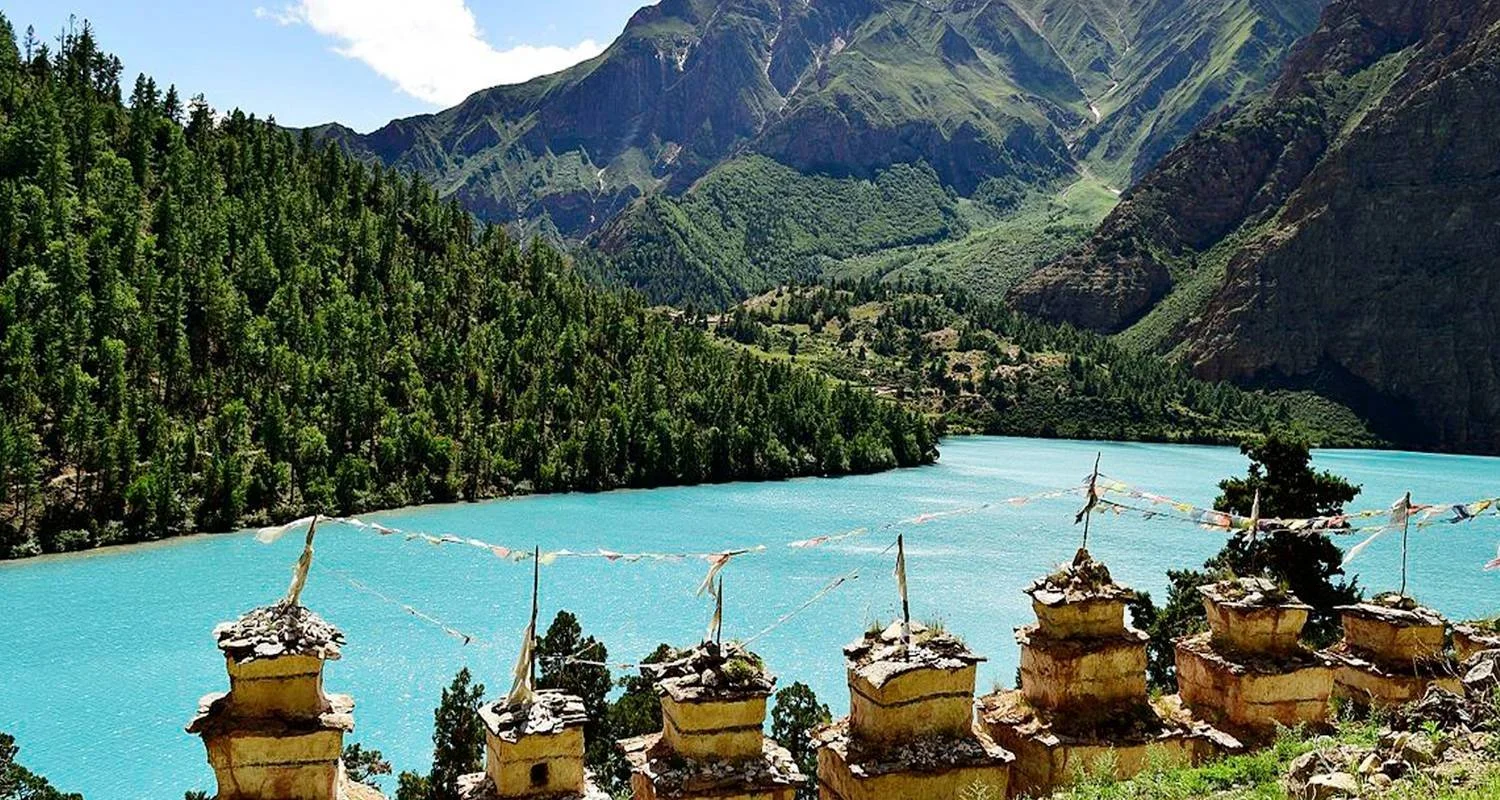
- Bezoek het ongerepte Phoksundo meer, een pelgrimsoord.
- Trek naar een van de meest afgelegen bestemmingen in Nepal, de Dolpo regio.
- Bewonder de schoonheid van het Shey Phoksundo Nationaal Park, de thuisbasis van bedreigde diersoorten als sneeuwluipaard en grijze wolf.
Overzicht
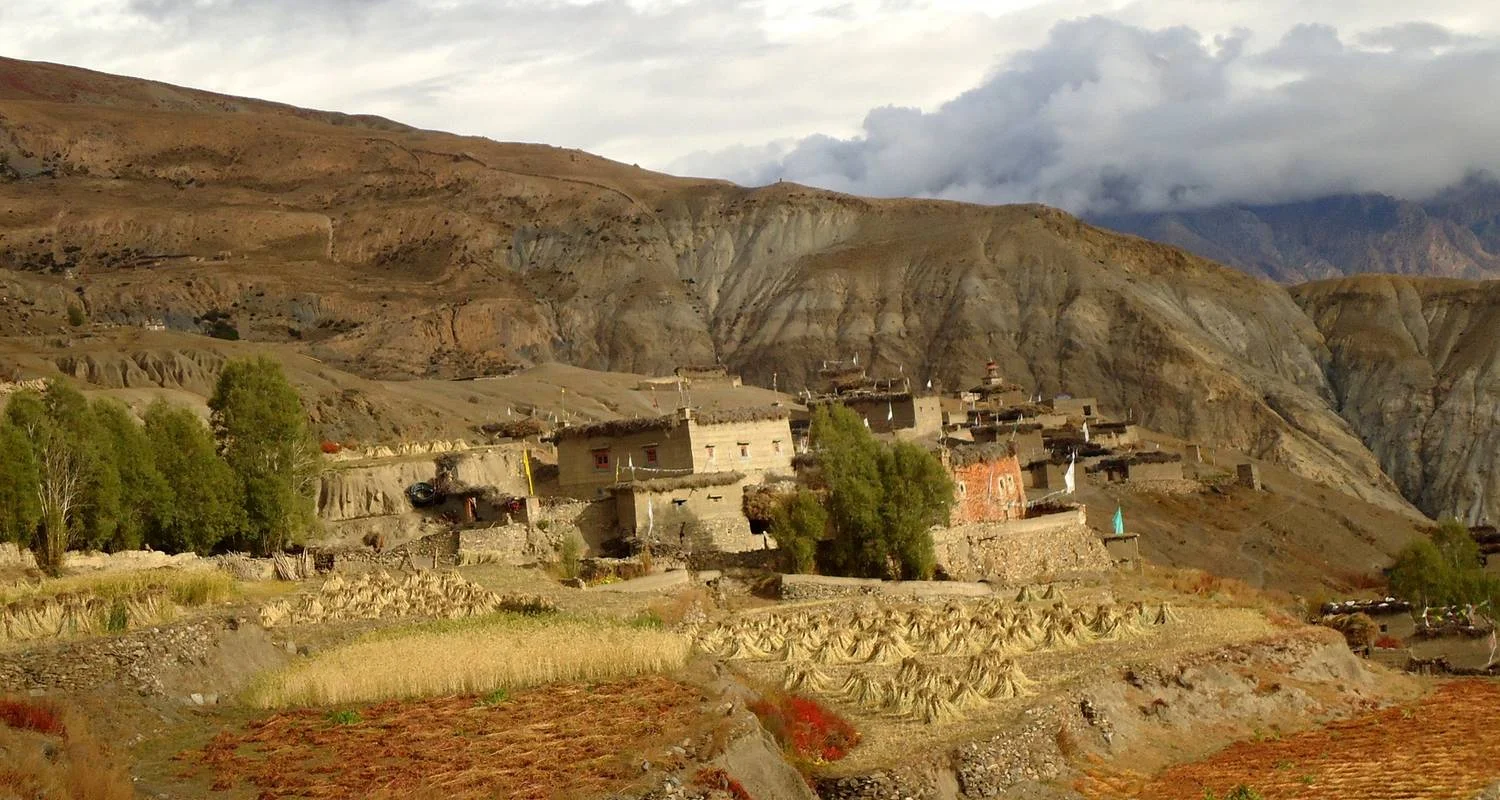
Neder-Dolpo is een minder bereisde bestemming in Nepal en is beroemd om de oude culturele wortels van de streek. Als zodanig is de Neder-Dolpo Trek een reis die geniet van de ongerepte natuur van westelijk Nepal. Evenzo is de Neder-Dolpo streek beroemd om de authentieke cultuur van de plaatselijke Khas bevolking. De hogere delen van de Neder-Dolpo Trek tonen ook hun banden met de Tibetaanse en Bon Po cultuur. Al met al is de trektocht een schitterende reis om de culturele aspecten van Nepal te verkennen.
De trektocht begint eerst in Kathmandu en voert naar het westen van Nepal naar Nepalgunj. De vlucht naar Nepalgunj wordt gevolgd door een andere die naar Juphal gaat. Van hieruit begint de trektocht als de trekkers zich klaarmaken voor de wandeling. De trektocht volgt de Thuli Bheri rivier en voert naar Dunai. Verder trek je naar Tarakot en volg je het pad naar Laina Odar. De tocht volgt een route tegen de wijzers van de klok in naar het Phoksundo meer en gaat onderweg naar Dho Tarap. Dit dorp is beroemd om zijn vertoning van plaatselijke cultuur gebaseerd op de Bon Po religie.
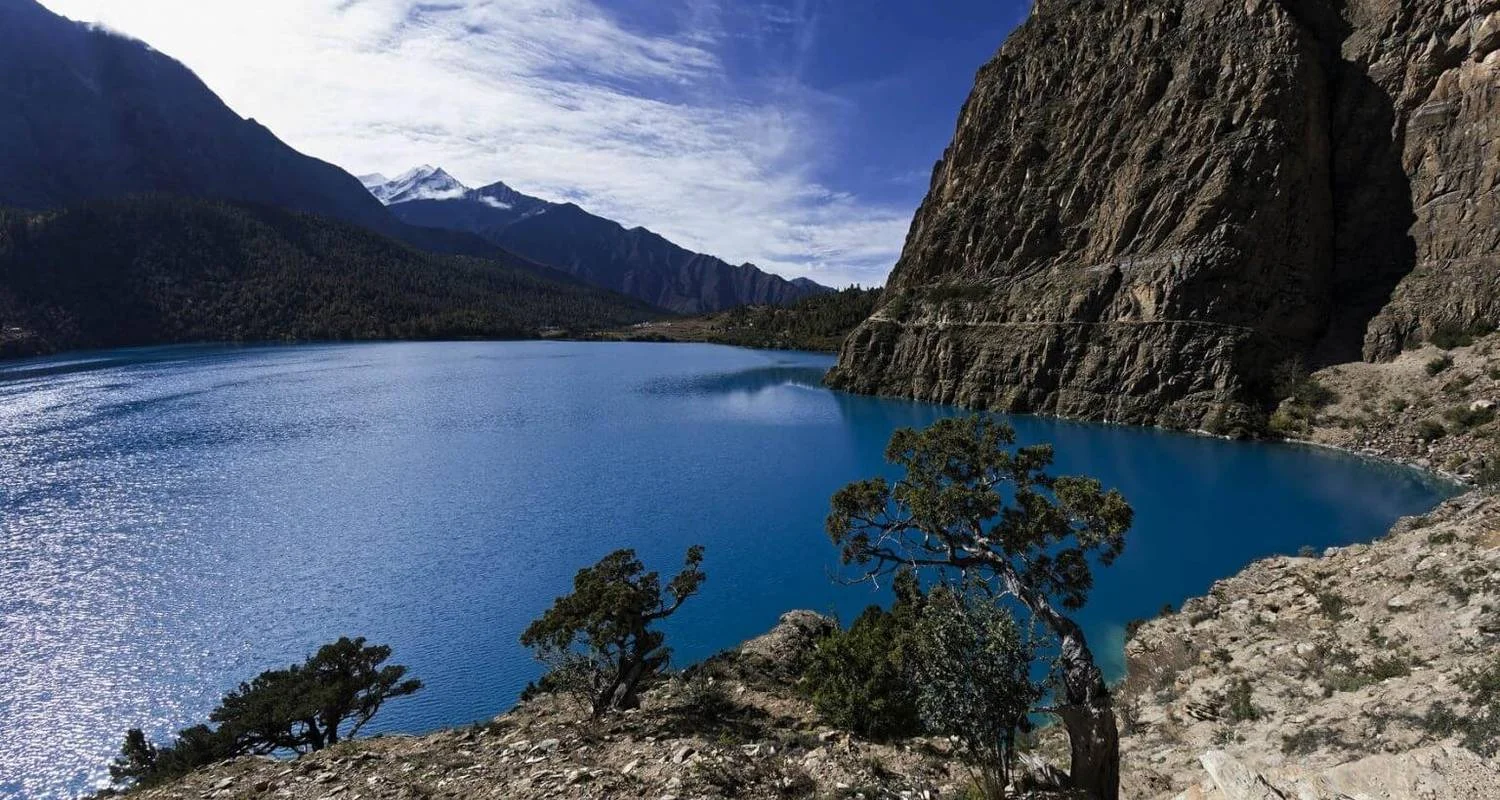
Het volgende deel van de trektocht brengt je naar het Numa La Basiskamp en steekt twee passen over. De eerste is de Numa La Pas, gevolgd door de Baga La Pas. Tenslotte bereik je het Shey Phoksundo meer waar je kunt uitrusten en bijkomen. Het meer is het op één na grootste in Nepal en ligt binnen het Shey Phoksundo Nationaal Park. De omgeving van het meer is beroemd om de geweldige uitzichten over het meer en de omgeving. Na de verkenning van het meer trek je naar Shyanta en keer je terug naar Juphal. Tenslotte stap je op twee opeenvolgende vluchten naar Nepalgunj en Kathmandu waarmee de reis ten einde loopt.
De tocht is tamelijk moeilijk en de trekkers moeten in prima vorm en lichamelijke conditie zijn. Ook zijn de lente- en herfstseizoenen de perfecte tijd om de tocht te doen.
Bij Himalayan Adventure Treks & Tours bieden we onze klanten geweldige reisdiensten aan. Ook hebben we diverse andere tochten en aanbiedingen voor alle soorten reizigers. Ook ons team bestaat uit getrainde gidsen, dragers, en ander personeel.
Reisprogramma
Dag 1
Aankomst op de luchthaven van Kathmandu. (1,334m)
Startpunt
Tribhuvan International Airport (KTM) त्रिभुवन विमानस्थल, त्रिभुवन विमानस्थल, Kathmandu, Bagmati Zone, Nepal
Dag 2
Bezienswaardigheden en voorbereidingsdag Kathmandu-vallei (1.334m.). (B)
Na het ontbijt beginnen we aan de stadstour door Kathmandu, die vier van de UNESCO werelderfgoederen in de vallei omvat.
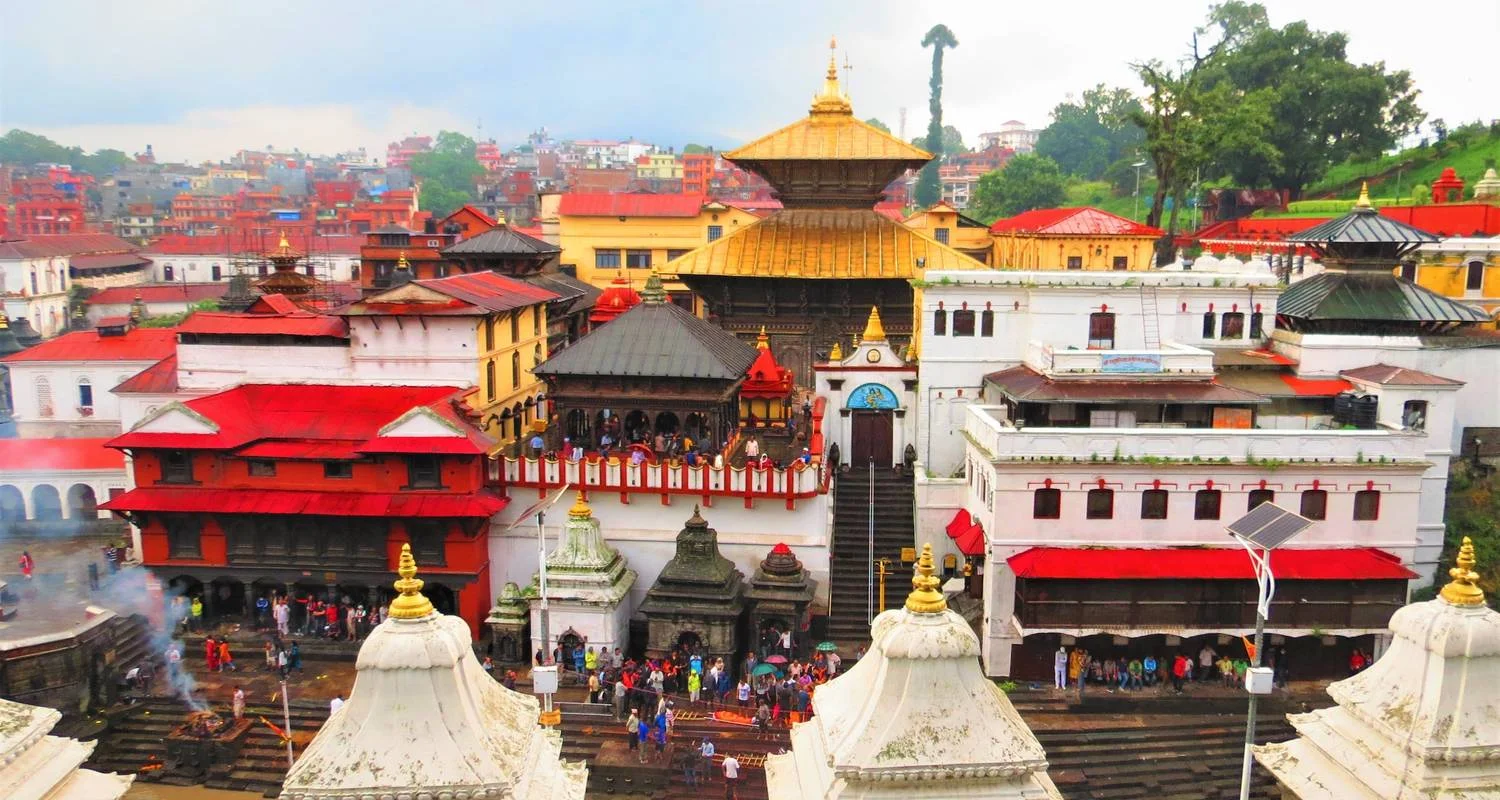
Pashupatinath: Het is een zeer groot, complex en brandpunt voor de Hindoeïstische religie. Dit oude en zeer vereerde complex van tempels en heiligdommen is gewijd aan Heer Shiva, een van de belangrijkste godheden van het hindoeïsme en zeer populair in zowel Nepal als India. Hindoeïsten geloven dat Heer Shiva meerdere gedaanten heeft die hij vaak ziet als de vernietigingsgod. Dit heeft grote betekenis voor de Pashupatinath tempel, omdat hier dagelijks vele hindoeïstische rituele crematies plaatsvinden aan de oever van de heilige Bagmati rivier. De Pashupatinath tempel wordt door hindoes beschouwd als een gunstige plaats om van de ene levensfase over te gaan naar de volgende door de zuiverende en vernietigende vlammen van de crematie aan de oever van de Bagmati rivier en de voeten van Heer Shiva, Brahmanal genaamd. Maar op een gelukkiger toon kunnen bezoekers de tempel ook zien in een levendige festivalstemming met een van de vele Hindoefestivals zoals Shivaratri, Teej, Janaipurinma en vele andere die hier het hele jaar door worden gevierd.
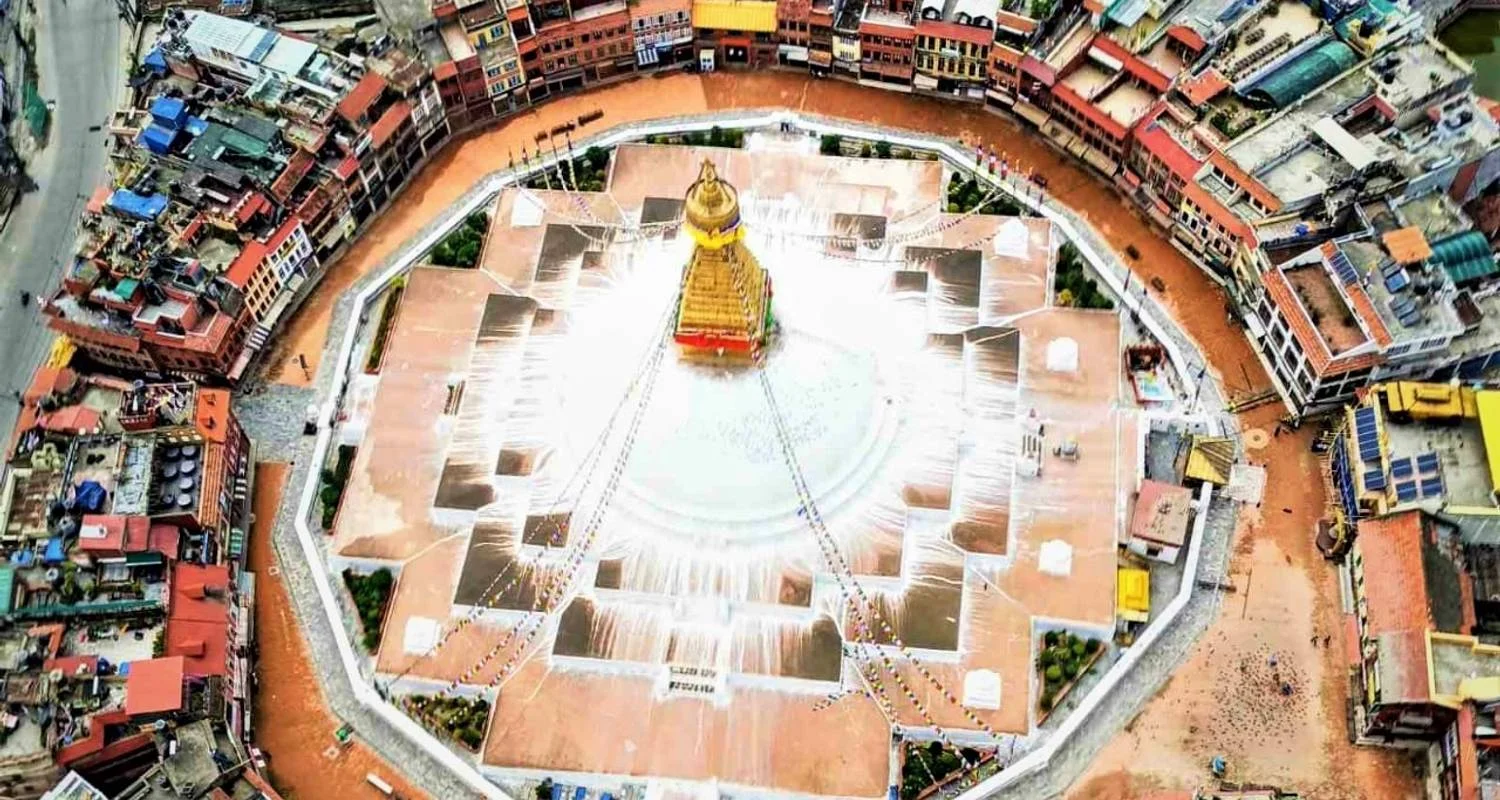
Boudhanath Stupa: Het is een boeddhistisch religieus complex met een lange geschiedenis van meer dan 500 jaar en meer, dat ook op de Werelderfgoedlijst van UNESCO staat. Gelegen in het oostelijke deel van de Kathmandu-vallei is het nu een pelgrimsoord voor boeddhistische volgelingen die rond de enorme stoepa draaien, aan de vele gebedsmolens draaien en het prachtige klooster bezoeken. Het belangrijkste kenmerk van Boudhanath is de enorme halfronde witte stoepa met een centrale gouden toren en de alziende ogen van de Boeddha. Men gelooft ook dat de ogen staan voor vrede en liefde. Bezoekers moeten de stoepa met de klok mee omcirkelen en gebedsmolens draaien voor geluk en het verkrijgen van Nirvana. De omgeving van Boudhanath is een soort school voor bezoekers die geïnteresseerd zijn in Thangka schilderkunst om hoogopgeleide kunstenaars aan het werk te zien op religieuze mandala schilderijen.
Kathmandu Durbar Square: Het bevat de plaatsen van de oude koning die heerste over het Kathmandu Koninkrijk. Het durbar plein is een oude Malla koning van de Kathmandu Vallei. Het is alle kunst- en architectuurschatten van een UNESCO Werelderfgoed. Het wordt ook wel de Hanuman Dhoka genoemd in het centrum van Kathmandu. Men gelooft dat de Kasthamandap tempel in de 5e eeuw is gebouwd uit één enkele boom. Het durbarplein heeft veel prachtige pagodes en tempels met meerdere verdiepingen en sierlijk houtsnijwerk dat enkele verhalen vertelt over de oude koningen en hun mystieke tijd en geloof. Het durbarplein bevat veel belangrijke hindoetempels en standbeelden zoals Kal Bhairab, Swyat (Witte) Bhairb, en Heer Shiva. De belangrijkste attractie voor toeristen bevat de unieke en intrigerende Kumari Chowk. Dit is een oud en sierlijk huis waar de Levende Godin woont. Het jonge meisje heeft via een oud en mystiek selectieproces uit de Newar gemeenschap gekozen om de menselijke incarnatie te worden van de hindoeïstische moedergodin, Durga. Op de binnenplaats van de Kumari kun je op het juiste moment in de middag een korte glimp van de Godin bij haar raam zien.
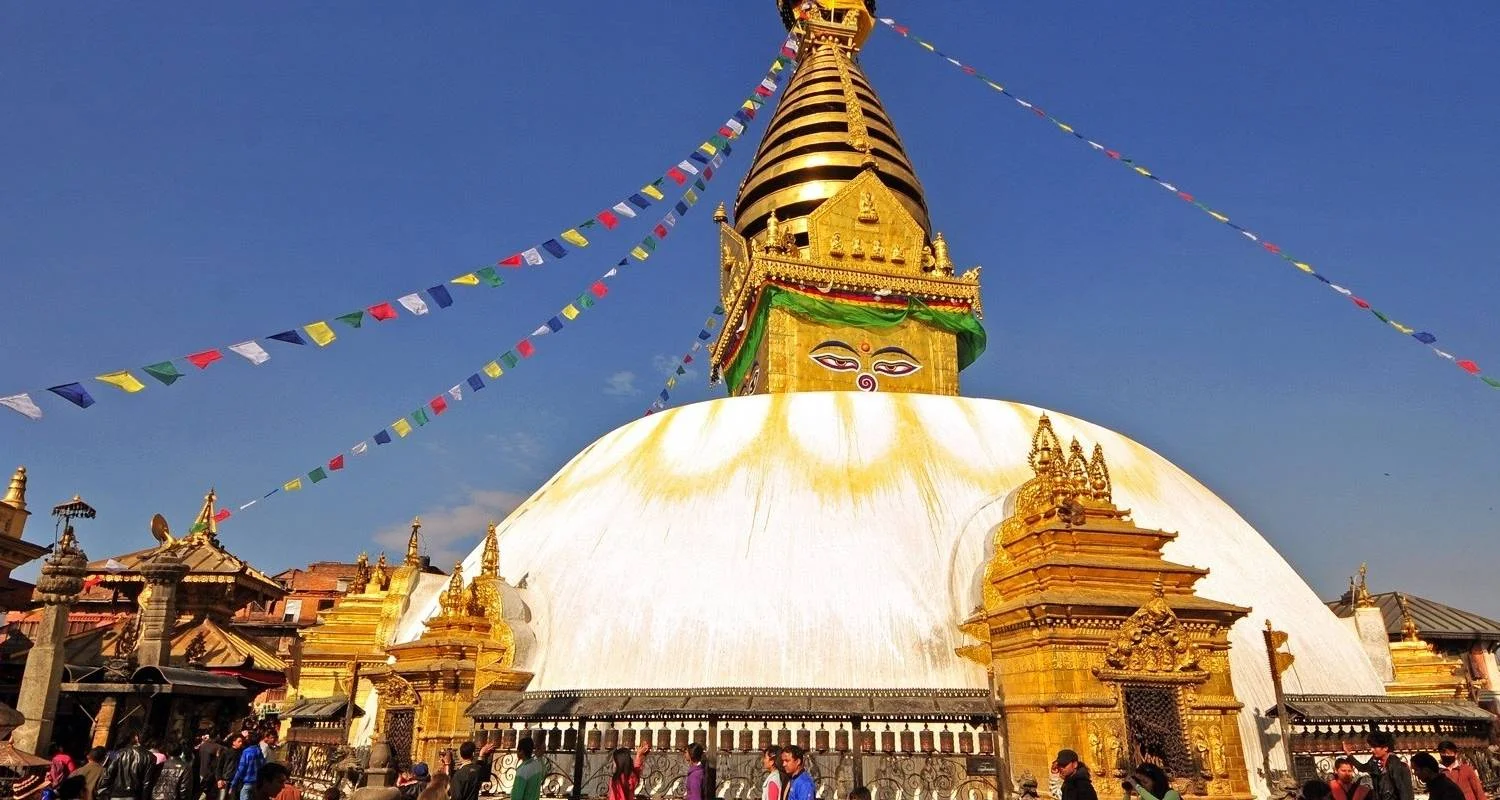
Swayambhunath (apentempel): Swayambhunath stupa complex dat bovenop een hoge heuvel ligt en uitkijkt over Kathmandu en de hele Kathmandu Vallei met bergketens aan de noordzijde. Swayambhunath is waarschijnlijk het heiligste boeddhistische bedevaartsoord in Nepal. Het is een andere beroemde toeristische bestemming en de heiligste boeddhistische en hindoeïstische pelgrims. Deze tempel wordt ook wel de apentempel genoemd vanwege de vele apen en hun zwembad. Dit is een prachtige plek om op adem te komen en de zonsondergang te bekijken, en het diepe belang van het boeddhistische geloof voor de mensen te begrijpen. Het bestaat uit een zeer grote witte stoepa met de alziende ogen, die gelooft in de liefde en vrede van Heer Boeddha en vele kleine stoepa's en prachtig bewerkte stenen heiligdommen op de top van de heuvel. Als je je energieker voelt, kun je ook enkele of alle van de 350 treden of meer proberen die vanaf het oostelijke deel van de tempel genaamd Bhagwan pau (God Feet) helemaal omhoog leiden naar het uitkijkpunt van de Swayambhunath stupa.
Dag 3
Vlieg van Kathmandu naar Nepalgunj (150m) 1 uur. (B/L/D)
Vandaag vliegen we 's ochtends na het ontbijt naar de westkant van Nepal. Het is ongeveer 1 uur vliegen van Kathmandu naar Nepalgunj. De teraistad Nepalgunj ligt vlakbij de grens tussen Nepal en India. Nepalgunj biedt je de smaak van zowel de hindoe- als de moslimcultuur. In de middag verkennen we de grensstad. Overnachting in het hotel.
Dag 4
Vlieg van Nepaljung naar Jhupal (2475m) en trek naar Dunai (2850m) 3-4 uur. (B/L/D)
Na ons ontbijt nemen we nog een vlucht om Juphal te bereiken. Het duurt ongeveer 45 minuten om Juphal te bereiken met een prachtig uitzicht op de bergen. Bij aankomst in Juphal word je ontvangen door ons trekkingteam, dat een zware tocht heeft gemaakt vanuit Nepalgunj met kampeeruitrusting en voedselvoorraad, die ongeveer 5-6 dagen duurt. Vanaf Juphal brengt een korte wandeling van 2-3 uur ons naar ons eerste overnachtingskamp in het dorp Dunai.
Onze eerste dag op de route begint met een uur bergafwaarts wandelen door het dorp onder de landingsbaan, dan door de terrasvormige velden naar de Bheri rivier en de smalle kloof die 2-3 uur duurt naar het kamp in Dunai. Dit is een veel groter dorp, of beter gezegd, een kleine township, met een nieuw ziekenhuis en het administratieve hoofdkwartier van de Dolpo regio. Hier hebben we ruim de tijd voor een wandeling door het dorp.
Dag 5
Trek van Dunai naar Tarakot (2545m) 5-6 uur. (B/L/D)
De tocht van vandaag voert door vele kleine stroompjes en volgt dan de Bheri en Barbung rivier die door een enorme kloof loopt met pijnbomen en een ingenieus pad dat ongeveer zeven meter boven de rivier is aangelegd; na een flinke wandeling komen we bij Tarakot waar kleurrijke terrasvormige velden ons begroeten. Tarakot is een oude vestingstad die door de plaatselijke bevolking is gebouwd als Dzong of fort. Tarakot was een hoofdstad voordat de Gorkha-dynastie in Nepal regeerde. De beroemde Sandul gompa ligt verder naar het oosten van Tarakot en op de kruising van Barbung Khola (rivier) en Tarup Chu (rivier).
Het dorp staat op een heuvel ten zuiden van de Bheri rivier, waar ooit tol werd geheven voor de handelskaravanen. Ons overnachtingskamp staat aan de rivier, ongeveer 150 m onder het dorp, bij de politiepost, of we klimmen een uur over een steile bergkam naar het dorp op een uitloper, waar chortens en een gompa staan aan de rand van een grasplateau met verspreid staande eenzame bomen.
Dag 6
Trek van Tarakot naar Laini (3170m) 5-6 uur. (B/L/D)
Na het ontbijt vertrekken we naar Laini, wat ongeveer 6-7 uur lopen is. We zullen de Tarap Chu rivier volgen. We moeten enkele hangbruggen en dezelfde rivier weer oversteken. We zien een beroemde Gompa genaamd Sandul Gompa even verderop op een splitsing waar de Barbung rivier en de Tarap Chu rivier samenkomen. Het pad gaat door terrasvormige landbouw binnen enkele mooie dorpen. Als we enige tijd naar beneden lopen, komen we bij Laini.
Dag 7
Trek van Laini naar Nawarpani (3545m) 6-7 uur. (B/L/D)
We beginnen onze trektocht vroeg in de ochtend na ons ontbijt. We vertrekken naar Nawarpani, waar we de Tarap Chu rivier blijven volgen op een weg met steile stenen. Je voelt de andere ervaring van het lopen vandaag omdat je onderweg smalle kloven krijgt waar je van de ene naar de andere plaats moet springen.
Onderweg verdwijnt het pad op sommige plaatsen waar we ons een weg moeten banen naar onze inspanning. We moeten houtblokken tussen de stenen plaatsen die als brug zullen werken. Dit wordt een spannende wandeling. Als we iets verder lopen, bereiken we Nawarpani.
Dag 8
Trek van Nawarpani naar Do Tarap (4990m) 7-8 uur. (B/L/D)
Onze ochtendwandeling begint met een geleidelijke stijging die ons leidt naar Kamattarka bij de samenvloeiing van de Tarap Chu en de Lang Khola, een stroom die uit het oosten komt. Na een paar uur wandelen in de ochtend verlaten we de smalle kloof en vanaf hier loopt het pad vlak boven bomenrijen van jeneverbesstruiken en wilde rozen, typisch voor droge innerlijke Himalaya valleien.
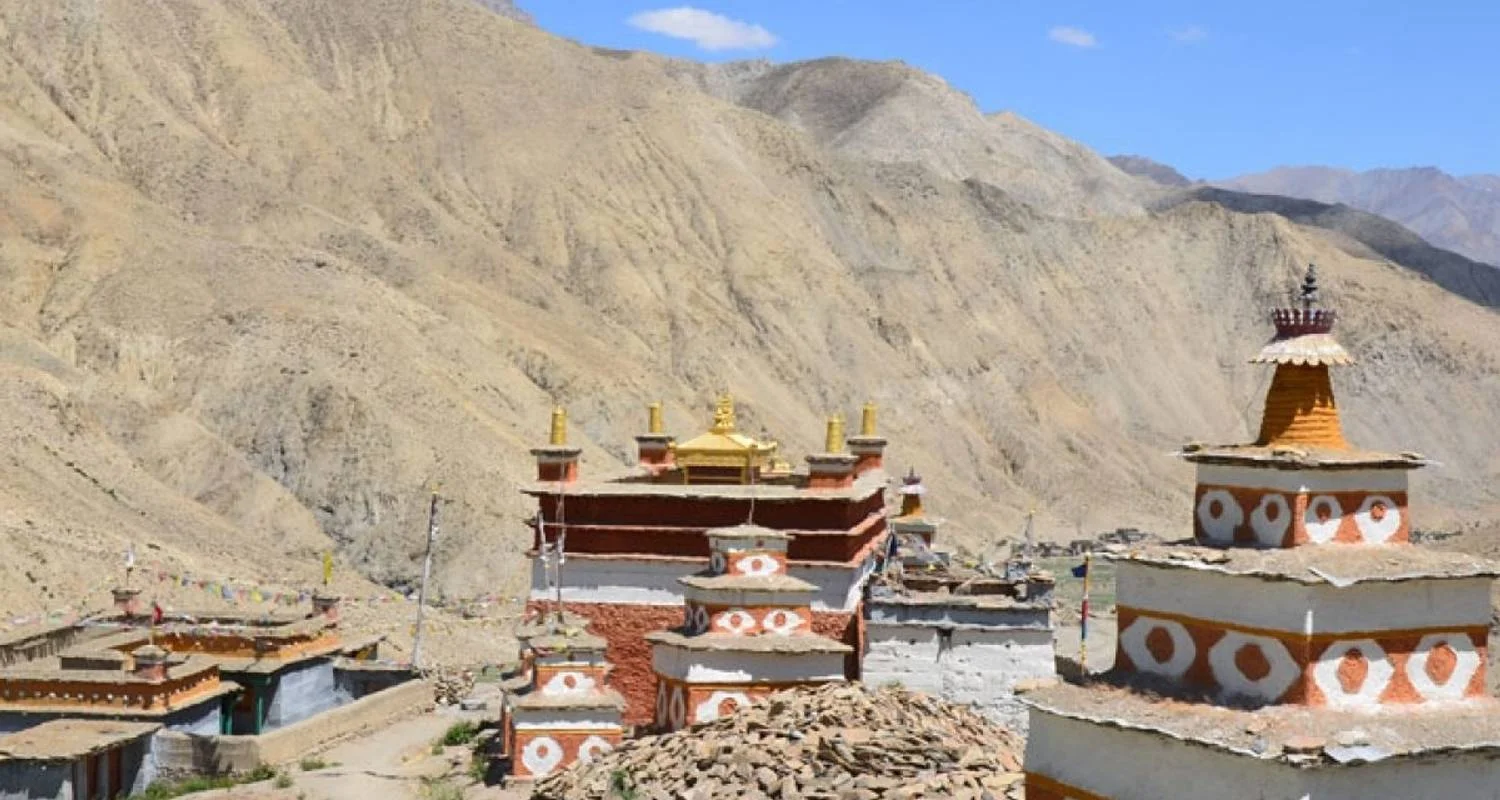
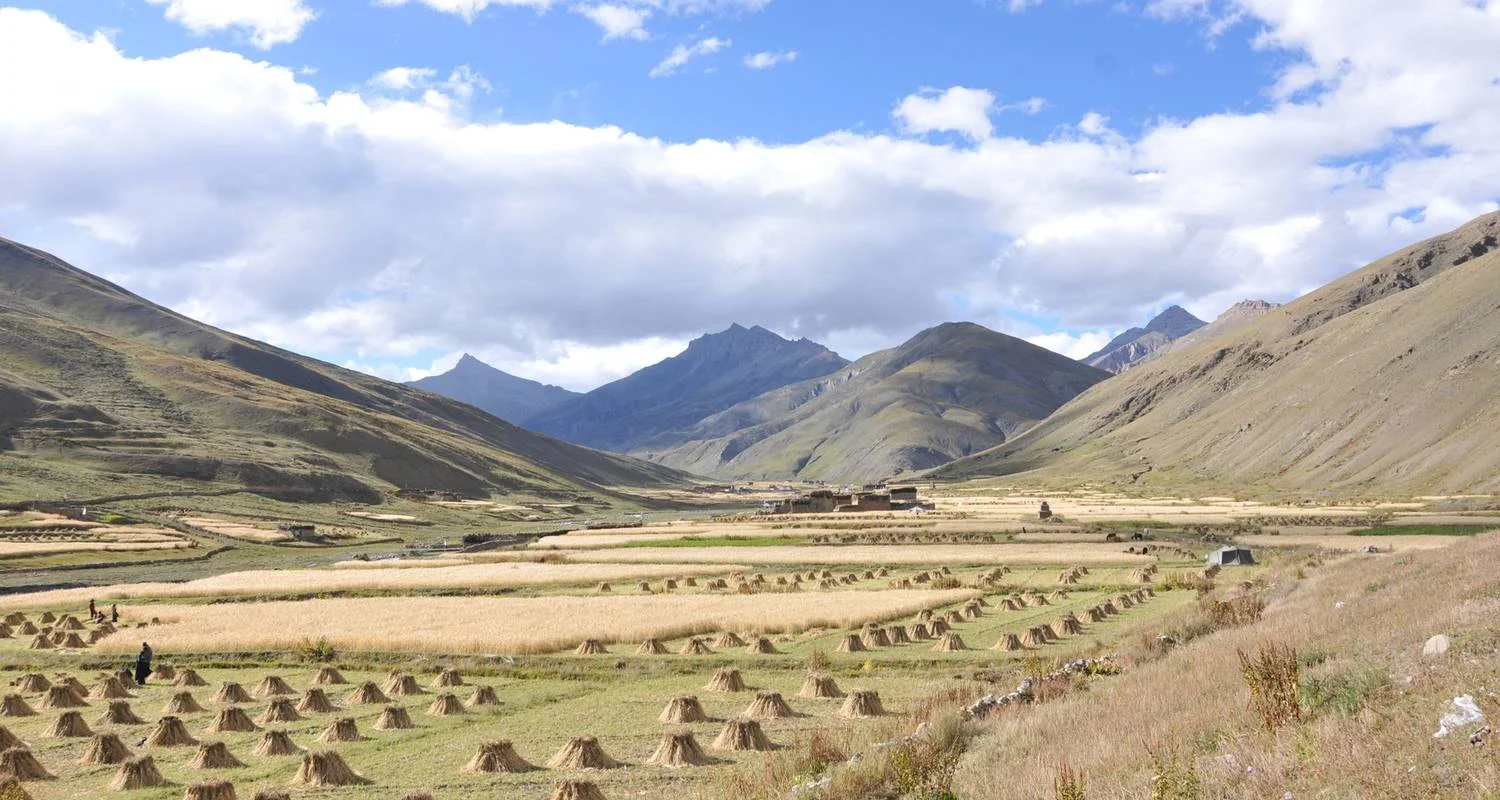
Nog ruim 3 uur lopen brengt ons naar het dorp Dho Tarap, omgeven door een onregelmatige stenen muur. In Dho zijn vierendertig huizen in drie groepen verdeeld en op willekeurige wijze ingebouwd, best interessant! In deze vallei wonen zowel de Bon Po als de Chaiba sekten samen. Tarap wordt ook bewoond door een paar Tibetanen en vooral Magars die hier al vele generaties wonen.
Dag 9
Acclimatiseringsdag in Do Tarap (4990m). (B/L/D)
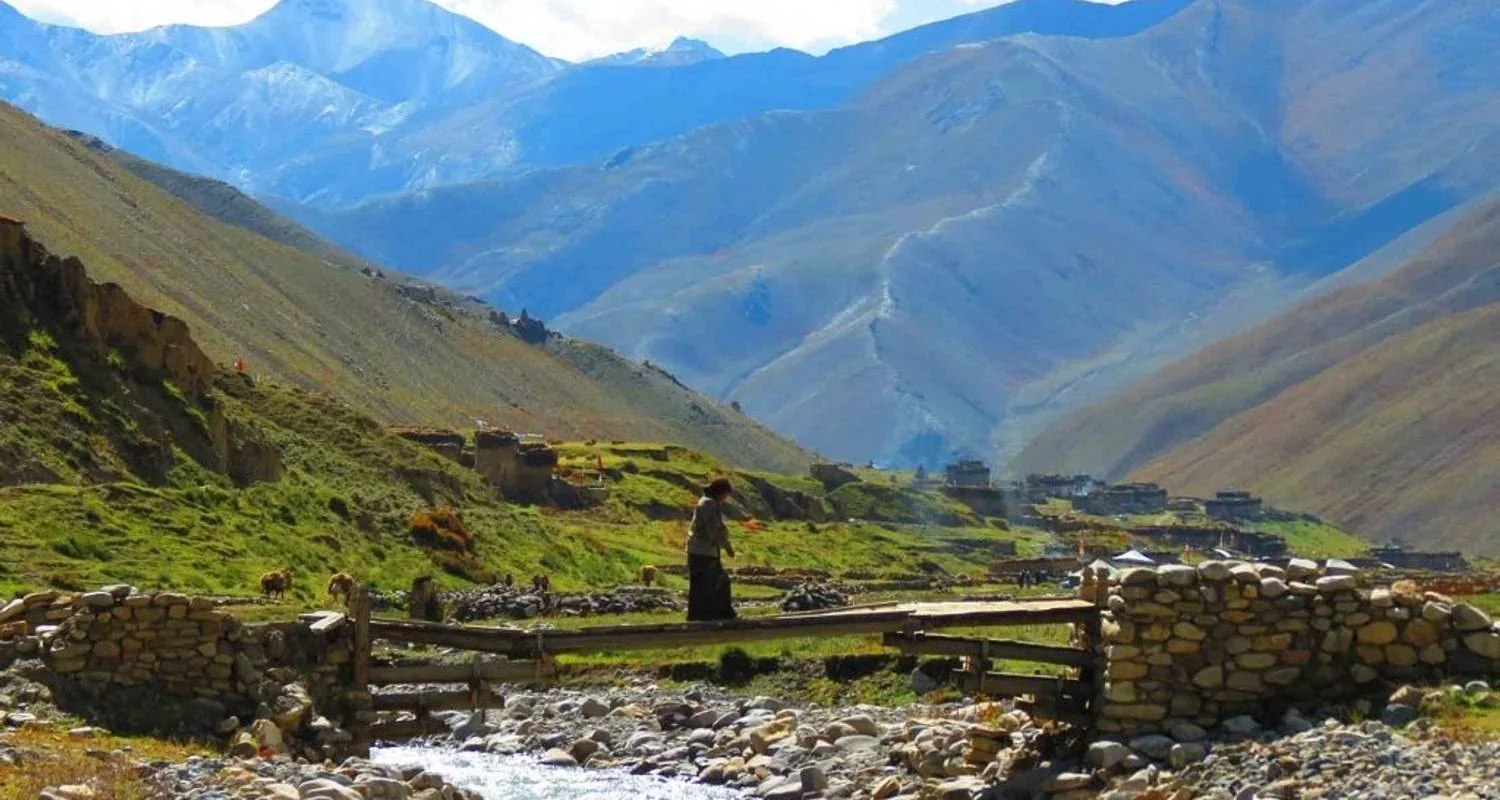
Dit is een welverdiende rustdag, vrij van het gedoe met inpakken vandaag, en een kans om vrienden te maken met de plaatselijke bevolking, die al tijden nauwelijks westerlingen heeft gezien. Het is altijd goed om met de plaatselijke bevolking om te gaan en de kinderen wat toffees te geven als je die hebt. De Dolpo bevolking draagt zelfgemaakte kleding die soms kastanjebruin wordt geverfd en ze geven de voorkeur aan Somba of Dhocha (laarzen met omgekeerde tenen) in Tibetaanse stijl als schoeisel.
Zowel mannen als vrouwen dragen vaak religieuze amuletten en koorden van koraal, barnsteen en turkoois. De mensen in de regio zijn zowel Bon Po als Nyingmapa van de boeddhistische sekte. De boeddhistische Gompa ligt vlakbij het kamp, terwijl de Bon Gompa (preboeddhistisch) op ongeveer een half uur lopen ligt.
Dag 10
Trek van Do Tarap naar Numa- La Basiskamp (4440m) 6-7 uur. (B/L/D)
Na het verkennen van het dorp Dho Tarap gaat onze tocht naar het Numa La Basiskamp, dat ongeveer 6-7 uur lopen is. Vanuit het dorp Dho Tarap gaat het pad omhoog naar de vlakke valleien met uitzicht op de rivier die aan weerszijden bedekt is met groen gras, een ander uitzicht dan andere in deze streek.
Daarna volgen we Tarap Chu de hele weg omhoog. Na een wandeling van een uur zijn we bij het dorp Tokyo, waar we een klooster van de Chiba groep kunnen zien. We kunnen wat ronddwalen in dit dorp. De tocht vanaf hier kan een beetje moeilijk zijn, want we moeten ongeveer 3 uur over een ruw pad lopen. Uiteindelijk komen we bij het Numa- La basiskamp.
Dag 11
Oversteek Numa- La pas (5190m) en kamp bij Pelung Tang (4445m) 6-7 uur. (B/L/D)
Onze reis gaat verder met de oversteek van de Numa-La pas op 5.190 m, het pad gaat over in een steile klim naar de topkam van de Numa-La met fantastische uitzichten op de omringende landschappen; het landschap van de valleien en de bergen, waaronder de noordkant van het Dhaulagiri massief samen met andere besneeuwde toppen in de verte, is zo geestverruimend.
Na een glorieus moment op de pas brengt bijna drie uur bergafwaarts wandelen ons naar Palungtang 4.465m of verder voor het overnachtingskamp vlak voor de Baga-la of Basi-la pas.
Dag 12
Oversteek Baga- La pas (5070m) en kamp bij Dajok Tang (4080m) 6-7 uur. (B/L/D)
De trektocht van vandaag gaat ook over grote hoogte, want we moeten de Baga La pas van 5070 meter oversteken. De tocht begint met een steile klim naar de top van Baga La, die moeilijk te beklimmen is, maar de moeite waard omdat je een prachtig uitzicht hebt op de omringende landschappen en de besneeuwde toppen van de Kanjirowa bergketen. Na enige tijd lopen we ongeveer 3 uur naar beneden om Dajok Tang te bereiken.
Dag 13
Trek van Dajok Tang naar Ringmo (3600m) 4-5 uur. (B/L/D)
De ochtendtocht begint met een steile klim naar de top van de bergkam van Baga-la op (5.070m), die een fantastisch uitzicht biedt op de omringende landschappen en de besneeuwde toppen van de Kanjiroba Himal range in de verte, na een geweldig moment hier leidt onze wandeling tot een afdaling van 2 uur door een dennenbos; Als we het bos achter ons laten, verandert het land en de vegetatie in weidevelden en alpenstruiken voor het grootste deel van de weg naar Ringmo over geleidelijke hellingen met weinig stijgingen en dalingen als we onze eindbestemming Ringmo en het kristalheldere meer van Phoksumdo bereiken.
Dag 14
Rustdag in Ringmo en wandeling Phoksundo Lake (3612m). (B/L/D)
Het nabijgelegen Tibetaanse boeddhistische klooster is een bezoek waard, evenals het dorp Ringmo. Een wandeling rondom het meer is ook heel plezierig en ontspannend. Het is een heerlijke plek om gewoon te chillen en je geest te laten gaan. Je kunt hier misschien ook je demonen kwijtraken.
Dag 15
Trek van Ringmo naar Shyanta (2520m) 4-5 uur. (B/L/D)
Vandaag dalen we na het ontbijt af naar Chepka. Men gelooft dat we hier veel belangrijke geneeskrachtige mineralen kunnen krijgen die veel ziekten genezen. Daarna passeren we enkele mooie dorpen. Na nog wat wandelen bereiken we Shyanta.
Dag 16
Trek van Shyanta naar Jhupal (2475m) 5-6 uur. (B/L/D)
Vandaag trekken we van Shyanta naar Juphal. Vanuit Shyanta volgen we het rivierpad stroomafwaarts naar Juphal. We lopen bergopwaarts door weilanden en langs een paar huizen naar de kleine hotels van Kala Gaura (2090m). Na enkele uren lopen bereiken we eindelijk Juphal, het eindpunt van onze trektocht.
Dag 17
Vlieg terug naar Kathmandu via Nepalgunj. (B/D)
We vliegen eerst van Jhupal naar Nepalgunj. Vanuit Nepalgunj nemen we de beschikbare vlucht terug naar Kathmandu. Aangekomen in Kathmandu zal je gids je helpen naar je hotel te gaan. We kunnen uitrusten in onze hotelkamer of souvenirs kopen voor onze familie en vrienden.
s Avonds hebben we een afscheidsdiner in een authentiek Nepalees restaurant met een culturele voorstelling.
Dag 18
Vertrek naar de luchthaven. (B)
Een vertegenwoordiger van Himalayan Adventure Treks and Tours brengt je naar het vliegveld, ongeveer 3 uur voor je geplande vlucht. Op weg naar huis heb je ruim de tijd om je volgende avontuur in het prachtige land Nepal te plannen.
Eindpunt
Tribhuvan International Airport (KTM) त्रिभुवन विमानस्थल, त्रिभुवन विमानस्थल, Kathmandu, Bagmati Zone, Nepal
Annuleringsbeleid
Himalayan Adventure Treks & Tours Team Terms & Conditions
Risk and Liabilities
All the Nepal, China and Bhutan tours are conducted under the strict rules and regulations of the Nepal
tourism board of the respective country. We are not liable for any change or cancellation of the trip
under unavoidable circumstances like change in rules and regulations of country, government
restrictions, natural disasters, political instability, cancellation of flight, delay, sickness or accident,
breakdown of vehicle, etc. Any extra cost incurred due to such circumstances shall be borne by the
clients themselves. Therefore, travel insurance is highly recommended.
Last minute booking
We even accept last minute booking. You can book a trip to Nepal 7 days prior to the trip departure
dates. Last minute booking may not acceptable in case of Bhutan or Tibet Package tour.
Postpone the trip
A written notice should be sent to us 30 days prior to the trip departure date.
In case of postpone of Nepal tour, minimum USD 150 will be charged as a current trip cancellation
charge and the remaining amount will be transferred for the postponed trip.
In case of postpone of Tibet and Bhutan Tour, trip cancellation charge will be charged as per the
trending market rate of those country. It solely depends upon the ongoing policy of our agents in Tibet
and Bhutan. For now, 25 % of trip cost and 50 % of trip cost will be charged in case of postpone of
Bhutan and Tibet trip respectively.
Trip Cancellation (Nepal)
In case you intend to cancel your trip for any reasons, you need to write it to us 15 days prior to your
trip departure date. We shall approve it as cancelled only after receiving a valid written notice from the
client. If the reason for your cancellation is genuine like injury or serious illness, you can postpone your
trip or transfer your booking to another person who meets all the requirements for the trip. However, a
fee of USD 150 per person will be charged if you postpone or transfer your trip within 15 days prior to
your trip date. As per our policy, the deposit amount is non refundable, therefore, you can utilize the
amount to book a trip with Himalayan Adventure Treks & Tours next time.
Trip Cancellation (Tibet)
A valid written notice of cancellation should be provided 30 days prior to your trip departure date. In
case you cancel your Tibet tour, 50% of the trip cost will be charged as a cancellation charge (even in
case of postpone or transfer of trip to another person). The remaining amount will remain secured with
Himalayan Adventure Treks & Tours as a deposit from you. You can utilize it to book the tour with
Himalayan Adventure Treks & Tours next time. The amount is non-refundable.
Trip Cancellation (Bhutan)
A valid written notice of cancellation should be provided 30 days prior to your trip departure date. In
case you cancel your Bhutan tour, 25% of the trip cost will be charged as a cancellation charge (even in
case of postpone or transfer of trip to another person). The remaining amount will remain secured with
Himalayan Adventure Treks & Tours as a deposit from you. You can utilize it to book the tour with
Himalayan Adventure Treks & Tours next time. The amount is non-refundable.
Incomplete Tour
We are not liable for any refunds in case of any incomplete tour, trekking, Tour or expedition whatever
the reason.
Unforeseen Circumstances
If your trip gets cancelled due to any unforeseen circumstances like natural disasters, war or
unfavorable climatic conditions, we will arrange another trip for you. So, even if your trip will be not the
one you choose, your money will not go in vain.
Price changing
We reserve our rights to change the price under various circumstances. Though our action will be
reasonable like in case of some circumstances such as drastic change in exchange rate, inflation,
government actions, etc., we are not liable to answer anyone for our action.
Travel Insurance
We highly recommend a comprehensive travel insurance package to all our clients. The insurance must
cover all the medical expense, personal accident, and emergency evacuation, Helicopter rescue and trip
cancellation due to some serious region.
During the tour
In case you commit any unlawful act during your tour and you are compelled to leave Nepal, Himalayan
Adventure Treks & Tours is not liable for any kind of refunds.
Warning
Our terms and conditions are applicable only if you book your trip with us directly. If you book your trip
with us through any agents or third party, you shall be liable to their terms and conditions.
gears and natural calamity, theft of or damage to baggage and personal effects etc.
Flight Delay/Cancellation
Flight delays and cancellation are quite often during the bad weather condition in the remote areas
particularly in Everest region, Annapurna region, Dolpo, Simikot and Jumla region etc. Therefore, it is
advisable to carry some extra money to buy food and accommodations in case of delays. Himalayan
Adventure Treks & Tours will not be responsible for any of the additional expenses. Therefore, please
plan accordingly.
Your personal belongings
We are not liable for any damage or loss of your luggage or property. They are at your own risk.
Reisinformatie
Accommodatie
- Drie nachten in een 3* hotel in Kathmandu met ontbijt.
- Een 3* hotelovernachting in Nepalgunj met ontbijt.
- Alle overnachtingen in theehuizen tijdens de trektochten.
Optioneel
Equipment List for Lower Dolpo Trek:
Lower Dolpo Trek is difficult trekking but however our long-year experience of operating Trekking to Nepal, We learn many things and would like to give some information to pack your equipment list for your Trekking and we hope, this information will be helpful you so success your trip.
Luggage/Duffle bag:
You will require a duffel bag or a backpack for trekking (65- 75 L) max and all our trekking stuff is kept in this duffle bag and this will be carried by our porters. However, Himalayan Adventure also provides the duffle back if needed.
A day backpack:
You will need a day backpack and you will be carrying it every day by yourself and we recommend you it has to be at least 25L and you can carry important documents like Passport, credit card along with a need to carry a water bottle, snacks bar and clothing layers (hat, gloves, fleece, sunblock, poles, etc…).
Trekking/Hiking boots:
Lower Dolpo is difficult to trek and It is very important to have good trekking boots and it should be waterproof (in case of snow, or rain) Make sure it should be fit on your feet and comfortable during walking. Also, recommend you bring the Crompton during the winter season in Nepal.
Sport Sandals:
You need to have a pair of sports shoes or sandals to use while you are in camp or tea houses after the trek.
Sneakers:
Lower Dolpo is difficult trekking so sneakers are not suitable for this trek so you can leave your sneakers in Kathmandu hotel until you get back.
Sleeping Bag:
You need to have a lightweight sleeping bag that works for the minus 15 degrees for the summer season but during the winter we recommend minus 20 degrees for the trekking. Himalayan Adventure can provide it if you need one but has to be returned after the trek.
Fleece jacket:
You need to have good quality fleece jacket at least 1 synthetic jacket or pullovers are a great alternative to fleece because they are lighter and more compressible and gives you enough warmth during the trekking.
Down jacket:
Down jacket is compulsory and recommends you to bring the warm enough so can keep you warm during the Trek.
Socks:
You need to have at least 5 pairs of thick socks during the spring & autumn but winter and monsoon need at list 7 pairs of socks for this trekking.
Lightweight/ warm insulated pants:
You need to have at least 3 pairs of lightweight trekking pants like Lightweight expedition thermal bottoms, Nylon hiking shorts, Softshell and hardshell trekking pants, Water/windproof trousers, and Casual pants so we can use as the weather.
Short-sleeved shirts:
You need to have 3 ice-breaker merino wool to keep you warm from the cold or synthetic shirts and if you are not allergic to wool products, merino wool is the ideal for Lower Dolpo Trek & Himalayan Adventure also provide the 1 company T-shirt as a souvenir.
Long-sleeved shirts:
You need to have at least three shirts.
Underwear:
You need to have few pairs of underwear and this can be as much as you need as there are no washing facilities every day on Lower Dolpo Trek so, we highly recommend you to have enough pair of underwear.
Waterproof jacket:
You need at least one waterproof jacket for the rain/snow and wind for the Lower Dolpo Trek and waterproof pants may be on option.
Head and face gear:
Sun Hat or cap during the day time, Woolen Hat for morning & Evening and Polarized sunglasses are compulsory.
Hand gear:
You need warm gloves.
Traveling supplies:
Adapter Plug for Charging the Camera and Mobile, Camera belt, Passport belt ( nice to have), Swiss army knife (option), Flashlight, Headlamp, Water bottle, Extra camera battery, Hand sanitizer, Alarm clock, Hiking poles (optional ) and Binoculars (optional).
Toiletries:
Razor, razor blades, shaving cream, aftershave toothbrush, toothpaste, dental floss, sunscreen, toilet paper, small towel, and period pads (for women).
Medication:
First Aid Medical Kit box (can be purchased in Thamel Kathmandu), Altitude Medicines (Diamox), Tylenol, aspirin, ibuprofen, Anti-diarrheic, Powerful antibiotics, and Nasal Spray or Drops.
Physical Fitness:
Many people have questions as to what level of physical fitness is required for trekking in Nepal and that is extremely reliant on what activity the visitor is engaging in Nepal With that said, for a standard easy trek to Extreme hard level of trekking. The daily activity (trek) would be 5-6 hours,(depend on the trekking trail) and elevation will generally not exceed 5,600 meters like Everest Base Camp, Throng la passes, Chola passes treks and other passes or Base Camp but some of them are less than 4000m. The trekking day is involving both long steep climbs, and descents with a variety of terrain underfoot from well-trodden paths, to rocks covered with ice or snow, depending on the season. Mostly a day would include a number of climbs or descents of 600 meters more or less, starting after the early morning breakfast, resting at a lunch place in the afternoon, then continuous trekking until arriving at the teahouse.
In preparation for the trekking in Nepal, it is important, to begin with, the basic training requirement at least 2 months before departing for trekking in Nepal. Two to three hours of aerobic exercise like running, walking, swimming, cycling & some gym work per week is the minimum and most will find it beneficial to add some basic strength training to their physical fitness routine required for the hard trekking and for normal and easy trek just have some physical fitness is enough. One of the best ways to prepare is to take practice hikes with a daypack roughly the same weight as what you will be taking during the trek. Your calf should be enough fit and prepare for trekking. Mostly during the trekking calf paining or tired is the main issue. Do this only after a baseline of fitness has been reached. Moving fast is not our goal, will provide a more enjoyable and safe adventure trekking in Nepal for all easy and hard level.
Trekking Seasons in Nepal:
There are main two seasons in which Nepal where the most amount of visitors visit. (September, October & November) being the most popular season which is also called the peak season in Nepal, and spring (March, April & May) coming in close behind which is also called the mini-season in Nepal. The summer months of June, July, and August are the monsoon season and most of the time raining as such the trails are mostly washed out sometimes, and roads can sometimes be impassible due to landslide activates. Nevertheless, you can trek to rain-shadow regions like Upper Dolpo and Upper Mustang during the monsoon seasons. Nepal is a suitable destination for all seasons.
Winter is very dry & extremely cold and all the high passes become inaccessible due to ice and snow conditions. The temperature doesn’t usually fluctuate during the day time temperature is around 20-25 degrees. However, you gain the altitude the temperature decreases. The temperature can drop to around 0 to -25 degrees at night when staying at tented camps in Himalayan regions. Winter trek in higher altitudes is not advised due to the danger of avalanches and also altitude sickness. Although some may enjoy the sight of the snow-covered mountains as you reach your destination. However, the temperature does not change as much in lower mountain regions the nights are slightly colder than days’ time.
Autumn &Spring is the best timing for trekking in Nepal because the weather is generally warm and dry, and flowers are in bloom in the lower elevations of the country on the same time you can see the many festivals during that period.
Trekking Day:
A typical trekking day begins with the early morning breakfast around 7 am in the hotel. (Depend on the trekking region). It would advise you to pack your trekking gears in a duffle bag and essential supplies in your day pack after having breakfast; we begin the trek and head along the trail at around 8 am. The morning walk is more energetics to be longer as we begin with refreshed bodies and enthusiasm. A good morning’s walk, we make a stop for lunch at around 11-12 pm. The lunch involves group meals enjoying the vicinity around the stop & enjoys the organic & local food in the mountain. After resting for about an hour or two, we resume our trek to reach teahouse or camp by 2-3 pm. The afternoon walk is relatively shorter and can involve games and side trips as organized by the trekking experienced guides. You also can enjoy breaks during the trek to relax, read, and stroll around the area or doing yoga. You can explore with the local people and observe their lifestyle & culture. Dinner is served around 7-8 in the evening to round off the day.
Meals and Accommodations:
During the trekking period, the accommodation is commonly referred to as teahouses. These are family-run basic lodges that fill the role of the restaurant, Dining hall, and boarding house for tourists. Now a day’s electricity can be found in the rooms, which mean one light bulb, and one or two outlets for charging electronics. The common areas are also lit by electricity. Alternatively, teahouses may also use solar, hydroelectric, or have electrical lines running into the village, so the commonality and availability of electricity may vary. Still, a few of the trekking route electricity service is not available. Use the local traditional kerosene light.
Most of the teahouses have private rooms, though if the trek is in a more remote or high altitude place there are limited teahouses so season time dormitories are the norm. Most of the room has 2 single beds with basic bedding, and the bathroom is shared. Some of the places we can get the private bathroom also with a mix of western and squat style toilets in the bathrooms.
Breakfast and dinner are taken at the same teahouses and these lodges have large family style dining rooms centered on a stove or coal to provide heat basically in mountain areas. Most of the areas menu will have Nepali style western foods such as Pancake, pizza, Burger, fries, etc. Also on the menu is the traditional Nepali food Dal Bhat meal. This is a lentil soup with rice, vegetable, Pickle, or meat curry. Most menus will also offer a smattering of local cuisine.
Internal Flight Delays:
Nepal is an incredible and beautiful country of mixed of the White Mountains, deep valleys, Landscape, rivers, and green rolling hills. With this incredible diversity of landscapes, road travel can be extremely time consuming and flights within Nepal to reach popular trekking destinations is the easiest way. Not all the trekking destination has flight service, so road transportation is the only option. Mountainous terrain also comes with the possibility of in-climate weather. It mentions the incredibly high number of visitors during peak seasons makes internal flight delays a genuine possibility. To manage this situation, it may be helpful to have a few extras days on either end of your tour. If any cancellations or flight delays do occur (high chances of flight delays from around Kathmandu to Lukla, Everest region, Pokhara to Jomsom, Annapurna region), we also provide services to arrange chopper on the last stage to help you to be on your schedule on the premises of Civil Aviation Rules in Nepal which state that helicopters can fly if the visibility is 1500m. The cost ranges from USD400 to USD650 according to the number of passengers. The payment can be made either to the helicopter company or to us directly and can be made either by cash or using a credit card. It will be beneficial to purchase and review your insurance, the insurance companies may cover some of the alternative measures of travel. Flight insurance may cover changing your international flight if it is necessary.
Travel Insurance:
Most expeditions, Adventurous trekking, and tours require that travel insurance and it is purchased prior to arriving in Nepal, but other normal treks and tours may not require. However, travel insurance is definitely an important consideration. There are a number of reasons to consider insurance. Firstly, it may be required, so check to see what is being asked for by the company. Second, Nepal is a landlocked country, and there are only a few direct flights. Travel in and out from country can encounter some disruptions if purchasing insurance, make sure flight delays and cancellations also included. Always choose insurance that, though every safeguard is in place during your Holiday, there are always extenuating circumstances that may result in an accident during trekking & tours. Read carefully printout of insurance policies to ensure that the trekking or any other activity you are engaging in is covered or not, as some policies have stopped covering trekking in certain places. If you are going above 5000 m or high always mention the policies so it’s cover the chopper service in the last condition. It is very important that if you have the comfort of good insurance, so do the research and choose carefully which makes your trip relaxing and joyful.
Nepal Visa Entry Procedure:
There is only one International airport which is the Tribhuvan International Airport in Nepal. Immigration Office, TIA (Tribhuvan International Airport) under the Department of Immigration has been facilitating tourists flying to Nepal by providing Visa on Arrival.
‘On Arrival’ visa procedure is very quick and simple. October, November, March, April can expect some queues during peak Tourist season and October is basically the Nepalese got the Main festival Dashain. You can also get Visa from Nepalese Diplomatic Missions stationed abroad prior to your arrival. The choice is yours.
Visa obtains from Nepalese Diplomatic Missions, and then you must enter Nepal within six months from the visa issued date. Your total stay is counted starting from the day you enter into Nepal.
Visas obtained on Arrival at the Entry and Exit points are ‘Tourist Visas’. They bear multiple Re entry facility. Tourist Visa ‘On Arrival’ is the only entry visa to Nepal. If you are visiting Nepal for the purposes other than Tourism (sightseeing, tour, travel, mountaineering, trekking, visiting friends and families), you should still get ‘Tourist Visa’ to get into the country. However, you must change the category of visa as per your purpose and length of stay in Nepal from the Department of Immigration by producing required documents.
Please click below for the online Visa form.
http://online.nepalimmigration.gov.np/tourist-visa
The following visa rules apply for tourists:
For 15 days Multiple Entry Visa, the visa fee is the US $30 or equivalent foreign currency.
For 30 days Multiple Entry Visa, the visa fee is the US $ 40 or equivalent foreign currency.
For 100 days Multiple Entry Visa, the visa fee is the US $ 100 or equivalent foreign currency.
According to the immigration regulations, a tourist is allowed to stay in Nepal only for 150 days in a year. You can extend the visa up to another 90 days.
US$ 2 or equivalent Nepalese currency per day for extension.
Additional US$ 25 or equivalent Nepalese currency on visa fee, if Multiple Entry facility is required for the extended period
For more details please visit our FAQ link
https://www.himalayanadventuretreks.com/faq/
Acute Mountain Sickness (AMS):
Acute Mountain Sickness (AMS) is usually seen in un-acclimatized people shortly after ascent to high altitudes. The condition occurs due to the thinning of air as the altitude increases. The condition, if not taken seriously and treated immediately, can be life-threatening and its symptoms can be seen generally above 3200 meters. The symptoms of Acute Mountain Sickness are nausea, vomiting, tiredness, shortness of breath, and cerebral pain. The itineraries are designed to properly acclimatize you to the change in high altitude climate and sufficient precautionary measures too are taken to take utmost caution for our valuable guests. Our staff also equipped with cell phones and satellite phones (Option) in the occurrence of any emergency cases. We are greatly driven to keep the safety and security of our clients as our foremost concern.
Drinking-Water:
Water is essential for life, and clean water is imperative while on holiday. When visiting the less developed countries like Nepal it is a concern that all travelers should consider. There are few options when trekking or traveling in Nepal that will mitigate any chances of drinking contaminated water. The first consideration to take into account is that tap water should not be ingested. That even means when brushing your teeth in an urban area. Most will choose to buy bottled water and if doing so make sure the cap has sealed properly. Plastic bottle reuse is a big problem, and with that being said there are other options on the market to assist in making water drinkable. Mountain spring water is drinkable but if you use the purified tablet. The conservation area project also sells this tablet most of the trekking area. A guide will assist you to find out it also.
Arrival Instruction:
Upon your arrival at Tribhuvan International Airport (TIA) Kathmandu Nepal, our company representatives are stationed to welcome you to the country. We request you to carefully look for your and company name placard being held by our representatives following the events upon landing. Our representatives will be responsible to escort you up to your hotel in Kathmandu. There are many brokers, Taxi drivers, and trouble maker people offering you to carry your luggage and take you to your destination as you exit from the gate. We request you to pay no attention to these people and follow the company representatives and follow their instructions.
How to Book Your Tour:
Before booking any tour or trekking please read all the terms and conditions thoroughly and call or email the company representative with any questions prior to making any payments. Begin by filling out a booking form and pay the non-refundable deposit. Fill out the form completely and if any confusion contacts the company person so as not to disrupt the expediency of the process. The form may be submitted online or by downloading the form and mailing or Whatsapp the form to your company representative.
It is very important to understand all aspects of the chosen trip, from what’s included and excluded, to the level of service, or even what trip may be right for your level of experience and fitness. Take the time to get all the questions answered so that when booking the trip, it is without trepidation.
Extra diensten
- Ophalen van het vliegveld en transfer naar het hotel.
- Drie nachten in een 3* hotel in Kathmandu met ontbijt.
- Een 3* hotelovernachting in Nepalgunj met ontbijt.
- Vlucht Kathmandu/ Nepaljung/Jhupal/Kathmandu.
- Lunch, diner en ontbijt tijdens de trekking.
- Bezienswaardigheden in Kathmandu per privévoertuig met een ervaren gids.
- Trekking vergunning.
- Alle noodzakelijke papieren.
- Alle accommodaties in theehuizen tijdens de trektochten.
- Speciale vergunning.
- TIMS-vergunning (Trekkers' Information Management System).
- Een ervaren, behulpzame, Govt licentie houder en vriendelijke gids, dragers (1 drager voor 2 klanten).
- Medische benodigdheden (EHBO-kit is aanwezig).
- Alle overheidsbelastingen.
- Afscheidsdiner in een authentiek Nepalees restaurant met een culturele voorstelling.
Extra diensten
- Visum voor Nepal dat je gemakkelijk in het vliegveld van Kathmandu kunt krijgen.
- Entreegeld in Kathmandu.
- Internationale vliegtickets naar en van Kathmandu.
- Reis- en reddingsverzekering.
- Persoonlijke uitgaven (telefoongesprekken, wasserij, barrekeningen, opladen van batterijen, extra dragers, fles of gekookt water, douche, etc.).
Goed om te weten
Valuta
NPR
Nepalese Rupee
Nepal
Klantbeoordelingen
Operator
Faq Tour
How can I book a tour?
You can order a tour on our website by selecting the desired dates and clicking the “Confirm dates” button. You can also contact our sales department by phone or email.
Which payment options are available?
We accept credit cards, bank transfers and other popular payment methods.
Can I change or cancel my reservation?
Yes, changes or cancellations are possible, however penalties may apply depending on the time before the tour starts.
What documents are required to participate in the tour?
You will need a passport with a valid visa (if required) to visit countries along the tour route.
Fotogalerij