Your arrival in Kathmandu will be marked by landing at the Tribhuvan International Airport (TIA). A company representative of Himalayan Adventure Treks & Tours will receive you and transfer you to your hotel. Evening you can meet the participants and the trek members. Overnight stay at a hotel in Kathmandu.

Island Peak beklimming & Everest Basiskamp Trek -19 Dagen
-
26.12-13.01.26 guaranteed

-
27.12-14.01.26 guaranteed
-
28.12-15.01.26 guaranteed
-
29.12-16.01.26 guaranteed
-
30.12-17.01.26 guaranteed
-
31.12-18.01.26 guaranteed
-
01.01-19.01.26 guaranteed
-
02.01-20.01.26 guaranteed
-
03.01-21.01.26 guaranteed
-
04.01-22.01.26 guaranteed
-
05.01-23.01.26 guaranteed
-
06.01-24.01.26 guaranteed
-
07.01-25.01.26 guaranteed
-
08.01-26.01.26 guaranteed
-
09.01-27.01.26 guaranteed
-
10.01-28.01.26 guaranteed
-
11.01-29.01.26 guaranteed
-
12.01-30.01.26 guaranteed
-
13.01-31.01.26 guaranteed
-
14.01-01.02.26 guaranteed
-
15.01-02.02.26 guaranteed
-
16.01-03.02.26 guaranteed
-
17.01-04.02.26 guaranteed
-
18.01-05.02.26 guaranteed
-
19.01-06.02.26 guaranteed
-
20.01-07.02.26 guaranteed
-
21.01-08.02.26 guaranteed
-
22.01-09.02.26 guaranteed
-
23.01-10.02.26 guaranteed
-
24.01-11.02.26 guaranteed
-
25.01-12.02.26 guaranteed
-
26.01-13.02.26 guaranteed
-
27.01-14.02.26 guaranteed
-
28.01-15.02.26 guaranteed
-
29.01-16.02.26 guaranteed
-
30.01-17.02.26 guaranteed
-
31.01-18.02.26 guaranteed
-
01.02-19.02.26 guaranteed
-
02.02-20.02.26 guaranteed
-
03.02-21.02.26 guaranteed
-
04.02-22.02.26 guaranteed
-
05.02-23.02.26 guaranteed
-
06.02-24.02.26 guaranteed
-
07.02-25.02.26 guaranteed
-
08.02-26.02.26 guaranteed
-
09.02-27.02.26 guaranteed
-
10.02-28.02.26 guaranteed
-
11.02-01.03.26 guaranteed
-
12.02-02.03.26 guaranteed
-
13.02-03.03.26 guaranteed
-
14.02-04.03.26 guaranteed
-
15.02-05.03.26 guaranteed
-
16.02-06.03.26 guaranteed
-
17.02-07.03.26 guaranteed
-
18.02-08.03.26 guaranteed
-
19.02-09.03.26 guaranteed
-
20.02-10.03.26 guaranteed
-
21.02-11.03.26 guaranteed
-
22.02-12.03.26 guaranteed
-
23.02-13.03.26 guaranteed
-
24.02-14.03.26 guaranteed
-
25.02-15.03.26 guaranteed
-
26.02-16.03.26 guaranteed
-
27.02-17.03.26 guaranteed
-
28.02-18.03.26 guaranteed
-
01.03-19.03.26 guaranteed
-
02.03-20.03.26 guaranteed
-
03.03-21.03.26 guaranteed
-
04.03-22.03.26 guaranteed
-
05.03-23.03.26 guaranteed
-
06.03-24.03.26 guaranteed
-
07.03-25.03.26 guaranteed
-
08.03-26.03.26 guaranteed
-
09.03-27.03.26 guaranteed
-
10.03-28.03.26 guaranteed
-
11.03-29.03.26 guaranteed
-
12.03-30.03.26 guaranteed
-
13.03-31.03.26 guaranteed
-
14.03-01.04.26 guaranteed
-
15.03-02.04.26 guaranteed
-
16.03-03.04.26 guaranteed
-
17.03-04.04.26 guaranteed
-
18.03-05.04.26 guaranteed
-
19.03-06.04.26 guaranteed
-
20.03-07.04.26 guaranteed
-
21.03-08.04.26 guaranteed
-
22.03-09.04.26 guaranteed
-
23.03-10.04.26 guaranteed
-
24.03-11.04.26 guaranteed
-
25.03-12.04.26 guaranteed
-
26.03-13.04.26 guaranteed
-
27.03-14.04.26 guaranteed
-
28.03-15.04.26 guaranteed
-
29.03-16.04.26 guaranteed
-
30.03-17.04.26 guaranteed
-
31.03-18.04.26 guaranteed
-
01.04-19.04.26 guaranteed
-
02.04-20.04.26 guaranteed
-
03.04-21.04.26 guaranteed
-
04.04-22.04.26 guaranteed
-
05.04-23.04.26 guaranteed
-
06.04-24.04.26 guaranteed
-
07.04-25.04.26 guaranteed
-
08.04-26.04.26 guaranteed
-
09.04-27.04.26 guaranteed
-
10.04-28.04.26 guaranteed
-
11.04-29.04.26 guaranteed
-
12.04-30.04.26 guaranteed
-
13.04-01.05.26 guaranteed
-
14.04-02.05.26 guaranteed
-
15.04-03.05.26 guaranteed
-
16.04-04.05.26 guaranteed
-
17.04-05.05.26 guaranteed
-
18.04-06.05.26 guaranteed
-
19.04-07.05.26 guaranteed
-
20.04-08.05.26 guaranteed
-
21.04-09.05.26 guaranteed
-
22.04-10.05.26 guaranteed
-
23.04-11.05.26 guaranteed
-
24.04-12.05.26 guaranteed
-
25.04-13.05.26 guaranteed
-
26.04-14.05.26 guaranteed
-
27.04-15.05.26 guaranteed
-
28.04-16.05.26 guaranteed
-
29.04-17.05.26 guaranteed
-
30.04-18.05.26 guaranteed
-
01.05-19.05.26 guaranteed
-
02.05-20.05.26 guaranteed
-
03.05-21.05.26 guaranteed
-
04.05-22.05.26 guaranteed
-
05.05-23.05.26 guaranteed
-
06.05-24.05.26 guaranteed
-
07.05-25.05.26 guaranteed
-
08.05-26.05.26 guaranteed
-
09.05-27.05.26 guaranteed
-
10.05-28.05.26 guaranteed
-
11.05-29.05.26 guaranteed
-
12.05-30.05.26 guaranteed
-
13.05-31.05.26 guaranteed
-
14.05-01.06.26 guaranteed
-
15.05-02.06.26 guaranteed
-
16.05-03.06.26 guaranteed
-
17.05-04.06.26 guaranteed
-
18.05-05.06.26 guaranteed
-
19.05-06.06.26 guaranteed
-
20.05-07.06.26 guaranteed
-
21.05-08.06.26 guaranteed
-
22.05-09.06.26 guaranteed
-
23.05-10.06.26 guaranteed
-
24.05-11.06.26 guaranteed
-
25.05-12.06.26 guaranteed
-
26.05-13.06.26 guaranteed
-
27.05-14.06.26 guaranteed
-
28.05-15.06.26 guaranteed
-
29.05-16.06.26 guaranteed
-
30.05-17.06.26 guaranteed
-
31.05-18.06.26 guaranteed
-
01.06-19.06.26 guaranteed
-
02.06-20.06.26 guaranteed
-
03.06-21.06.26 guaranteed
-
04.06-22.06.26 guaranteed
-
05.06-23.06.26 guaranteed
-
06.06-24.06.26 guaranteed
-
07.06-25.06.26 guaranteed
-
08.06-26.06.26 guaranteed
-
09.06-27.06.26 guaranteed
-
10.06-28.06.26 guaranteed
-
11.06-29.06.26 guaranteed
-
12.06-30.06.26 guaranteed
-
13.06-01.07.26 guaranteed
-
14.06-02.07.26 guaranteed
-
15.06-03.07.26 guaranteed
-
16.06-04.07.26 guaranteed
-
17.06-05.07.26 guaranteed
-
18.06-06.07.26 guaranteed
-
19.06-07.07.26 guaranteed
-
20.06-08.07.26 guaranteed
-
21.06-09.07.26 guaranteed
-
22.06-10.07.26 guaranteed
-
23.06-11.07.26 guaranteed
-
24.06-12.07.26 guaranteed
-
25.06-13.07.26 guaranteed
-
26.06-14.07.26 guaranteed
-
27.06-15.07.26 guaranteed
-
28.06-16.07.26 guaranteed
-
29.06-17.07.26 guaranteed
-
30.06-18.07.26 guaranteed
-
01.07-19.07.26 guaranteed
-
02.07-20.07.26 guaranteed
-
03.07-21.07.26 guaranteed
-
04.07-22.07.26 guaranteed
-
05.07-23.07.26 guaranteed
-
06.07-24.07.26 guaranteed
-
07.07-25.07.26 guaranteed
-
08.07-26.07.26 guaranteed
-
09.07-27.07.26 guaranteed
-
10.07-28.07.26 guaranteed
-
11.07-29.07.26 guaranteed
-
12.07-30.07.26 guaranteed
-
13.07-31.07.26 guaranteed
-
14.07-01.08.26 guaranteed
-
15.07-02.08.26 guaranteed
-
16.07-03.08.26 guaranteed
-
17.07-04.08.26 guaranteed
-
18.07-05.08.26 guaranteed
-
19.07-06.08.26 guaranteed
-
20.07-07.08.26 guaranteed
-
21.07-08.08.26 guaranteed
-
22.07-09.08.26 guaranteed
-
23.07-10.08.26 guaranteed
-
24.07-11.08.26 guaranteed
-
25.07-12.08.26 guaranteed
-
26.07-13.08.26 guaranteed
-
27.07-14.08.26 guaranteed
-
28.07-15.08.26 guaranteed
-
29.07-16.08.26 guaranteed
-
30.07-17.08.26 guaranteed
-
31.07-18.08.26 guaranteed
-
01.08-19.08.26 guaranteed
-
02.08-20.08.26 guaranteed
-
03.08-21.08.26 guaranteed
-
04.08-22.08.26 guaranteed
-
05.08-23.08.26 guaranteed
-
06.08-24.08.26 guaranteed
-
07.08-25.08.26 guaranteed
-
08.08-26.08.26 guaranteed
-
09.08-27.08.26 guaranteed
-
10.08-28.08.26 guaranteed
-
11.08-29.08.26 guaranteed
-
12.08-30.08.26 guaranteed
-
13.08-31.08.26 guaranteed
-
14.08-01.09.26 guaranteed
-
15.08-02.09.26 guaranteed
-
16.08-03.09.26 guaranteed
-
17.08-04.09.26 guaranteed
-
18.08-05.09.26 guaranteed
-
19.08-06.09.26 guaranteed
-
20.08-07.09.26 guaranteed
-
21.08-08.09.26 guaranteed
-
22.08-09.09.26 guaranteed
-
23.08-10.09.26 guaranteed
-
24.08-11.09.26 guaranteed
-
25.08-12.09.26 guaranteed
-
26.08-13.09.26 guaranteed
-
27.08-14.09.26 guaranteed
-
28.08-15.09.26 guaranteed
-
29.08-16.09.26 guaranteed
-
30.08-17.09.26 guaranteed
-
31.08-18.09.26 guaranteed
-
01.09-19.09.26 guaranteed
-
02.09-20.09.26 guaranteed
-
03.09-21.09.26 guaranteed
-
04.09-22.09.26 guaranteed
-
05.09-23.09.26 guaranteed
-
06.09-24.09.26 guaranteed
-
07.09-25.09.26 guaranteed
-
08.09-26.09.26 guaranteed
-
09.09-27.09.26 guaranteed
-
10.09-28.09.26 guaranteed
-
11.09-29.09.26 guaranteed
-
12.09-30.09.26 guaranteed
-
13.09-01.10.26 guaranteed
-
14.09-02.10.26 guaranteed
-
15.09-03.10.26 guaranteed
-
16.09-04.10.26 guaranteed
-
17.09-05.10.26 guaranteed
-
18.09-06.10.26 guaranteed
-
19.09-07.10.26 guaranteed
-
20.09-08.10.26 guaranteed
-
21.09-09.10.26 guaranteed
-
22.09-10.10.26 guaranteed
-
23.09-11.10.26 guaranteed
-
24.09-12.10.26 guaranteed
-
25.09-13.10.26 guaranteed
-
26.09-14.10.26 guaranteed
-
27.09-15.10.26 guaranteed
-
28.09-16.10.26 guaranteed
-
29.09-17.10.26 guaranteed
-
30.09-18.10.26 guaranteed
-
01.10-19.10.26 guaranteed
-
02.10-20.10.26 guaranteed
-
03.10-21.10.26 guaranteed
-
04.10-22.10.26 guaranteed
-
05.10-23.10.26 guaranteed
-
06.10-24.10.26 guaranteed
-
07.10-25.10.26 guaranteed
-
08.10-26.10.26 guaranteed
-
09.10-27.10.26 guaranteed
-
10.10-28.10.26 guaranteed
-
11.10-29.10.26 guaranteed
-
12.10-30.10.26 guaranteed
-
13.10-31.10.26 guaranteed
-
14.10-01.11.26 guaranteed
-
15.10-02.11.26 guaranteed
-
16.10-03.11.26 guaranteed
-
17.10-04.11.26 guaranteed
-
18.10-05.11.26 guaranteed
-
19.10-06.11.26 guaranteed
-
20.10-07.11.26 guaranteed
-
21.10-08.11.26 guaranteed
-
22.10-09.11.26 guaranteed
-
23.10-10.11.26 guaranteed
-
24.10-11.11.26 guaranteed
-
25.10-12.11.26 guaranteed
-
26.10-13.11.26 guaranteed
-
27.10-14.11.26 guaranteed
-
28.10-15.11.26 guaranteed
-
29.10-16.11.26 guaranteed
-
30.10-17.11.26 guaranteed
-
31.10-18.11.26 guaranteed
-
01.11-19.11.26 guaranteed
-
02.11-20.11.26 guaranteed
-
03.11-21.11.26 guaranteed
-
04.11-22.11.26 guaranteed
-
05.11-23.11.26 guaranteed
-
06.11-24.11.26 guaranteed
-
07.11-25.11.26 guaranteed
-
08.11-26.11.26 guaranteed
-
09.11-27.11.26 guaranteed
-
10.11-28.11.26 guaranteed
-
11.11-29.11.26 guaranteed
-
12.11-30.11.26 guaranteed
-
13.11-01.12.26 guaranteed
-
14.11-02.12.26 guaranteed
-
15.11-03.12.26 guaranteed
-
16.11-04.12.26 guaranteed
-
17.11-05.12.26 guaranteed
-
18.11-06.12.26 guaranteed
-
19.11-07.12.26 guaranteed
-
20.11-08.12.26 guaranteed
-
21.11-09.12.26 guaranteed
-
22.11-10.12.26 guaranteed
-
23.11-11.12.26 guaranteed
-
24.11-12.12.26 guaranteed
-
25.11-13.12.26 guaranteed
-
26.11-14.12.26 guaranteed
-
27.11-15.12.26 guaranteed
-
28.11-16.12.26 guaranteed
-
29.11-17.12.26 guaranteed
-
30.11-18.12.26 guaranteed
-
01.12-19.12.26 guaranteed
-
02.12-20.12.26 guaranteed
-
03.12-21.12.26 guaranteed
-
04.12-22.12.26 guaranteed
-
05.12-23.12.26 guaranteed
-
06.12-24.12.26 guaranteed
-
07.12-25.12.26 guaranteed
-
08.12-26.12.26 guaranteed
-
09.12-27.12.26 guaranteed
-
10.12-28.12.26 guaranteed
-
11.12-29.12.26 guaranteed
-
12.12-30.12.26 guaranteed
-
13.12-31.12.26 guaranteed
-
14.12-01.01.27 guaranteed
-
15.12-02.01.27 guaranteed
-
16.12-03.01.27 guaranteed
-
17.12-04.01.27 guaranteed
-
18.12-05.01.27 guaranteed
-
19.12-06.01.27 guaranteed
-
20.12-07.01.27 guaranteed
-
21.12-08.01.27 guaranteed
-
22.12-09.01.27 guaranteed
-
23.12-10.01.27 guaranteed
-
24.12-11.01.27 guaranteed
-
25.12-12.01.27 guaranteed
-
26.12-13.01.27 guaranteed
-
27.12-14.01.27 guaranteed
-
28.12-15.01.27 guaranteed
-
29.12-16.01.27 guaranteed
-
30.12-17.01.27 guaranteed
-
31.12-18.01.27 guaranteed
-
01.01-19.01.27 guaranteed
-
02.01-20.01.27 guaranteed
-
03.01-21.01.27 guaranteed
-
04.01-22.01.27 guaranteed
-
05.01-23.01.27 guaranteed
-
06.01-24.01.27 guaranteed
-
07.01-25.01.27 guaranteed
-
08.01-26.01.27 guaranteed
-
09.01-27.01.27 guaranteed
-
10.01-28.01.27 guaranteed
-
11.01-29.01.27 guaranteed
-
12.01-30.01.27 guaranteed
-
13.01-31.01.27 guaranteed
-
14.01-01.02.27 guaranteed
-
15.01-02.02.27 guaranteed
-
16.01-03.02.27 guaranteed
-
17.01-04.02.27 guaranteed
-
18.01-05.02.27 guaranteed
-
19.01-06.02.27 guaranteed
-
20.01-07.02.27 guaranteed
-
21.01-08.02.27 guaranteed
-
22.01-09.02.27 guaranteed
-
23.01-10.02.27 guaranteed
-
24.01-11.02.27 guaranteed
-
25.01-12.02.27 guaranteed
-
26.01-13.02.27 guaranteed
-
27.01-14.02.27 guaranteed
-
28.01-15.02.27 guaranteed
-
29.01-16.02.27 guaranteed
-
30.01-17.02.27 guaranteed
-
31.01-18.02.27 guaranteed
-
01.02-19.02.27 guaranteed
-
02.02-20.02.27 guaranteed
-
03.02-21.02.27 guaranteed
-
04.02-22.02.27 guaranteed
-
05.02-23.02.27 guaranteed
-
06.02-24.02.27 guaranteed
-
07.02-25.02.27 guaranteed
-
08.02-26.02.27 guaranteed
-
09.02-27.02.27 guaranteed
-
10.02-28.02.27 guaranteed
-
11.02-01.03.27 guaranteed
-
12.02-02.03.27 guaranteed
-
13.02-03.03.27 guaranteed
-
14.02-04.03.27 guaranteed
-
15.02-05.03.27 guaranteed
-
16.02-06.03.27 guaranteed
-
17.02-07.03.27 guaranteed
-
18.02-08.03.27 guaranteed
-
19.02-09.03.27 guaranteed
-
20.02-10.03.27 guaranteed
-
21.02-11.03.27 guaranteed
-
22.02-12.03.27 guaranteed
-
23.02-13.03.27 guaranteed
-
24.02-14.03.27 guaranteed
-
25.02-15.03.27 guaranteed
-
26.02-16.03.27 guaranteed
-
27.02-17.03.27 guaranteed
-
28.02-18.03.27 guaranteed
-
01.03-19.03.27 guaranteed
-
02.03-20.03.27 guaranteed
-
03.03-21.03.27 guaranteed
-
04.03-22.03.27 guaranteed
-
05.03-23.03.27 guaranteed
-
06.03-24.03.27 guaranteed
-
07.03-25.03.27 guaranteed
-
08.03-26.03.27 guaranteed
-
09.03-27.03.27 guaranteed
-
10.03-28.03.27 guaranteed
-
11.03-29.03.27 guaranteed
-
12.03-30.03.27 guaranteed
-
13.03-31.03.27 guaranteed
-
14.03-01.04.27 guaranteed
-
15.03-02.04.27 guaranteed
-
16.03-03.04.27 guaranteed
-
17.03-04.04.27 guaranteed
-
18.03-05.04.27 guaranteed
-
19.03-06.04.27 guaranteed
-
20.03-07.04.27 guaranteed
-
21.03-08.04.27 guaranteed
-
22.03-09.04.27 guaranteed
-
23.03-10.04.27 guaranteed
-
24.03-11.04.27 guaranteed
-
25.03-12.04.27 guaranteed
-
26.03-13.04.27 guaranteed
-
27.03-14.04.27 guaranteed
-
28.03-15.04.27 guaranteed
-
29.03-16.04.27 guaranteed
-
30.03-17.04.27 guaranteed
-
31.03-18.04.27 guaranteed
-
01.04-19.04.27 guaranteed
-
02.04-20.04.27 guaranteed
-
03.04-21.04.27 guaranteed
-
04.04-22.04.27 guaranteed
-
05.04-23.04.27 guaranteed
-
06.04-24.04.27 guaranteed
-
07.04-25.04.27 guaranteed
-
08.04-26.04.27 guaranteed
-
09.04-27.04.27 guaranteed
-
10.04-28.04.27 guaranteed
-
11.04-29.04.27 guaranteed
-
12.04-30.04.27 guaranteed
-
13.04-01.05.27 guaranteed
-
14.04-02.05.27 guaranteed
-
15.04-03.05.27 guaranteed
-
16.04-04.05.27 guaranteed
-
17.04-05.05.27 guaranteed
-
18.04-06.05.27 guaranteed
-
19.04-07.05.27 guaranteed
-
20.04-08.05.27 guaranteed
-
21.04-09.05.27 guaranteed
-
22.04-10.05.27 guaranteed
-
23.04-11.05.27 guaranteed
-
24.04-12.05.27 guaranteed
-
25.04-13.05.27 guaranteed
-
26.04-14.05.27 guaranteed
-
27.04-15.05.27 guaranteed
-
28.04-16.05.27 guaranteed
-
29.04-17.05.27 guaranteed
-
30.04-18.05.27 guaranteed
-
01.05-19.05.27 guaranteed
-
02.05-20.05.27 guaranteed
-
03.05-21.05.27 guaranteed
-
04.05-22.05.27 guaranteed
-
05.05-23.05.27 guaranteed
-
06.05-24.05.27 guaranteed
-
07.05-25.05.27 guaranteed
-
08.05-26.05.27 guaranteed
-
09.05-27.05.27 guaranteed
-
10.05-28.05.27 guaranteed
-
11.05-29.05.27 guaranteed
-
12.05-30.05.27 guaranteed
-
13.05-31.05.27 guaranteed
-
14.05-01.06.27 guaranteed
-
15.05-02.06.27 guaranteed
-
16.05-03.06.27 guaranteed
-
17.05-04.06.27 guaranteed
-
18.05-05.06.27 guaranteed
-
19.05-06.06.27 guaranteed
-
20.05-07.06.27 guaranteed
-
21.05-08.06.27 guaranteed
-
22.05-09.06.27 guaranteed
-
23.05-10.06.27 guaranteed
-
24.05-11.06.27 guaranteed
-
25.05-12.06.27 guaranteed
-
26.05-13.06.27 guaranteed
-
27.05-14.06.27 guaranteed
-
28.05-15.06.27 guaranteed
-
29.05-16.06.27 guaranteed
-
30.05-17.06.27 guaranteed
-
31.05-18.06.27 guaranteed
-
01.06-19.06.27 guaranteed
-
02.06-20.06.27 guaranteed
-
03.06-21.06.27 guaranteed
-
04.06-22.06.27 guaranteed
-
05.06-23.06.27 guaranteed
-
06.06-24.06.27 guaranteed
-
07.06-25.06.27 guaranteed
-
08.06-26.06.27 guaranteed
-
09.06-27.06.27 guaranteed
-
10.06-28.06.27 guaranteed
-
11.06-29.06.27 guaranteed
-
12.06-30.06.27 guaranteed
-
13.06-01.07.27 guaranteed
-
14.06-02.07.27 guaranteed
-
15.06-03.07.27 guaranteed
-
16.06-04.07.27 guaranteed
-
17.06-05.07.27 guaranteed
-
18.06-06.07.27 guaranteed
-
19.06-07.07.27 guaranteed
-
20.06-08.07.27 guaranteed
-
21.06-09.07.27 guaranteed
-
22.06-10.07.27 guaranteed
-
23.06-11.07.27 guaranteed
-
24.06-12.07.27 guaranteed
-
25.06-13.07.27 guaranteed
-
26.06-14.07.27 guaranteed
-
27.06-15.07.27 guaranteed
-
28.06-16.07.27 guaranteed
-
29.06-17.07.27 guaranteed
-
30.06-18.07.27 guaranteed
-
01.07-19.07.27 guaranteed
-
02.07-20.07.27 guaranteed
-
03.07-21.07.27 guaranteed
-
04.07-22.07.27 guaranteed
-
05.07-23.07.27 guaranteed
-
06.07-24.07.27 guaranteed
-
07.07-25.07.27 guaranteed
-
08.07-26.07.27 guaranteed
-
09.07-27.07.27 guaranteed
-
10.07-28.07.27 guaranteed
-
11.07-29.07.27 guaranteed
-
12.07-30.07.27 guaranteed
-
13.07-31.07.27 guaranteed
-
14.07-01.08.27 guaranteed
-
15.07-02.08.27 guaranteed
-
16.07-03.08.27 guaranteed
-
17.07-04.08.27 guaranteed
-
18.07-05.08.27 guaranteed
-
19.07-06.08.27 guaranteed
-
20.07-07.08.27 guaranteed
-
21.07-08.08.27 guaranteed
-
22.07-09.08.27 guaranteed
-
23.07-10.08.27 guaranteed
-
24.07-11.08.27 guaranteed
-
25.07-12.08.27 guaranteed
-
26.07-13.08.27 guaranteed
-
27.07-14.08.27 guaranteed
-
28.07-15.08.27 guaranteed
-
29.07-16.08.27 guaranteed
-
30.07-17.08.27 guaranteed
-
31.07-18.08.27 guaranteed
-
01.08-19.08.27 guaranteed
-
02.08-20.08.27 guaranteed
-
03.08-21.08.27 guaranteed
-
04.08-22.08.27 guaranteed
-
05.08-23.08.27 guaranteed
-
06.08-24.08.27 guaranteed
-
07.08-25.08.27 guaranteed
-
08.08-26.08.27 guaranteed
-
09.08-27.08.27 guaranteed
-
10.08-28.08.27 guaranteed
-
11.08-29.08.27 guaranteed
-
12.08-30.08.27 guaranteed
-
13.08-31.08.27 guaranteed
-
14.08-01.09.27 guaranteed
-
15.08-02.09.27 guaranteed
-
16.08-03.09.27 guaranteed
-
17.08-04.09.27 guaranteed
-
18.08-05.09.27 guaranteed
-
19.08-06.09.27 guaranteed
-
20.08-07.09.27 guaranteed
-
21.08-08.09.27 guaranteed
-
22.08-09.09.27 guaranteed
-
23.08-10.09.27 guaranteed
-
24.08-11.09.27 guaranteed
-
25.08-12.09.27 guaranteed
-
26.08-13.09.27 guaranteed
-
27.08-14.09.27 guaranteed
-
28.08-15.09.27 guaranteed
-
29.08-16.09.27 guaranteed
-
30.08-17.09.27 guaranteed
-
31.08-18.09.27 guaranteed
-
01.09-19.09.27 guaranteed
-
02.09-20.09.27 guaranteed
-
03.09-21.09.27 guaranteed
-
04.09-22.09.27 guaranteed
-
05.09-23.09.27 guaranteed
-
06.09-24.09.27 guaranteed
-
07.09-25.09.27 guaranteed
-
08.09-26.09.27 guaranteed
-
09.09-27.09.27 guaranteed
-
10.09-28.09.27 guaranteed
-
11.09-29.09.27 guaranteed
-
12.09-30.09.27 guaranteed
-
13.09-01.10.27 guaranteed
-
14.09-02.10.27 guaranteed
-
15.09-03.10.27 guaranteed
-
16.09-04.10.27 guaranteed
-
17.09-05.10.27 guaranteed
-
18.09-06.10.27 guaranteed
-
19.09-07.10.27 guaranteed
-
20.09-08.10.27 guaranteed
-
21.09-09.10.27 guaranteed
-
22.09-10.10.27 guaranteed
-
23.09-11.10.27 guaranteed
-
24.09-12.10.27 guaranteed
-
25.09-13.10.27 guaranteed
-
26.09-14.10.27 guaranteed
-
27.09-15.10.27 guaranteed
-
28.09-16.10.27 guaranteed
-
29.09-17.10.27 guaranteed
-
30.09-18.10.27 guaranteed
-
01.10-19.10.27 guaranteed
-
02.10-20.10.27 guaranteed
-
03.10-21.10.27 guaranteed
-
04.10-22.10.27 guaranteed
-
05.10-23.10.27 guaranteed
-
06.10-24.10.27 guaranteed
-
07.10-25.10.27 guaranteed
-
08.10-26.10.27 guaranteed
-
09.10-27.10.27 guaranteed
-
10.10-28.10.27 guaranteed
-
11.10-29.10.27 guaranteed
-
12.10-30.10.27 guaranteed
-
13.10-31.10.27 guaranteed
-
14.10-01.11.27 guaranteed
-
15.10-02.11.27 guaranteed
-
16.10-03.11.27 guaranteed
-
17.10-04.11.27 guaranteed
-
18.10-05.11.27 guaranteed
-
19.10-06.11.27 guaranteed
-
20.10-07.11.27 guaranteed
-
21.10-08.11.27 guaranteed
-
22.10-09.11.27 guaranteed
-
23.10-10.11.27 guaranteed
-
24.10-11.11.27 guaranteed
-
25.10-12.11.27 guaranteed
-
26.10-13.11.27 guaranteed
-
27.10-14.11.27 guaranteed
-
28.10-15.11.27 guaranteed
-
29.10-16.11.27 guaranteed
-
30.10-17.11.27 guaranteed
-
31.10-18.11.27 guaranteed
-
01.11-19.11.27 guaranteed
-
02.11-20.11.27 guaranteed
-
03.11-21.11.27 guaranteed
-
04.11-22.11.27 guaranteed
-
05.11-23.11.27 guaranteed
-
06.11-24.11.27 guaranteed
-
07.11-25.11.27 guaranteed
-
08.11-26.11.27 guaranteed
-
09.11-27.11.27 guaranteed
-
10.11-28.11.27 guaranteed
-
11.11-29.11.27 guaranteed
-
12.11-30.11.27 guaranteed
-
13.11-01.12.27 guaranteed
-
14.11-02.12.27 guaranteed
-
15.11-03.12.27 guaranteed
-
16.11-04.12.27 guaranteed
-
17.11-05.12.27 guaranteed
-
18.11-06.12.27 guaranteed
-
19.11-07.12.27 guaranteed
-
20.11-08.12.27 guaranteed
-
21.11-09.12.27 guaranteed
-
22.11-10.12.27 guaranteed
-
23.11-11.12.27 guaranteed
-
24.11-12.12.27 guaranteed
-
25.11-13.12.27 guaranteed
-
26.11-14.12.27 guaranteed
-
27.11-15.12.27 guaranteed
-
28.11-16.12.27 guaranteed
-
29.11-17.12.27 guaranteed
-
30.11-18.12.27 guaranteed
-
01.12-19.12.27 guaranteed
-
02.12-20.12.27 guaranteed
-
03.12-21.12.27 guaranteed
-
04.12-22.12.27 guaranteed
-
05.12-23.12.27 guaranteed
-
06.12-24.12.27 guaranteed
-
07.12-25.12.27 guaranteed
-
08.12-26.12.27 guaranteed
-
09.12-27.12.27 guaranteed
-
10.12-28.12.27 guaranteed
-
11.12-29.12.27 guaranteed
-
12.12-30.12.27 guaranteed
-
13.12-31.12.27 guaranteed
-
14.12-01.01.28 guaranteed
-
15.12-02.01.28 guaranteed
-
16.12-03.01.28 guaranteed
-
17.12-04.01.28 guaranteed
-
18.12-05.01.28 guaranteed
-
19.12-06.01.28 guaranteed
-
20.12-07.01.28 guaranteed
Reisroute
HOOGTEPUNTEN
- Ontdek het Tengboche klooster.
- Bezoek aan Namche Bazaar & Kalapatthar.
- Beklimming van Island Peak en Everest Base Camp.
- Observeren van de prachtige Imja vallei en de machtige Lhotse vanaf Island Peak.
Overzicht
Island Peak Climbing is een tocht om Island Peak, ook bekend als Imja Tse, te bedwingen. De piek ligt in het Sagarmatha National Park en is een beginpunt van de Imja rivier. Met een hoogte van 6.189 m boven zeeniveau is Island Peak beklimming met Everest Base Camp Trekking perfect voor bergliefhebbers en beginnende klimmers.
Onze klimreis begint bij aankomst in de Kathmandu vallei. Eenmaal in de Kathmandu vallei bekijken we het toeristische centrum Thamel en bereiden we ons voor op onze reis. De volgende dag vliegen we naar Lukla, wat ongeveer 27 minuten duurt. Eenmaal in Lukla gaan we op weg naar Phakding. Dit is een klein dorp dat dient als toegangspoort tot trektochten in de Everest regio. Daarna vervolgen we onze trektocht naar Namche Bazaar. Namche Bazaar (3.440 m) is de plaats waar we zullen acclimatiseren. Dit is een levendige stad waar we zullen ontspannen en ons voorbereiden op het uitdagende deel van onze reis.
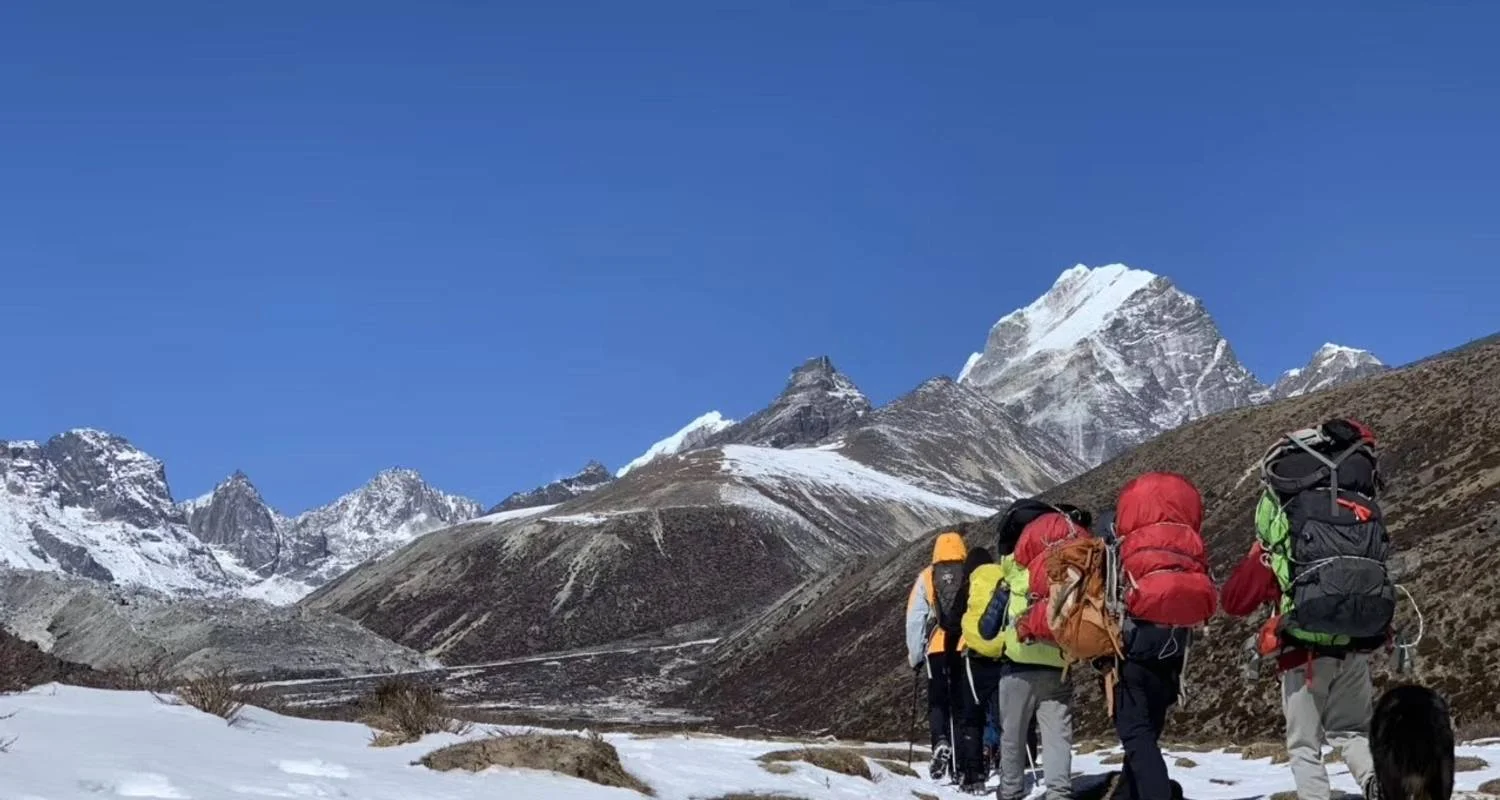
Na het acclimatiseren in Namche Bazaar gaan we na 5-6 uur trekking op weg naar Tengboche. De essentie van deze plek is het Tengboche klooster. Dit boeddhistische klooster heeft de test van krachtige aardbevingen en vuur doorstaan, maar staat nog steeds overeind. Via Tengboche vervolgen we onze tocht naar Chukung (4730m), een traditioneel weideland voor yaks. In dit dorp stoppen we om te acclimatiseren. We beklimmen Chukung Ri (5546m) en keren terug naar het dorp.
Ons pad leidt ons vervolgens naar het basiskamp van Island Peak na een trektocht van 3-4 uur. Zodra we het basiskamp bereiken, rusten we een dag uit om ons voor te bereiden op onze eindbestemming. De volgende dag gaan we in de vroege ochtend op weg naar Island Peak. Na een zwaar bevochten maar lonende tocht beklimmen we de Island Peak. Vanaf de top zien we de prachtige Imja vallei beneden ons. Vanaf de top zien we de machtige Lhotse (8516m) van dichtbij. Wat nog meer voldoening geeft, is het feit dat deze piek voor het eerst werd beklommen door de legendarische Tenzing Norgay. Hierna keren we terug naar het basiskamp. We keren terug naar Kathmandu na de trekking van Chukung naar Lukla via Namche Bazar. Zo eindigt onze Island peak beklimmingstocht.
We hebben klimexperts beschikbaar om je tijdens de hele reis te begeleiden. Ook bieden we onze klanten alle hulp tijdens de hele reis. Dus, wij, Himalaya Avontuur Treks & Tours heten iedereen welkom bij Island peak climbing & Everest Base Camp Trek.
Wat is Imja Tse?
Imja Tse maakt deel uit van de Everest regio, een van de beroemdste avontuurlijke trekkingbestemmingen ter wereld. Nepal wordt ook wel het land van de machtige Himalaya genoemd. Imja Tse (Island Peak) (6189m) ligt in het noordoosten van het land en wordt beschermd door het Sagarmatha National Park en het Makalu Barun National Park in de Khumbu regio.
Imja Tse (6189m) is een van de mooiste en populairste pieken in de Khumbu. Hij is ook beter bekend als Island Peak. De eilandpiek werd genoemd door Eric Shipton 1951, een lid van de Britse Mount Everest Expeditie, omdat hij eruitziet als een eiland in een zee van ijs wanneer je hem bekijkt vanuit Dingboche (4410m). De piek werd later in 1983 hernoemd naar Imja Tse, maar Island Peak blijft de populaire keuze en gemakkelijk uit te spreken en te spellen. De piek is eigenlijk een uitbreiding van de bergkam die van de zuidkant van de berg Lhotse Shar naar beneden komt. Imja Tse, de eerste top, werd in 1956 beklommen door Hans-Rudolf Von Gunten en twee sherpa's, die deel uitmaakten van een Zwitsers team dat de tweede beklimming van de Mount Everest Base Camp Trek en de eerste beklimming van Mt. Tenzing Norgay sherpa was de eerste Nepalese klimmer die samen met Charles Evans, Alfred Gregory, Charles Wylie en zeven andere sherpa's de Imja Tse beklom. Het is een van de populairste trektochten in Nepal gezien de moeilijkheidsgraad (alpine PD+) en toegankelijkheid, vooral wanneer je wordt ondersteund door een Nepalese klimmende Sherpa gids.
Hoe beklim je Imja Tse?
Er zijn een paar opties om Imja Tse te beklimmen. Een daarvan is starten vanaf het basiskamp op 5.087 meter (16.690 ft) genaamd Pareshaya Gyab en in de vroege ochtend tussen 2/3 beginnen met klimmen. Een andere populaire optie is om te klimmen naar het Island Peak High Camp op ongeveer 5.600 meter (18.400 ft), wat helpt om de hoeveelheid inspanning en tijd die nodig is voor de topdag te verminderen en te besparen. Een goede watervoorraad, zuurstofniveau, minder last van hoogteziekte en zorgen over het slapen op grotere hoogte kunnen echter dicteren om vanuit het basiskamp te beginnen.
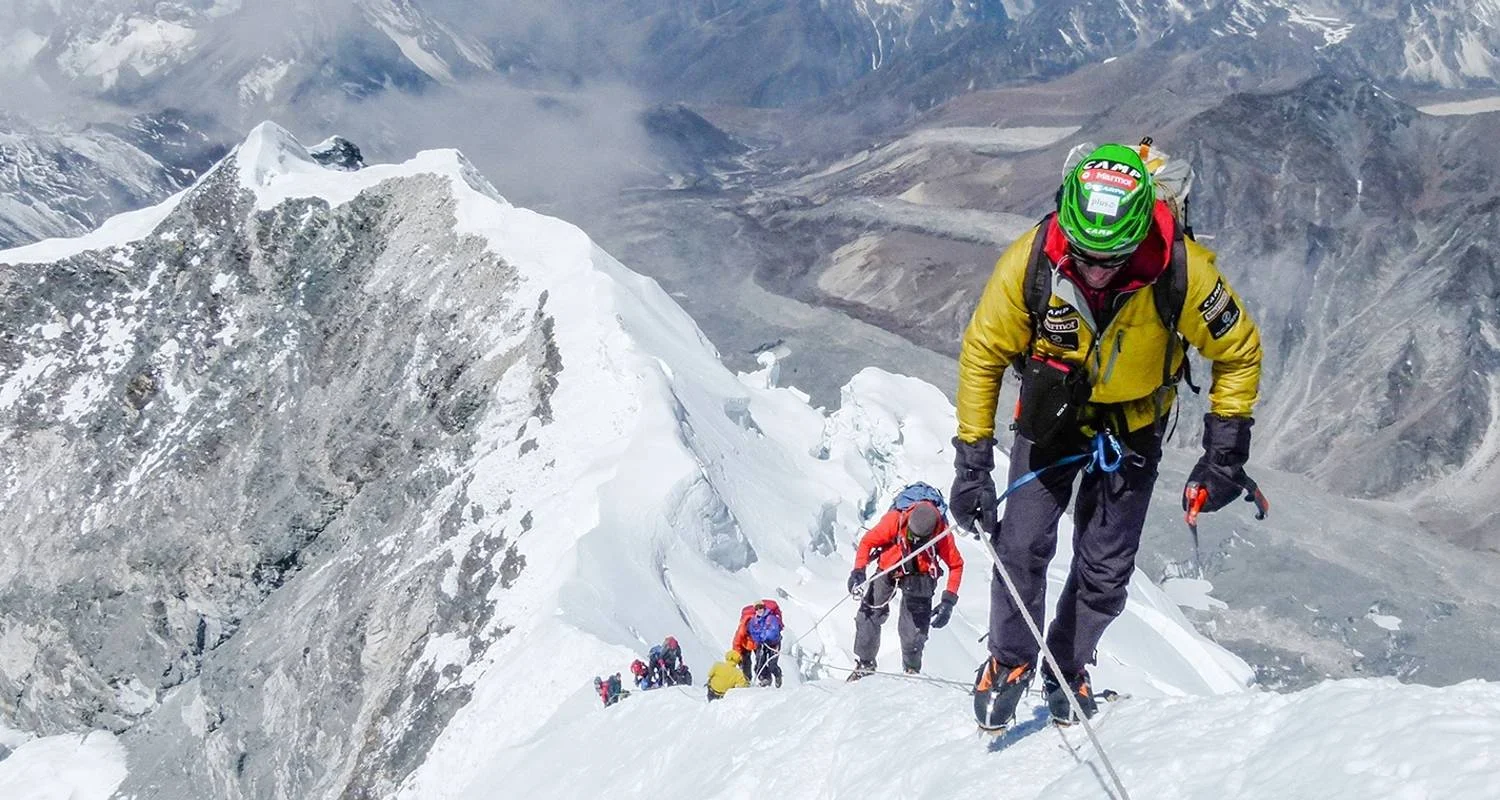
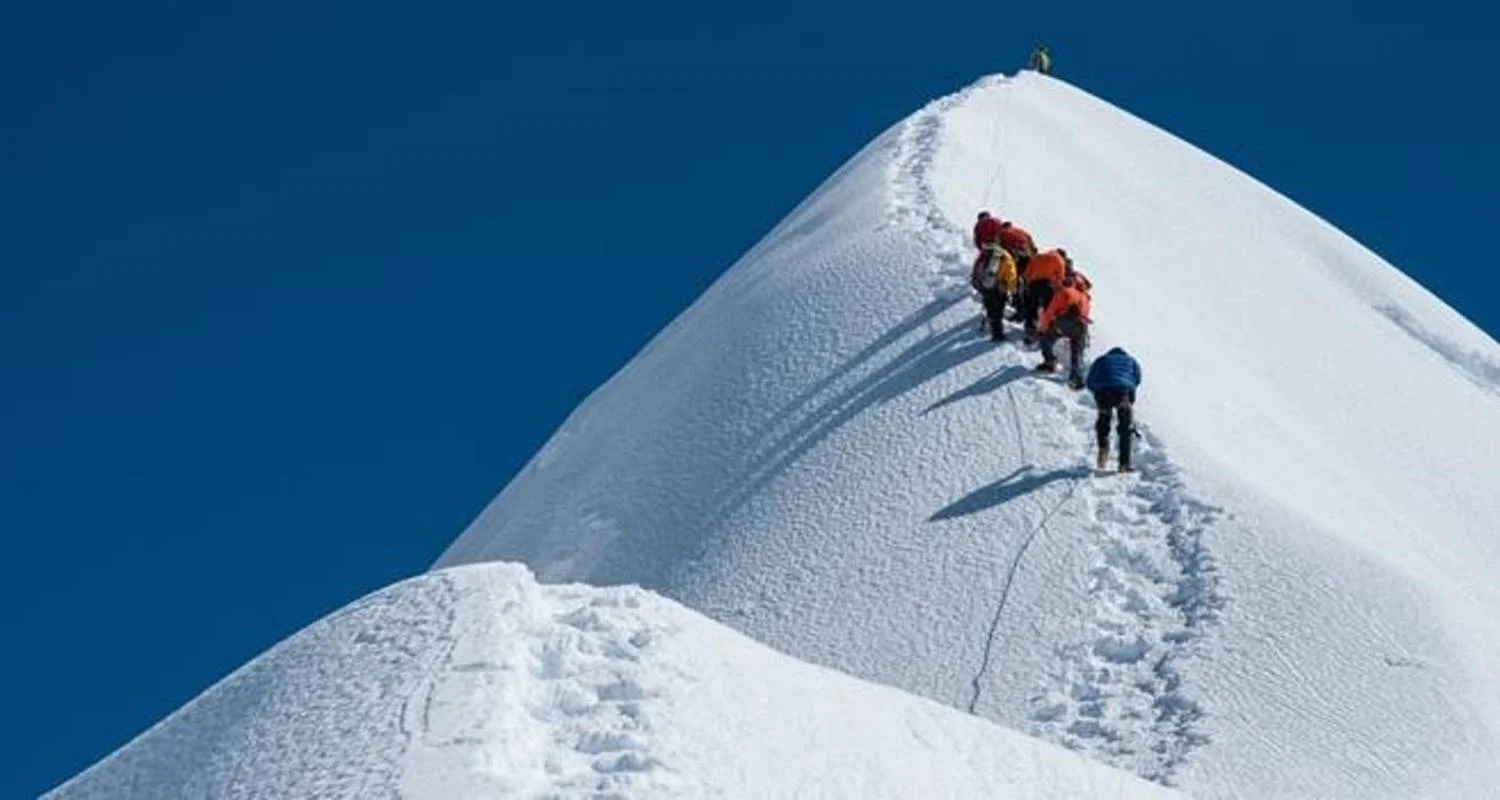
Island Peak beklimmen is een van de avontuurlijkste piekbeklimmingen in de Everest regio. Bovenaan de geul begint de tocht over oude ijsgletsjers en gaat verder omhoog naar een steile helling van sneeuw en ijs. Van hieruit kunnen vaste touwen door de sherpa gidsen worden opgezet voor de inspannende beklimming naar de steile helling van rotsachtig gebergte van bijna 100 meter (330 ft) naar de topkam. Het klimmen naar de top is op de een of andere manier moeilijk door het steile klimmen. Op de top van de Imja Tse zag Mount Everest heel dichtbij op niet meer dan tien kilometer afstand naar het noorden, het uitzicht wordt belemmerd door de massieve muur van Mt. Lhotse (8.516m)en Cho Oyu (8201m), die 2.300 m (7.500 ft) boven de top uittorenen.
Niet alleen het uitzicht op het hooggebergte vanaf de top van de Imja Tse, maar ook de Imja gletsjer die ontspringt aan de westzijde van de Kali Himal, 7.057 meter (23.153 ft), en de zuidelijke hellingen van Imja Tse of Island Peak, ten zuidoosten van de Mount Everest, omzoomt en Imja Tsho (5004m) of Imja meer is een gletsjermeer dat ontstond nadat zich in de jaren 1950 smeltwater begon te verzamelen aan de voet van de Imja gletsjer op het lagere deel van de Imja Tse gletsjer.
Reisprogramma
Dag 1
Aankomst op de luchthaven van Kathmandu. (1,300m)
Startpunt
Tribhuvan International Airport (KTM) त्रिभुवन विमानस्थल, त्रिभुवन विमानस्थल, Kathmandu, Bagmati, Nepal
00:00 - 00:00
Dag 2
Hele dag Kathmandu Valley Sightseeing en reisvoorbereidingsdag. (B)
After breakfast, we start for the Kathmandu city tour which includes four of the UNESCO world heritage site in the Kathmandu valley.
Pashupatinath: It is a very large, complex, and focal point for the Hindu religion. This old and very revered complex of Temple and shrines is dedicated to Lord Shiva, one of the main deities of Hinduism and very popular in Nepal as well as Indian devotees. Hindu people believe that Lord Shiva has multiple forms he is often seen as the destroyer god. This has great significance for the Pashupatinath temple as it is the site of many Hindu ritual cremations each day on the bank of holy Bagmati River. Pashupatinath Temple is considered by Hindus to be an auspicious site for passing from one stage of life to the next through the purifying and destroying flames of cremation on the bank of Bagmati river and feet of Lord Shiva called Brahmanal. However, on a happier note, visitors may also get to see the temple in a buoyant festival mode with one of the many Hindu festivals like Shivaratri, Teej, Janaipurinma and many celebrated here throughout the year.
Boudhanath Stupa: It is a Buddhist religious complex with a long history back over 500 years and more. which is also the World Heritage Site UNESCO. Located on the eastern part of Kathmandu valley it is now a site of great pilgrimage for Buddhist followers who circle its massive stupa, spin its many prayer wheels and visit its beautiful monastery. The main feature of Boudhanath is its huge hemispherical white stupa with a central golden tower and the all-seeing eyes of the Buddha. It also believes that eyes represent peace and love. Visitors should circle the stupa in a clockwise direction and spin prayer wheels for good fortune and get Nirvana. Boudhanath surrounding is a kind of school for the visitors who are interested in Thangka painting to see highly skilled artists at work on religious mandala paintings.
Kathmandu Durbar Square: It holds the places of the ancient king who ruled over the Kathmandu Kingdom. The durbar square is an ancient Malla king of the Kathmandu Valley. It is all of the arts and architectural treasures of a UNESCO World Heritage Site. It is also called the Hanuman Dhoka in central Kathmandu. It believes that the Kasthamandap temple was build in the 5th century from the single tree. The durbar square has many beautiful multi-storey pagodas and temples with ornate carving and carpentry artwork that tells some of the stories of the ancient kings and their mystical time and beliefs. The durbar square contains many important Hindu temples and statues such as Kal Bhairab, Swyat (White) Bhairb, and Lord Shiva. The main attraction for tourists contains unique and intriguing Kumari Chowk. This is an ancient and ornate house where resides in the Living Goddess. The young girl has chosen through an ancient and mystical selection process from the Newar community to become the human incarnation of the Hindu mother goddess, Durga. At the Kumari courtyard the right time is in the afternoon you may see a brief glimpse of the Goddess at her window.
Swayambhunath (Monkey Temple): Swayambhunath stupa complex that sits atop a high hill overlooking Kathmandu and the entire Kathmandu Valley with Mountain ranges on the north side. Swayambhunath is probably the most sacred Buddhist pilgrimage site in Nepal. It is another famous tourist destination and holiest Buddhist and Hindu pilgrims. This temple also called the Monkey temple due to the lots of monkeys and they have their swimming pool. This is a wonderful place to catch your breath and observe the sunset, start to understand the deep importance of Budd]\p-
hist belief to the people. It consists of a very large white stupa with the all-seeing-eyes, it believes the love and peace of Lord Buddha and many small stupas and beautifully carved stone shrines on the top of the hill. If you feel more energetic then you might also like to try some or all of the 350 steps or more that lead all the way from the eastern part from the temple called Bhagwan pau (God Feet)up to your Swayambhunath stupa vantage point.
Dag 3
Vlieg van Kathmandu naar Lukla (2860m) en trek naar Phakding (2610m) 3-4 uur. (B/L/D)
After breakfast, we will be taken to the domestic terminal of TIA for an early morning flight to Lukla. After flying above the breathtaking green and white mountains, we reach Tenzing-Hillary Airport at Lukla. This is one of the most beautiful air routes in the world culminating in a landing on a hillside surrounded by high mountains.
Upon our arrival at Lukla, we meet our other crew members and after some packing and arrangements, we start our trek through the prosperous village of Lukla until we reach Phakding. To assist in acclimatization, we only have a short hike today. However, if interested in additional activities, we can take a side trip to a nearby monastery. Overnight in Phakding.
Dag 4
Trek van Phakding naar Namche Bazaar (3446m) 6-7 uur. (B/L/D)
After breakfast, we walk through beautiful pine forests and then along Dudh Koshi River ending our nature-filled journey at Namche Bazaar. After walking for almost over an hour, we come across the glistening Mt. Thamserku (6,608m) on our right and also experience the serenity of pine, fir, and juniper forests throughout our journey.
If the weather is clear, we may even catch a glimpse of Mt. Everest peering over the Lhotse-Nuptse ridge. We continue walking until we reach the entrance to Sagarmatha National Park, Namche Bazaar, the gateway to Mt. Everest, and the main trading center of this region. On this day we cross five suspension bridges, the last one also known as the Hillary Bridge being the highest. It is an uphill walk from Hillary Bridge to Namche Bazaar. Overnight in Namche Bazaar.
Dag 5
Acclimatisatiedag Bezoek Khumjung Village, Hotel Everest View (3880m). (B/L/D)
This is the day set aside for acclimatization. Health experts recommend that we stay active and move around even during the rest day instead of being idle. There are a few options set aside for this day. We can either stroll around Namche’s quaint villages or come in contact with the Sherpa people and their rich culture, or we can hike up to the Hotel Everest view and enjoy an up-close view of the mighty Everest.
While in the Namche village or upon returning from the hike to the Everest View Hotel, trekkers may also visit the local museum containing exhibits displaying the area’s native flora and fauna as well as the history of the Mount Everest region.
For trekkers who want to hike for a little longer, a hike to Khumjung village (5-6 hours) may also be an option. While in the village we can visit the Edmund Hillary School and Khumjung Monastery (a monastery famous for housing the head of the Yeti!). Overnight in Namche Bazaar.
Dag 6
Trek van Namche Bazaar naar Tengboche (3860m) 5 -6 uur. (B/L/D)
After breakfast, we trek towards Tengboche. It is an easy walk from Namche to Phunki. Upon reaching Phunki, we ascend towards Tengboche, a village that houses the very famous Tengboche monastery which is the largest monastery of the Everest region.
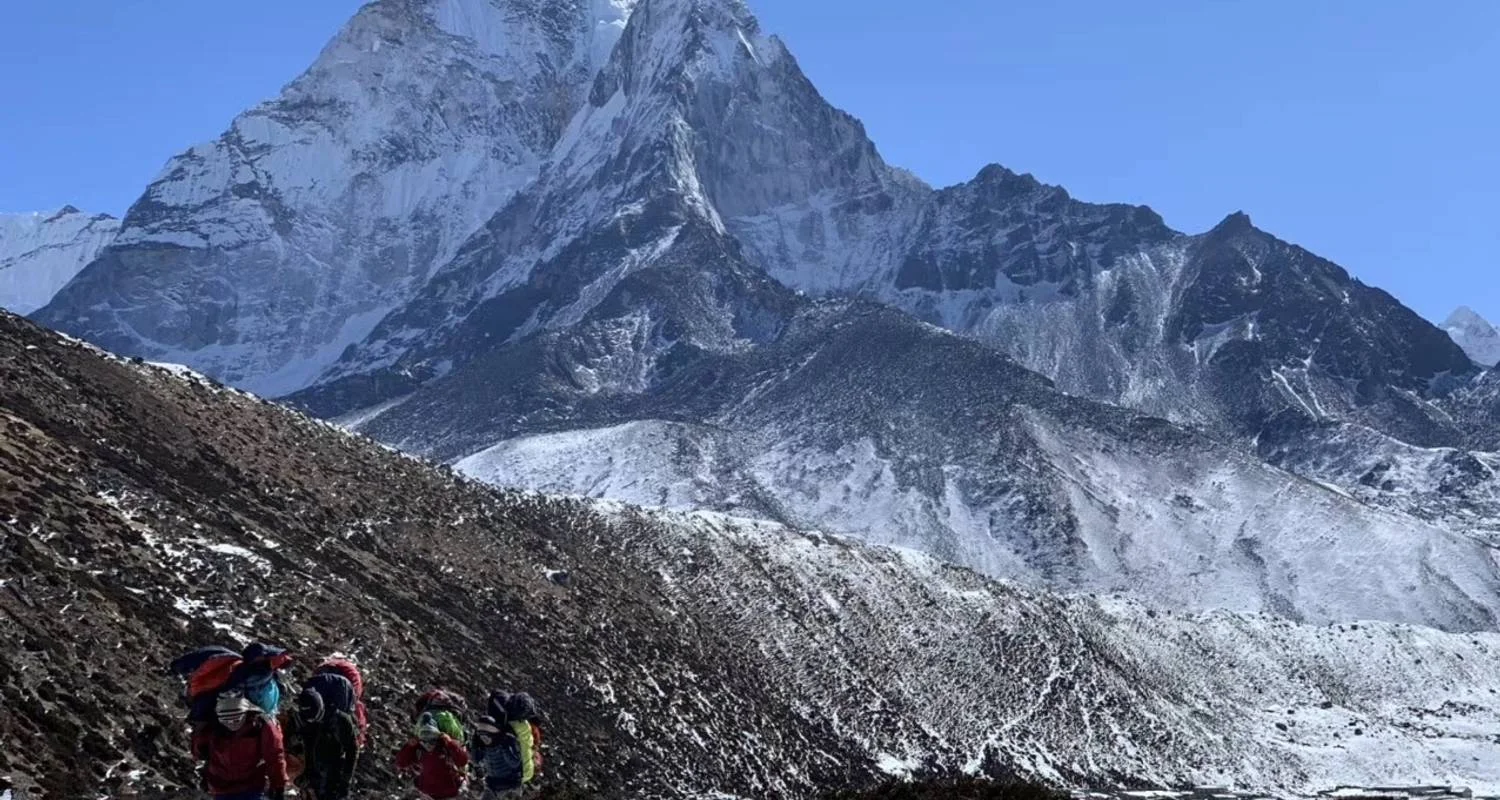
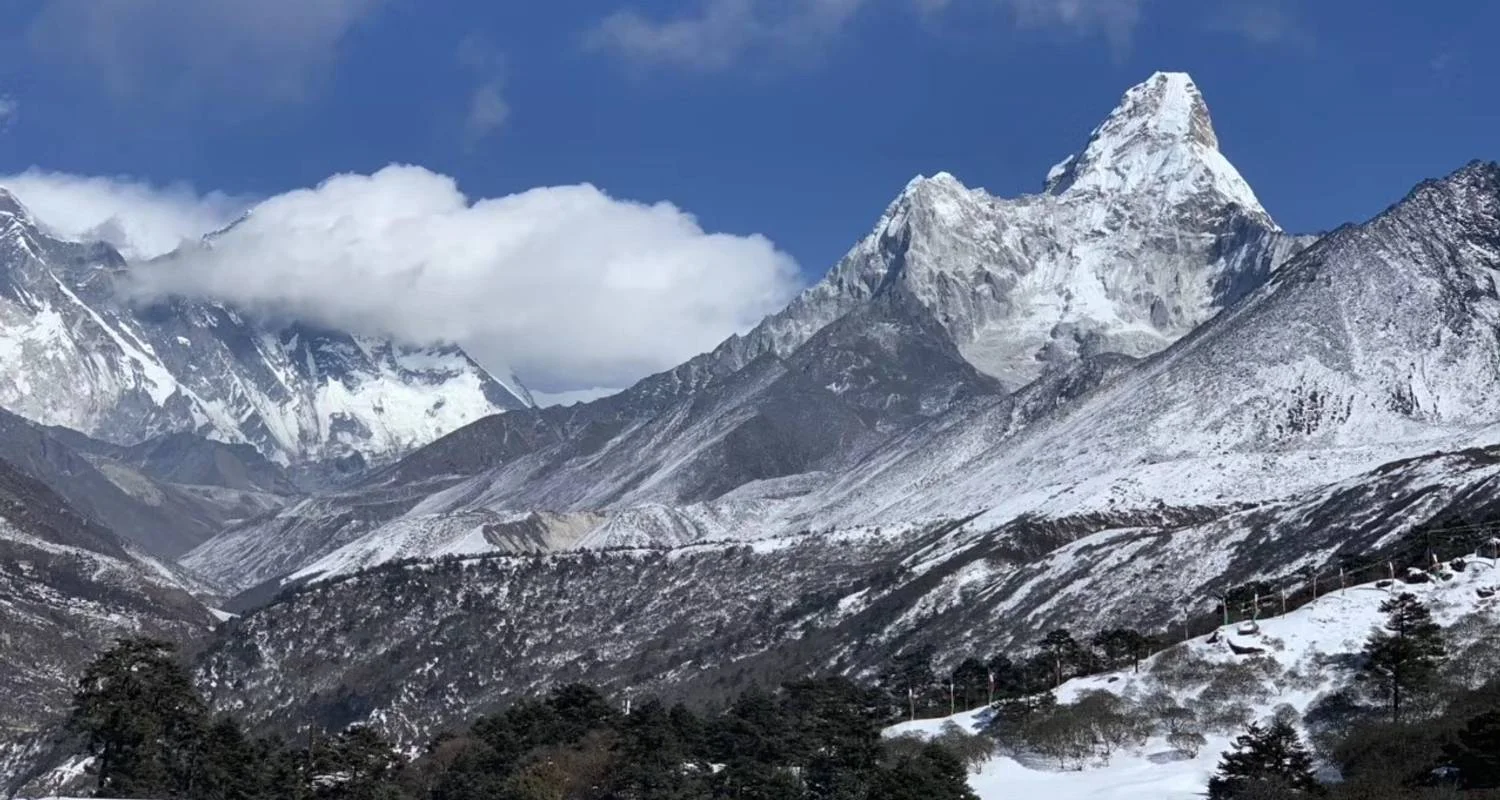
Located amidst the Sagarmatha National Park (a UNESCO World Heritage Site of "outstanding universal value”), it is draped with the panoramic 360-degree view of the Himalayas, including Mt. Everest, Nuptse, Lhotse, Ama Dablam, and Thamserku. The monastery opens at 3:00 pm so if we are lucky we might just be able to witness a religious ceremony. Overnight in Tengboche.
Dag 7
Trek van Tengboche naar Pheriche (4200m) 4 -5 uur. (B/L/D)
With the Himalayas as its backdrop, the monastery in Tengboche is in an excellent location. We visit the monastery in the morning and enjoy taking pictures of the monastery and the amazing landscape. We descend for about half an hour through a forest before crossing a river.
Next, we trek uphill and notice that as we climb higher, the landscape becomes drier. We walk past a traditional Sherpa village of Pangboche before reaching Pheriche, a beautiful village located on a riverside. Here, we will also see a small helipad that is used for helicopter rescues during emergencies. We may even take a class with a mountain specialist in a medical clinic at Pheriche. Overnight in Pheriche.
Dag 8
Trek van Pheriche naar Lobuche (4910m) 5-6 uur. (B/L/D)
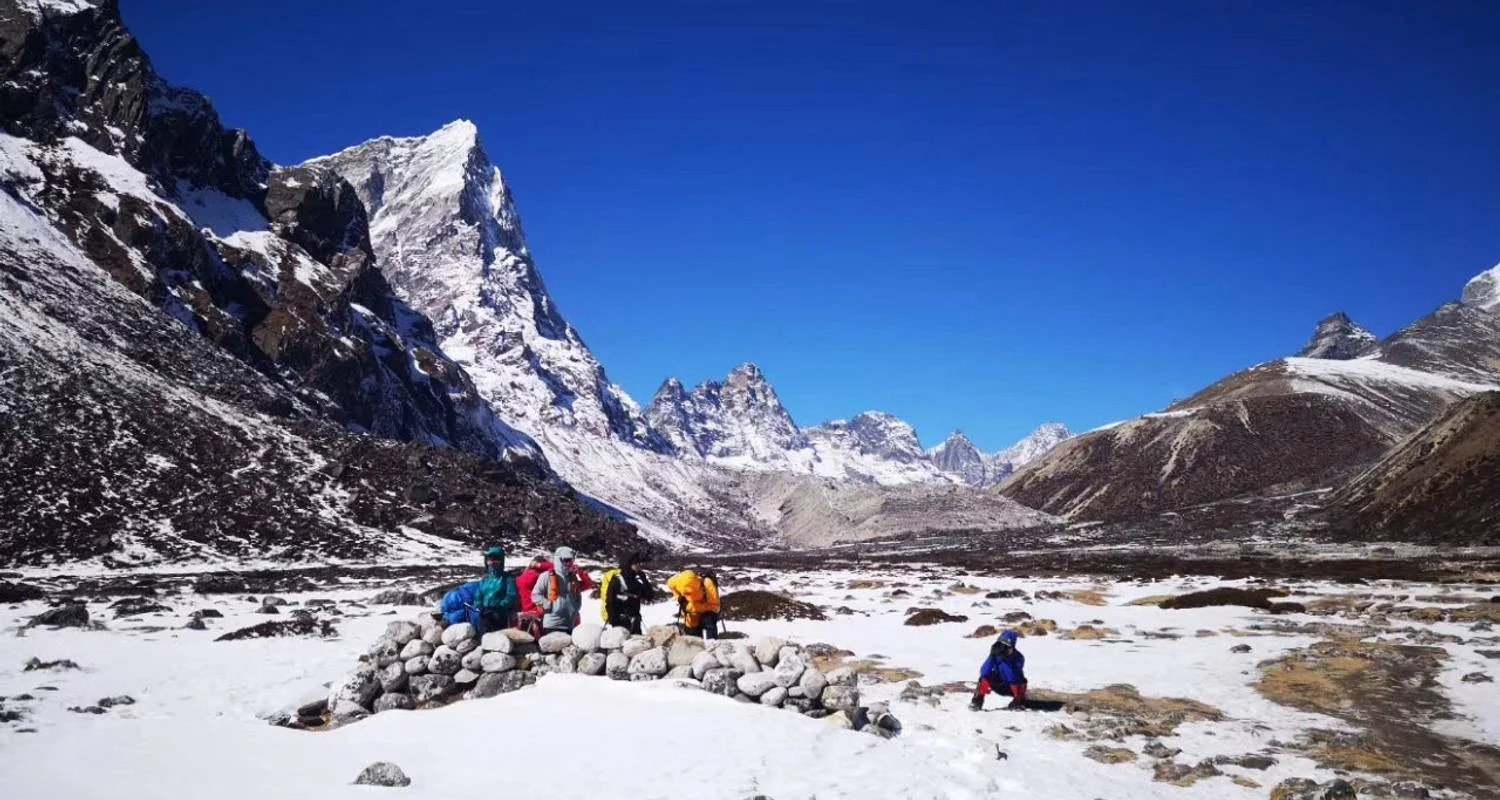
After breakfast, we start with an easy walk towards Dugla. Next, we trek up the steep terminal moraine of the Khumbu Glacier and then pass through the boulder-strewn slopes as we ascend Chupki Lhara where we find an array of stones with prayer flags used as memorials to Scott Fischer (American mountaineer) and 10-time Everest summiteer Babu Chiri Sherpa (Nepalese mountain guide) who perished on a mission to climb Everest.
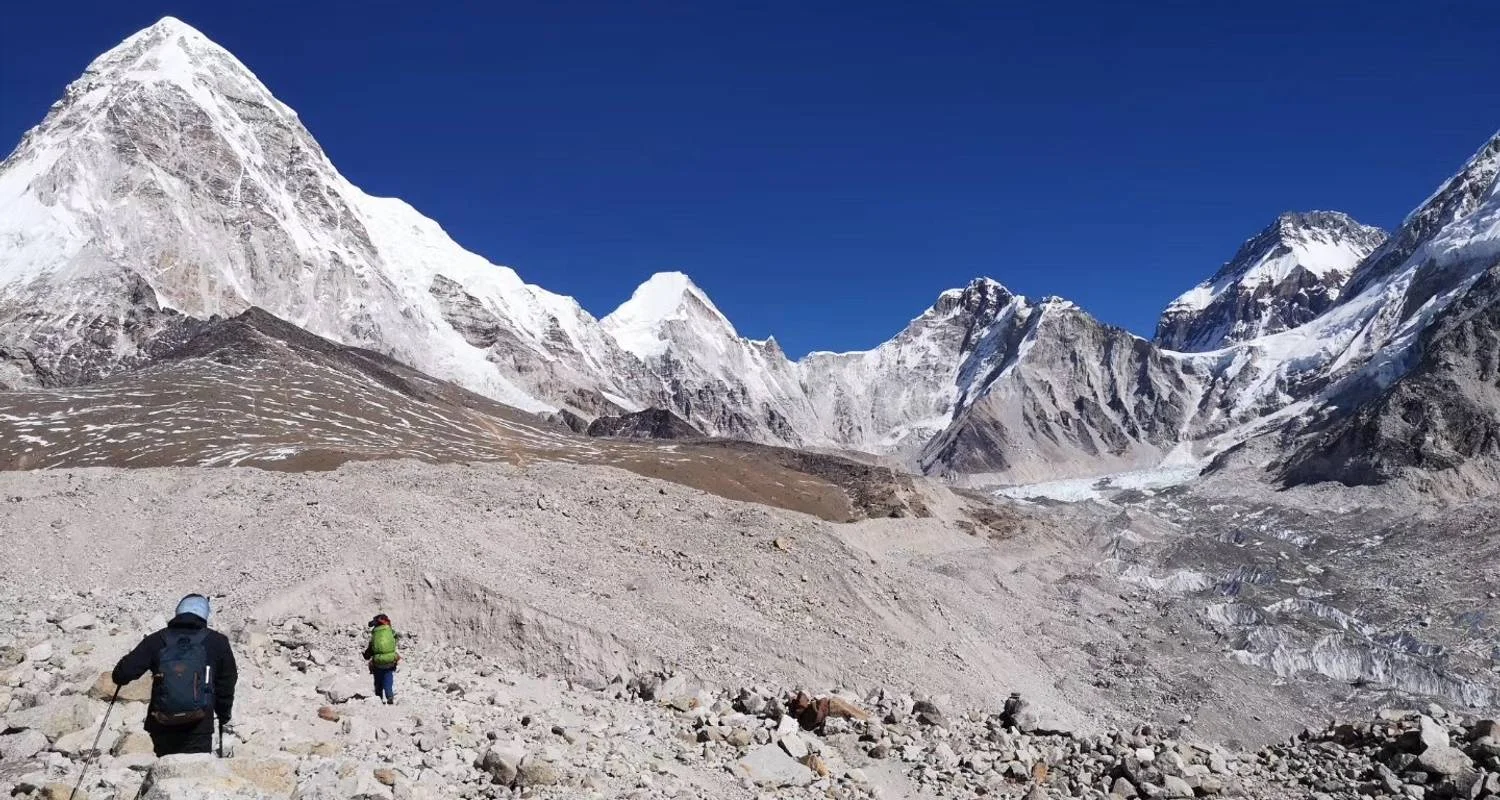
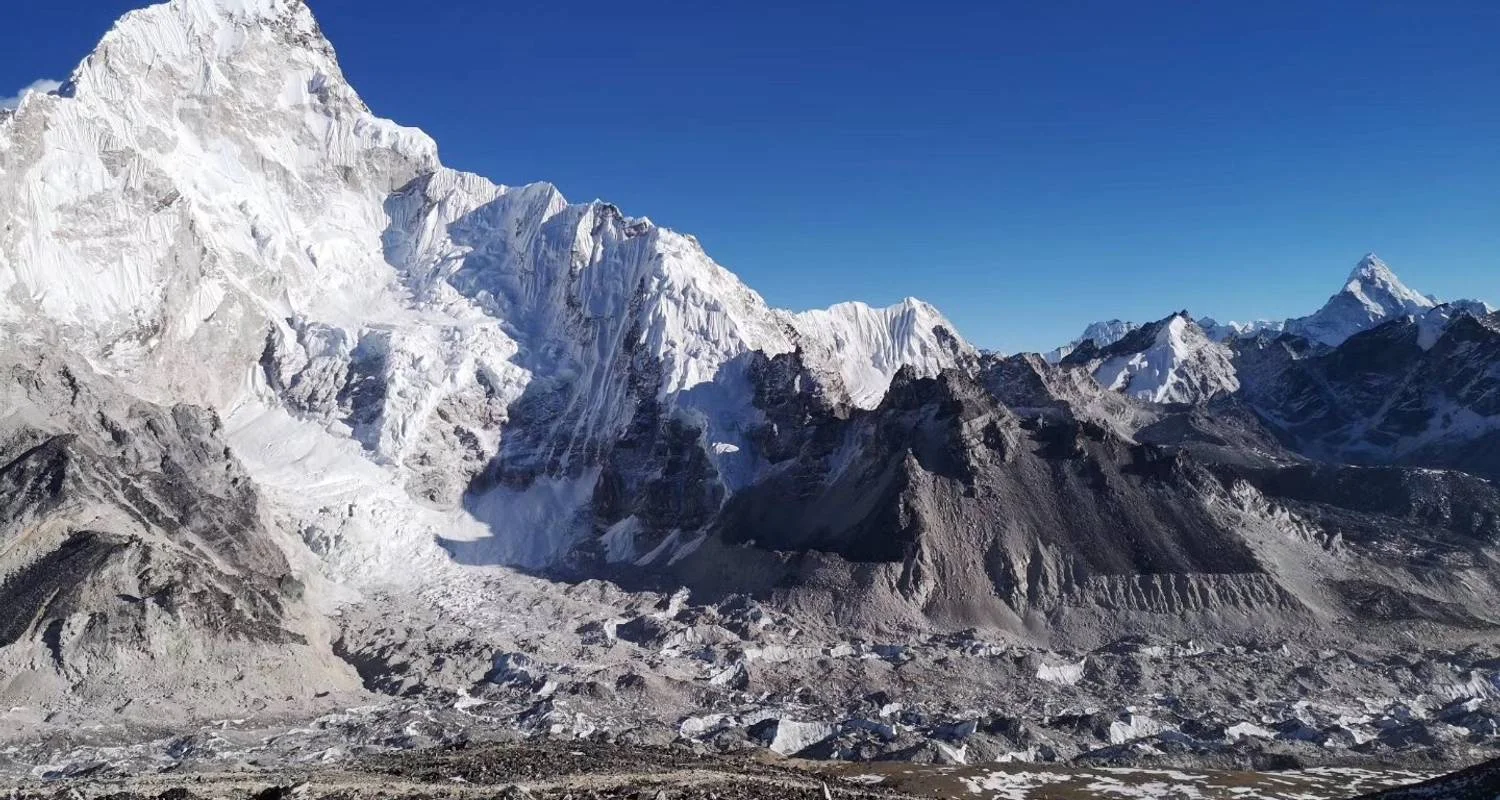
The trail then continues to the Khumbu Glacier moraine and we find ourselves facing several great peaks - Khumbutse, Lingtren, Pumori, and Mahalangur Himal. Overnight in Lobuche.
Dag 9
Trek van Lobuche naar Gorakshep (5160m) via EBC (5360m) 6-7 uur. (B/L/D)
We take the trail to Everest Base Camp through the once vast Gorak Shep Lake. Continuing straight ahead, we come across the Indian army mountaineers' memorials. The path from here can be misleading; hence it is important that we follow our lead Sherpa diligently. The walk is strenuous due to the thin air at a high altitude.
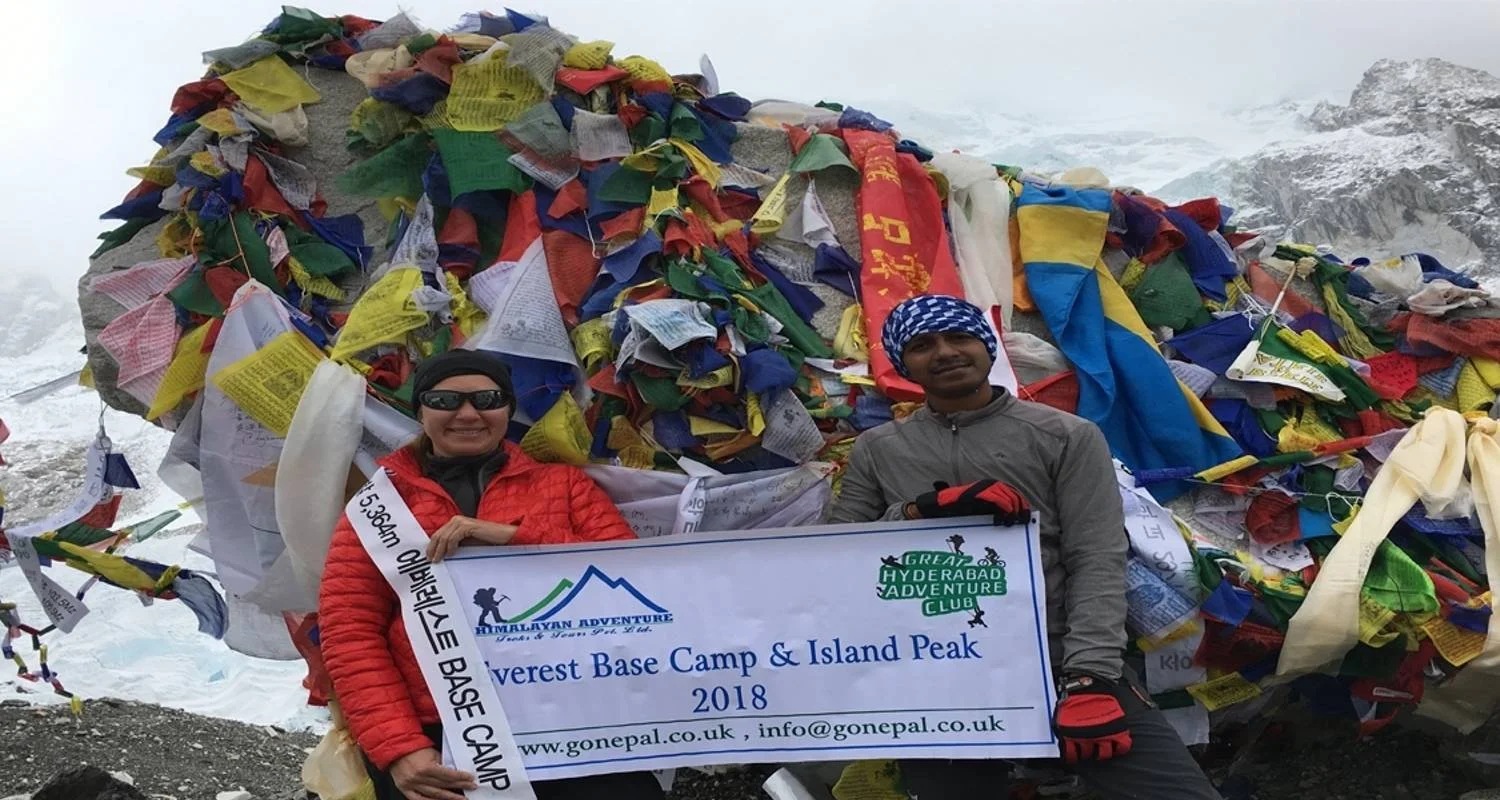
We pass through rocky dunes, moraine, and streams before reaching the Everest Base Camp. Upon reaching the Everest Base Camp, we see tents of mountaineers that stand out in bright colors against the monotony of gray surroundings (especially in the spring). Nuptse, Khumbuste, and Pumori are the mountains we can view from the base camp. We get back to Gorak Shep for a good night's rest. Overnight in Gorakshep.
Dag 10
Trek van Gorakshep naar Lobuche via Kalapatthar (5545m) 6-7 uur. (B/L/D)
We prepare for an early morning departure, amid pre-dawn darkness and cold temperatures (-10 to -14 c). Plus, there is always the potential for chilly winds which are quite common. Familiar peaks such as Lingtren, Khumbutse, and Changtse tower to the east even as Everest begins to reveal itself. But, it is upon reaching Kala Patthar that we get to see360 degree up-close and formidable views of Mt. Everest.
We take pictures, enjoy the magnificent mountain panorama, and then return back to Lobuche for a good night's rest. Overnight in Lobuche.
Dag 11
Trek van Lobuche naar Chhukung (4730m) 5-6 uur. (B/L/D)
After breakfast, we trek via Khumbu Glacier to Kongma La Base Camp (5,000m/16,404ft). The ascent to the Kongma La pass is the most difficult part of our trek today. In the Kongma La, we see cairn wrapped in prayer flags to mark the pass.
Then we descend gradually to Imja Khola valley, followed by another descent to Chhukung, a small summer settlement. After reaching Chhukung we will also check our equipment in order to get ready for our ultimate climb. Overnight in Chhukung.
Dag 12
Trek van Chukung naar Basiskamp Island Peak (5200m) 3-4 uur. (B/L/D)
The trek to Island Peak Base Camp is on a fairly steep trail. First, we climb south then turn east to the mainline of the valley. We then walk on a winding path below the southern flank of the moraine from the Lhotse Glacier. Next, we continue walking on a pleasant trail along a streamside.
The route to the Amphu Labtsa lies to the southeast. A crisscross route through the Imja and Lhotse glacier moraines leads to a wide valley flanking the SW side of Island Peak. Overnight at Island Peak Base Camp.
Dag 13
Pre klim Training op Island Peak basiskamp (5200m). (B/L/D)
We begin our pre-climb training today after breakfast. Our guides will provide training on peak climbing techniques and the proper ways of using climbing gear such as the ice axe, climbing boots, and crampons, harness, ascender, etc.
The training will also include using ropes to go up and down. Although it is not mandatory to have prior training for Island Peak Climbing, we strongly believe that some training experience will boost your confidence and climbing skills to increase the chances of scaling the summit as well as to fully enjoy the experience. We can spend the rest of the day hiking to high camp and back or resting for the next day’s climb. Overnight at the base camp.
Dag 14
Island Peak Base Camp naar Island Peak Summit (6189m) terug naar Base Camp 10-12 uur. (B/L/D)
We wake up early today at around 12 to 1 am and have our breakfast before beginning our climb. It is important we reach the summit before noon because in the afternoon the strong winds in the highlands might become a barrier to a successful summit.
The trail moves up beyond the base camp for several hundred meters before striking off the steep hillside. Initially sandy, the path soon turns to grass before becoming boulder-strewn. As we climb up the hill, we will see that the slope narrows, and the trail enters a steep rock channel. We climb the rock gully. This is not difficult, but there are several short rock steps to climb before we emerge on the right side of the gully.
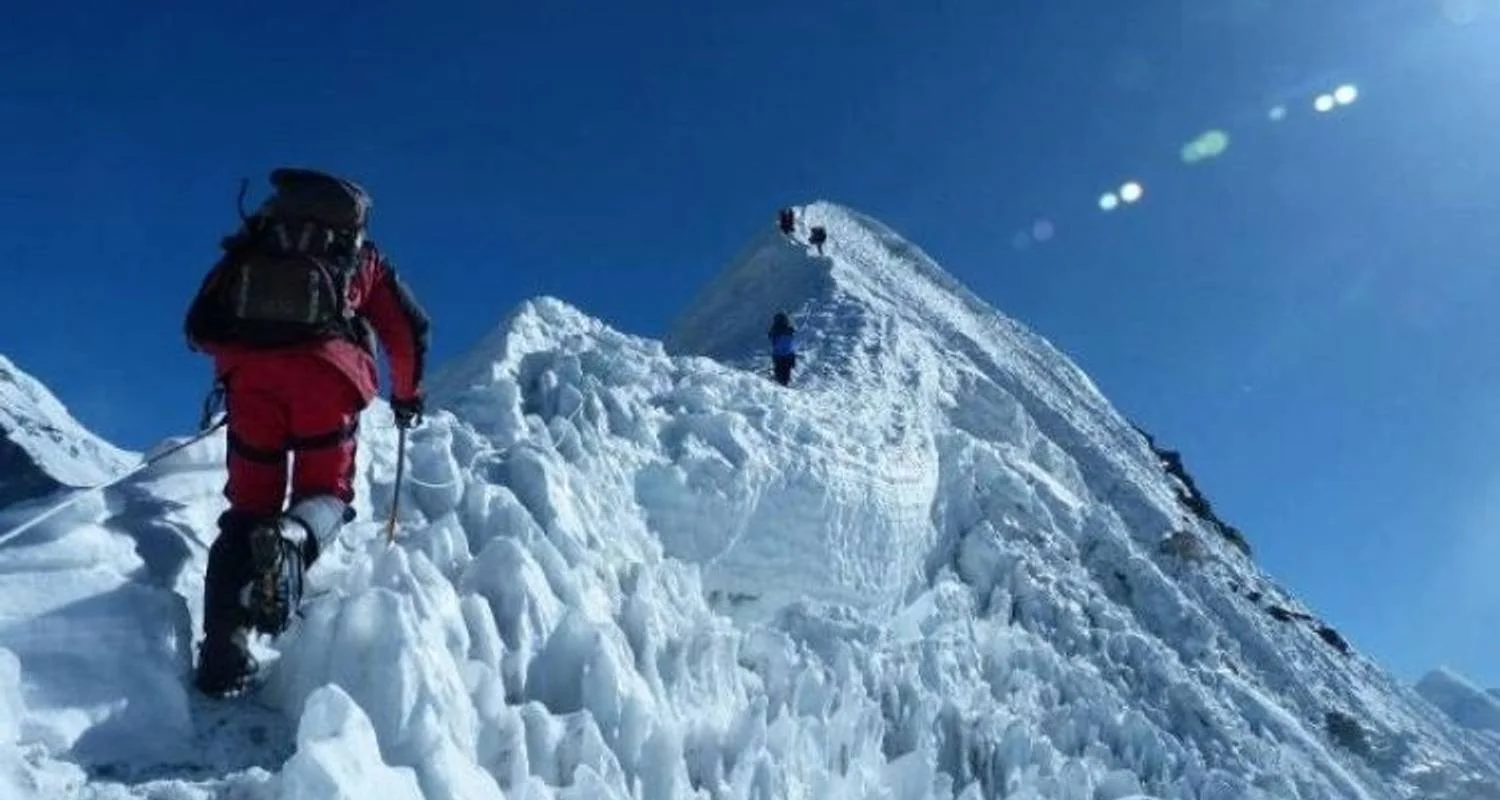
The route then follows a ridgeline, which leads to an exhilarating and exposed traverse onto the snout of the summit glacier. The guides will fix a rope when required. A steep snow slope leads us onto the summit ridge. Both fixed rope and man rope will be used during the climb for safety. We use fixed rope after successfully climbing on rock. The length of the rope will usually be 350 m. However, the length depends on the time of the season and the crevasses.
There are two newly formed crevasses which are approximately 3 and 4 meters long. We will be using ladders to cross them. After enjoying the summit views and taking pictures, we descend all the way to Island Peak Base Camp where some of our crew are waiting for us. We celebrate on our successful Island Peak climb.
Dag 15
Trek van Island Peak Base Camp naar Pangboche (3985m) 5-6 uur. (B/L/D)
Today’s walk will be much easier as we descend to the lower altitudes. Following the same route back through the wide valley of Khumbu Khola, we pass through the beautiful Sherpa villages, Orsho and Shomare. We can also take a different trail to visit the Gompa in Upper Pangboche, which is believed to be the oldest in the Khumbu region, or take the regular trail to reach Pangboche.
Pangboche is a scenic village surrounded by Everest to its north, Ama Dablam, Thamserku, and Kangtaiga to the east, the Kongde range to the south, and the Imja Tse River flowing through the wide fertile valley.
Dag 16
Trek van Pangboche naar Namche Bazaar (3440m) 4-5 uur. (B/L/D)
From Pangboche we retrace our steps down to the Imja Khola and up through the forest to Tengboche. If interested, we can also visit nuns at the Tengboche monastery. After lunch at Tengboche, we continue through the hillside blanketed by rhododendron and juniper trees. After crossing the bridge over the Dudh Koshi River, our trail follows the Dudh Koshi gorge descending rapidly through the pine forests before reaching Sansa.
We keep a lookout for wildlife such as mountain goats, snow leopards, colorful pheasants, etc., while passing through the forest. After passing a Chorten, we reach the army camp at Namche Bazaar. Overnight in Namche Bazaar.
Dag 17
Trek van Namche Bazaar naar Lukla (2860 m) 5-6 uur. (B/L/D)
The trail descends steeply downward so we need to walk cautiously as our shaky legs continuously battle the rocky terrain. After crossing the suspension bridges over the fast-flowing Dudh Koshi and its tributaries, the trail becomes more level and natural. After our arrival in Lukla, we stretch those sore legs and recall the experiences of the last couple of weeks. Overnight in Lukla.
Dag 18
Vlieg van Lukla naar Kathmandu. (B/D)
After breakfast, you head towards the airport to fly to Kathmandu. This day is free for you. After reaching Kathmandu, we can take a rest or do some souvenir shopping. Evening you can do shopping in Thamel for your friends & family. Evening farewell dinner at an authentic Nepalese restaurant with a cultural performance.
Dag 19
Vertrek naar de luchthaven. (B)
A representative from Himalayan Adventure Treks and Tours will take you to the airport, approximately 3 hours before your scheduled flight. On your way home you'll have plenty of time to plan your next adventure in the wonderful country of Nepal.
Eindpunt
Tribhuvan International Airport (KTM) त्रिभुवन विमानस्थल, त्रिभुवन विमानस्थल, Kathmandu, Bagmati, Nepal
00:00 - 00:00
Annuleringsbeleid
Himalayan Adventure Treks & Tours Team Terms & Conditions
Risk and Liabilities
All the Nepal, China and Bhutan tours are conducted under the strict rules and regulations of the Nepal
tourism board of the respective country. We are not liable for any change or cancellation of the trip
under unavoidable circumstances like change in rules and regulations of country, government
restrictions, natural disasters, political instability, cancellation of flight, delay, sickness or accident,
breakdown of vehicle, etc. Any extra cost incurred due to such circumstances shall be borne by the
clients themselves. Therefore, travel insurance is highly recommended.
Last minute booking
We even accept last minute booking. You can book a trip to Nepal 7 days prior to the trip departure
dates. Last minute booking may not acceptable in case of Bhutan or Tibet Package tour.
Postpone the trip
A written notice should be sent to us 30 days prior to the trip departure date.
In case of postpone of Nepal tour, minimum USD 150 will be charged as a current trip cancellation
charge and the remaining amount will be transferred for the postponed trip.
In case of postpone of Tibet and Bhutan Tour, trip cancellation charge will be charged as per the
trending market rate of those country. It solely depends upon the ongoing policy of our agents in Tibet
and Bhutan. For now, 25 % of trip cost and 50 % of trip cost will be charged in case of postpone of
Bhutan and Tibet trip respectively.
Trip Cancellation (Nepal)
In case you intend to cancel your trip for any reasons, you need to write it to us 15 days prior to your
trip departure date. We shall approve it as cancelled only after receiving a valid written notice from the
client. If the reason for your cancellation is genuine like injury or serious illness, you can postpone your
trip or transfer your booking to another person who meets all the requirements for the trip. However, a
fee of USD 150 per person will be charged if you postpone or transfer your trip within 15 days prior to
your trip date. As per our policy, the deposit amount is non refundable, therefore, you can utilize the
amount to book a trip with Himalayan Adventure Treks & Tours next time.
Trip Cancellation (Tibet)
A valid written notice of cancellation should be provided 30 days prior to your trip departure date. In
case you cancel your Tibet tour, 50% of the trip cost will be charged as a cancellation charge (even in
case of postpone or transfer of trip to another person). The remaining amount will remain secured with
Himalayan Adventure Treks & Tours as a deposit from you. You can utilize it to book the tour with
Himalayan Adventure Treks & Tours next time. The amount is non-refundable.
Trip Cancellation (Bhutan)
A valid written notice of cancellation should be provided 30 days prior to your trip departure date. In
case you cancel your Bhutan tour, 25% of the trip cost will be charged as a cancellation charge (even in
case of postpone or transfer of trip to another person). The remaining amount will remain secured with
Himalayan Adventure Treks & Tours as a deposit from you. You can utilize it to book the tour with
Himalayan Adventure Treks & Tours next time. The amount is non-refundable.
Incomplete Tour
We are not liable for any refunds in case of any incomplete tour, trekking, Tour or expedition whatever
the reason.
Unforeseen Circumstances
If your trip gets cancelled due to any unforeseen circumstances like natural disasters, war or
unfavorable climatic conditions, we will arrange another trip for you. So, even if your trip will be not the
one you choose, your money will not go in vain.
Price changing
We reserve our rights to change the price under various circumstances. Though our action will be
reasonable like in case of some circumstances such as drastic change in exchange rate, inflation,
government actions, etc., we are not liable to answer anyone for our action.
Travel Insurance
We highly recommend a comprehensive travel insurance package to all our clients. The insurance must
cover all the medical expense, personal accident, and emergency evacuation, Helicopter rescue and trip
cancellation due to some serious region.
During the tour
In case you commit any unlawful act during your tour and you are compelled to leave Nepal, Himalayan
Adventure Treks & Tours is not liable for any kind of refunds.
Warning
Our terms and conditions are applicable only if you book your trip with us directly. If you book your trip
with us through any agents or third party, you shall be liable to their terms and conditions.
gears and natural calamity, theft of or damage to baggage and personal effects etc.
Flight Delay/Cancellation
Flight delays and cancellation are quite often during the bad weather condition in the remote areas
particularly in Everest region, Annapurna region, Dolpo, Simikot and Jumla region etc. Therefore, it is
advisable to carry some extra money to buy food and accommodations in case of delays. Himalayan
Adventure Treks & Tours will not be responsible for any of the additional expenses. Therefore, please
plan accordingly.
Your personal belongings
We are not liable for any damage or loss of your luggage or property. They are at your own risk.
Reisinformatie
Accommodatie
- Drie overnachtingen in een 3* hotel in Kathmandu met ontbijt.
- Tenten en keukengerei van goede kwaliteit om te kamperen.
- Onderdak in theehuis tijdens de trektocht.
- Tent-accomodatie tijdens de beklimming.
Vervoer
- Airport pickups and drops by private vehicle.
- Kathmandu Sightseeing by private vehicle with an experienced tour guide.
Verzekering
- Travel and rescue arrangement.
Vluchten
- Domestic flights Kathmandu/Lukla/Kathmandu.
Extra diensten
- Ophalen en wegbrengen van en naar het vliegveld met een privé-voertuig.
- Drie overnachtingen in een 3* hotel in Kathmandu met ontbijt.
- Bezienswaardigheden in Kathmandu per privé-voertuig met een ervaren gids.
- Engelssprekende, opgeleide en ervaren trekkinggids (leider), klimgids (leider), en assistent-gidsen.
- Alle maaltijden ontbijt, lunch, en avondeten tijdens de trekking en beklimming.
- Een ervaren, behulpzame, en vriendelijke gids, dragers (1 drager voor 2 cliënten).
- Personeelskosten met inbegrip van hun salaris, verzekering, uitrusting, binnenlandse vliegreis, eten, en onderdak.
- Donsjack en slaapzak (terug te geven na afloop van de reis).
- Al het nodige papierwerk; trekkingsvergunningen.
- Binnenlandse vluchten Kathmandu/Lukla/Kathmandu.
- Medische kit (meegebracht door je gids).
- Tenten en keukengerei van goede kwaliteit voor het kamperen.
- Onderdak in theehuis tijdens de trektocht.
- Tent-accommodatie tijdens het klimmen.
- Alle overheids- en plaatselijke belastingen.
- Laatste avond afscheidsdiner in een authentiek Nepalees restaurant met een cultureel optreden.
Extra diensten
- Airport pickups and drops by private vehicle.
- Three Night 3* hotel in Kathmandu with breakfast.
- Kathmandu Sightseeing by private vehicle with an experienced tour guide.
- English speaking, trained, and experienced trekking guide (leader), climbing guide (leader), and assistant guides.
- All meals breakfast, lunch, and dinner during the trek and climb.
- An experienced, helpful, and friendly Guide, porters (1 porter for 2 clients).
- Staff costs including their salary, insurance, equipment, domestic airfare, food, and accommodation.
- Down jacket and sleeping bag (to be returned after trip completion).
- All necessary paperwork; trekking permits.
- Domestic flights Kathmandu/Lukla/Kathmandu.
- Medical kit (carried by your guide).
- Good quality tents and kitchen utensils for camping.
- Teahouse accommodation during the trek.
- Tented accommodation during climbing.
- All government and local taxes.
- Last night farewell dinner at an authentic Nepalese restaurant with a cultural performance.
Maaltijden
- All meals breakfast, lunch, and dinner during the trek and climb.
Gids
- English speaking, trained, and experienced trekking guide (leader), climbing guide (leader), and assistant guides.
- An experienced, helpful, and friendly Guide, porters (1 porter for 2 clients).
Goed om te weten
Valuta
NPR
Nepalese Rupee
Nepal
Klantbeoordelingen
Operator
Faq Tour
How can I book a tour?
You can order a tour on our website by selecting the desired dates and clicking the “Confirm dates” button. You can also contact our sales department by phone or email.
Which payment options are available?
We accept credit cards, bank transfers and other popular payment methods.
Can I change or cancel my reservation?
Yes, changes or cancellations are possible, however penalties may apply depending on the time before the tour starts.
What documents are required to participate in the tour?
You will need a passport with a valid visa (if required) to visit countries along the tour route.
Fotogalerij