Meet at the airport and travel into the city of Casablanca with the first views of the Moroccan country-side. Visit Hassan II mosque (not possible on Fridays or religious holidays), the largest mosque in Africa and decorated with beautiful tiling of the utmost craftsmanship. You may need to queue a while for tickets and the tour takes about an hour. Continue to the capital city, Rabat, to spend the night in a riad. You may have time to wander around the medina and get a feel of this city.
-
28.12-06.01.26 scheduled

-
29.12-07.01.26 scheduled
-
30.12-08.01.26 scheduled
-
31.12-09.01.26 scheduled
Itinéraire
L'excursion dans le désert marocain au départ de Casablanca, d'une durée de 10 jours, est le moyen idéal de découvrir la culture marocaine authentique. Il combine le majestueux et magique désert du Sahara avec les quatre villes impériales de Marrakech, Rabat, Fès et Meknès.
Le meilleur moyen de commencer vos vacances au Maroc est de visiter l'exquise mosquée Hassan II à Casablanca. La découverte des principales attractions de Rabat, telles que la Tour Hassan, le Mausolée de Mohammed V et la Médina, s'ajoute à ces premières impressions merveilleuses.
Ce sentiment d'orientalité est encore plus présent dans les autres villes impériales. C'est ce qui ressort d'une visite touristique d'une journée à Fès : la médina, le palais royal, les madrassas, les tanneries de cuir. Et de nouveau lors d'une visite à pied à Marrakech pour découvrir ses souks animés, ses jardins colorés, ses madrassas, ses magnifiques palais et sa Djemaa El Fna.
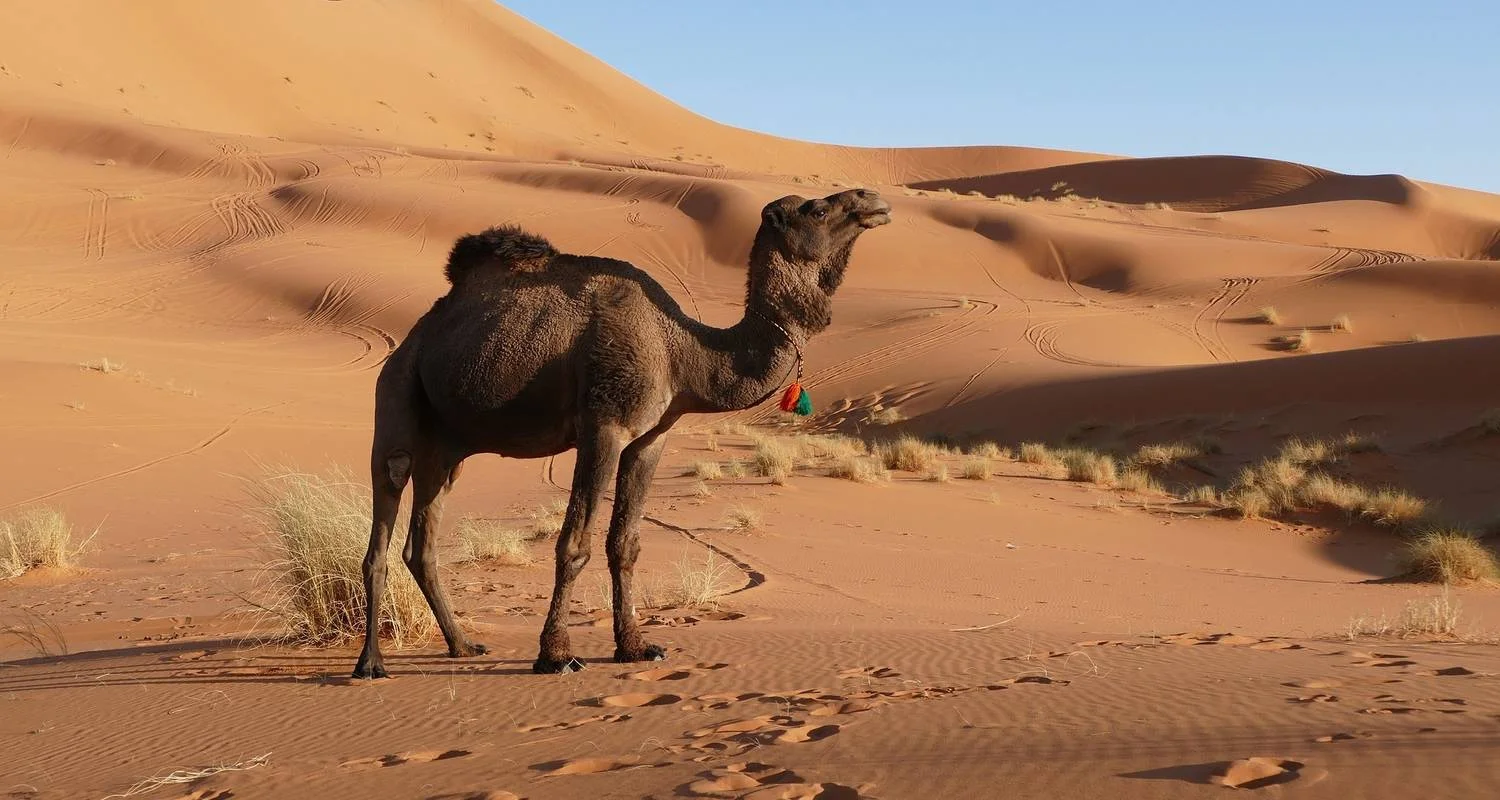
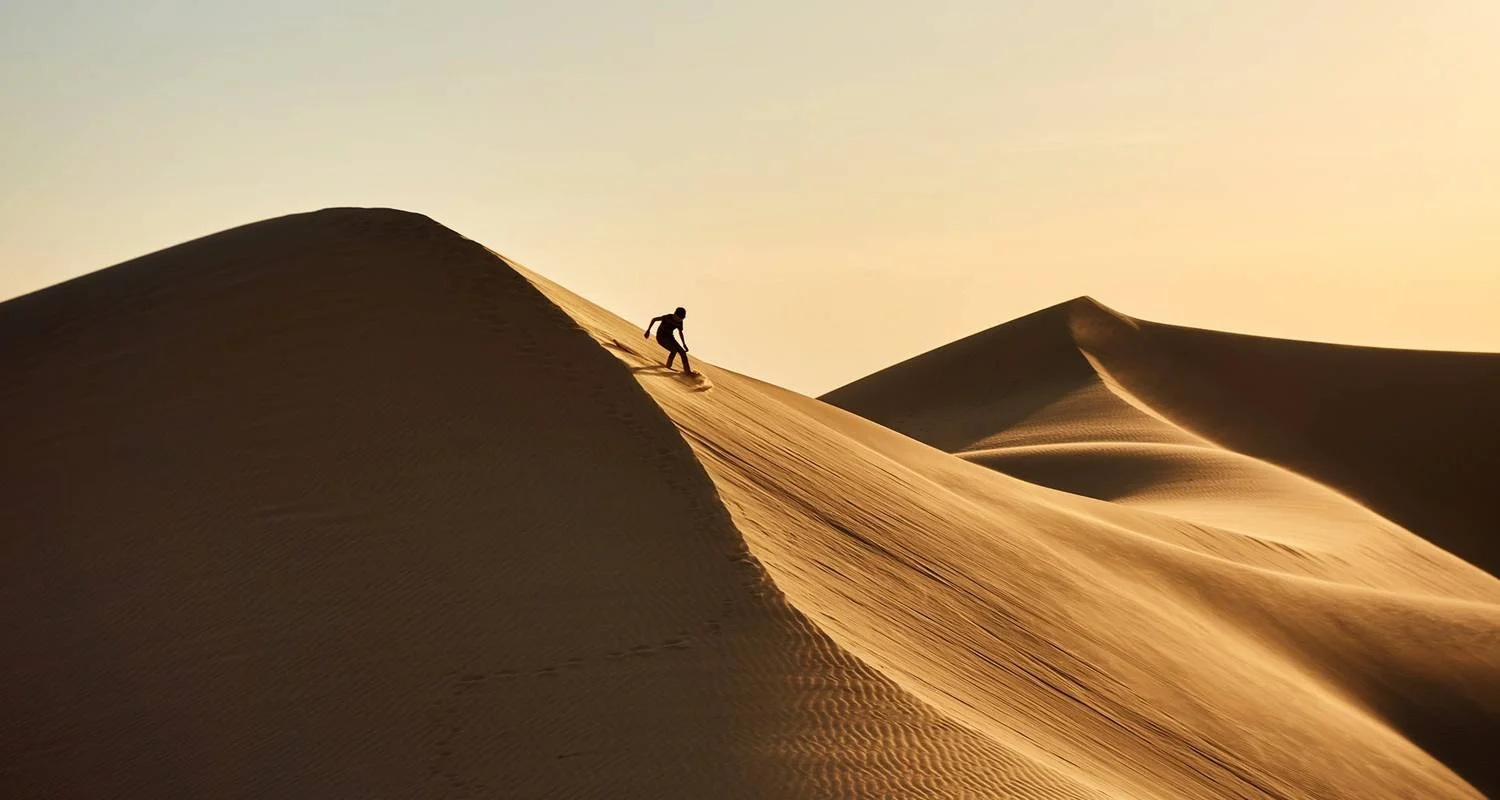
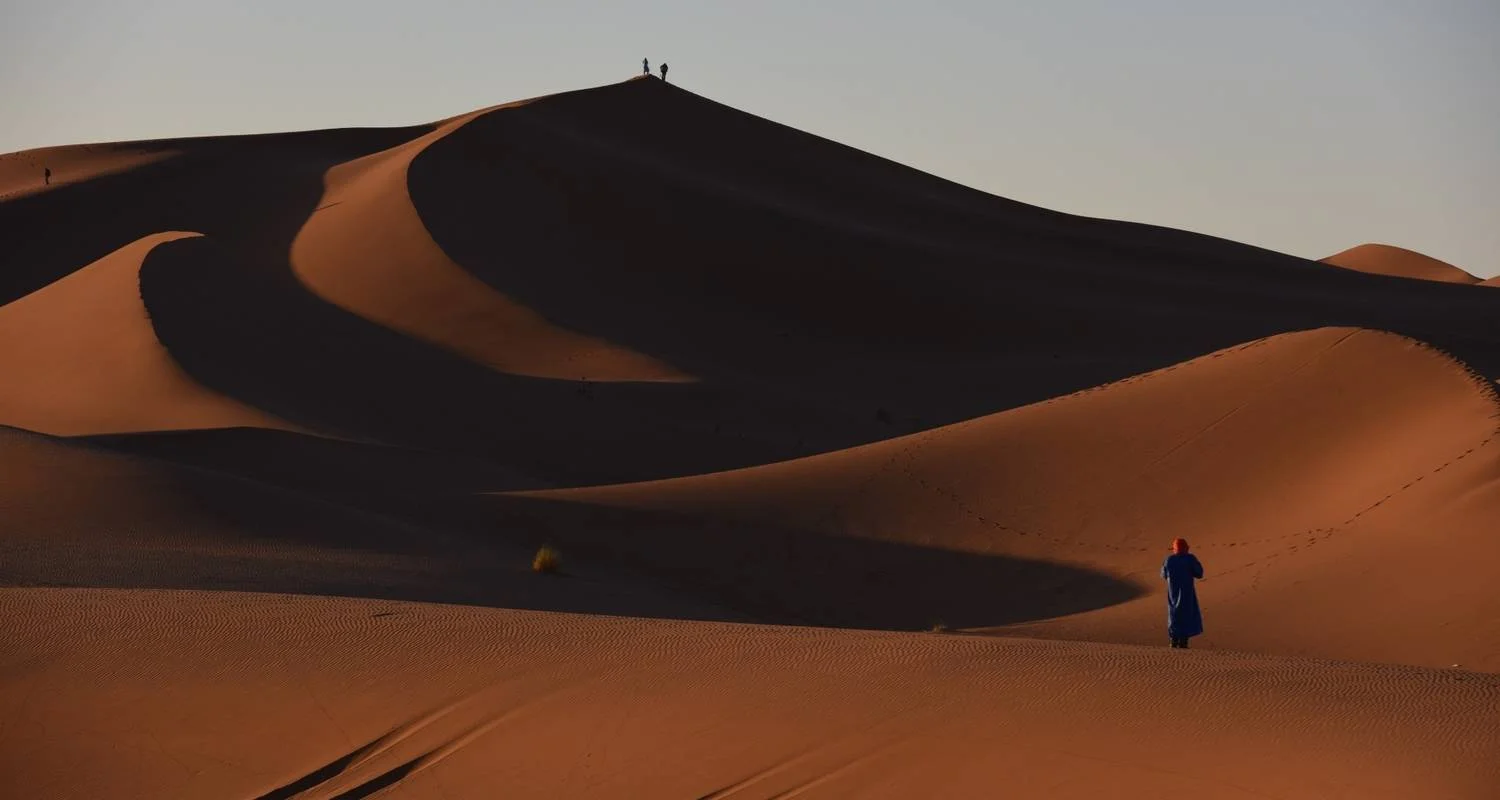
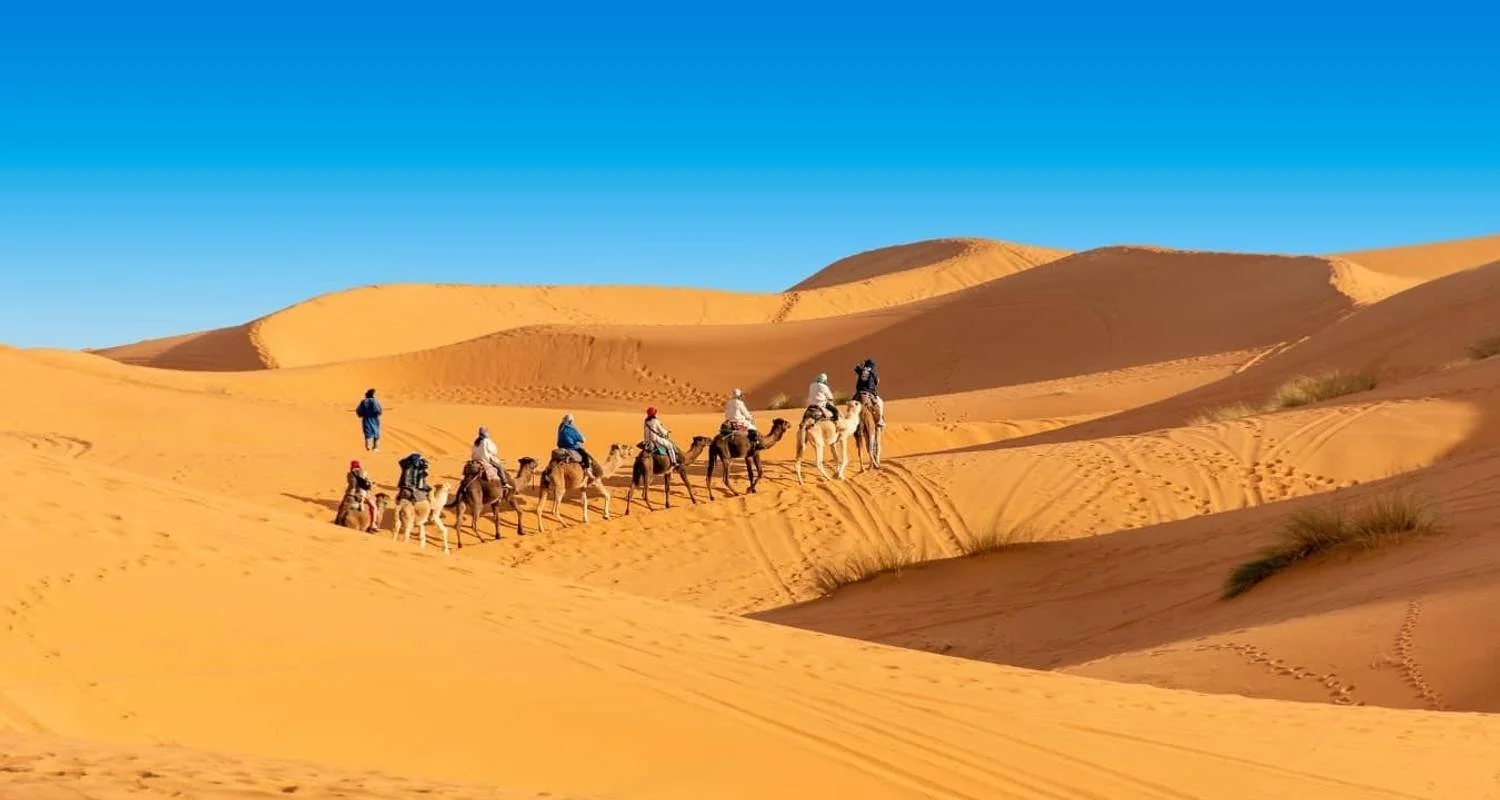
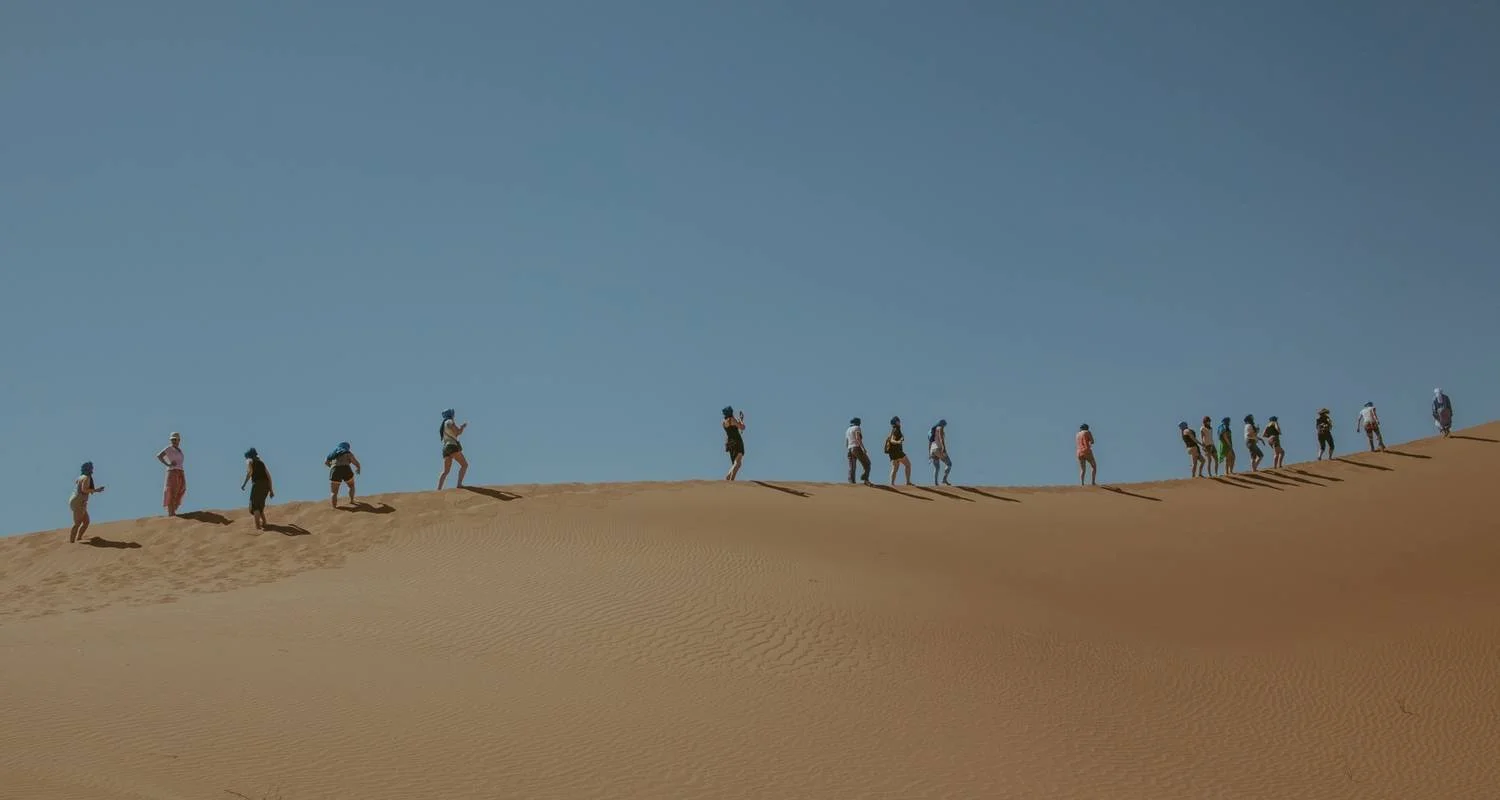
Dans les dunes dorées de l'Erg Chebbi, la mémorable promenade à dos de chameau est un must absolu et un moment fort. Les photos de votre groupe portant des turbans à la manière des nomades vous rappelleront de fabuleux souvenirs. Danser sur les rythmes de la musique berbère autour d'un feu de camp est une expérience acoustique à part entière. Votre propre tente privée et confortable dans un camp de luxe dans le désert, près des grandes dunes, sera la fin parfaite d'une journée inoubliable.
Une randonnée d'une journée à dos de chameau dans les plus hautes dunes du désert du Sahara au Maroc offre un bref aperçu de la vie nomade. Mais vous pouvez également opter pour une excursion d'une demi-journée en 4×4 autour des dunes jusqu'au village de Khamlia. Vous pouvez également vous détendre dans le camp en lisant votre livre préféré.
Tout au long du voyage, vous rencontrerez la population locale et passerez des nuits dans de magnifiques riads et d'authentiques maisons d'hôtes. Vous découvrirez les Kasbahs les plus célèbres du Maroc : Kasbah Ait Ben Haddou, Telouet et Amredhil. Vous pouvez vous dégourdir les jambes dans l'impressionnante vallée du Dadès ou faire une randonnée dans les gorges de Toudgha. Les panoramas qui s'offrent à vous en traversant les montagnes de l'Atlas sont incomparables !
Programme du circuit
Day 1
Casablanca - Rabat
Day 2
Rabat - Chefchaouen
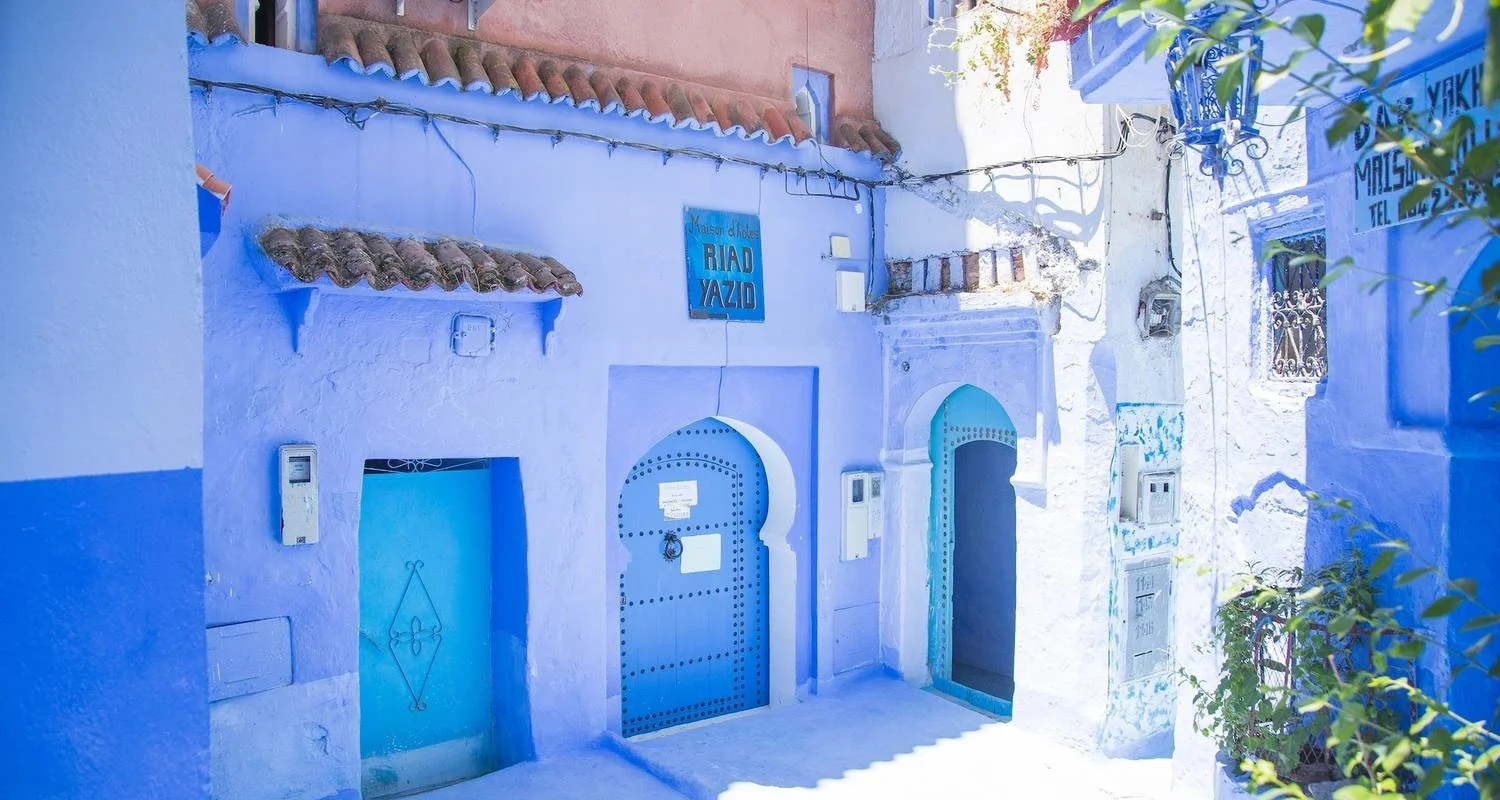
After breakfast, you will have a complete private guided tour of Rabat. TThis busy political centre has a mix of the old and new: wide, tree-lined boulevards in the new town lead to the narrow bustling alleys of the old medina. You have the day to explore: visit the Hassan Tower and the Mausoleum of Mohammed V; the Kasbah Oudaias, dominating the estuary entrance and used to defend the city against pirates; and the Chellah, a 13th century necropolis that also encloses the remains of the ancient Roman City of Sala Colonia. In the afternoon, we will drive to the blue town of Chefchaouen via Kénitra abd Wazzan through the Rif Mountains and other villages. Chefchaouen You will have a day tour in Chefchaouen to explore one of the most beautiful cities in Morocco and a stunning village at the foot of the Rif Mountains. Chefchaouen’s medina has a Spanish-style square surrounded by many funky arts and crafts stores, roof-top restaurants, and cafes.
Day 3
Chefchaouen-Volubilis-Meknes-Fes
After an early breakfast, you will set out for the ancient Roman ruins of Volubilis, where you will explore the 2000-year-old ruins. After lunch in Moulay Idriss, one of the holiest villages in Morocco, our driver will take you to discover the wonders of Meknes, a city famous for its 16 miles of protective wall. We will visit the Moulay Ismail Mosque and the former royal stables and granaries.
Day 4
Meknès - Fès
Day 5
Fès - Merzouga
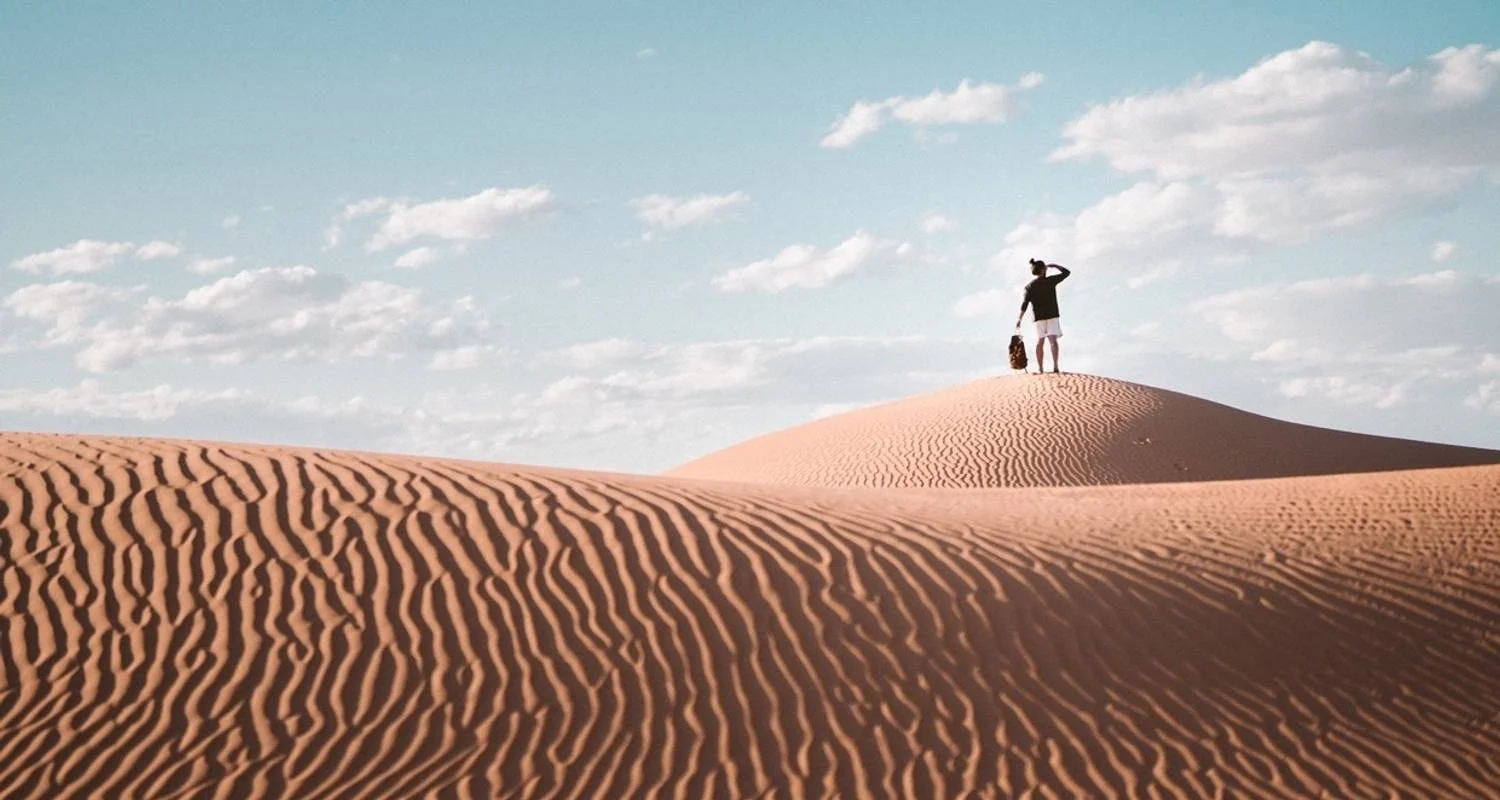
Departure from Fes at 8 o’clock, travelling past Ifrane, where the houses have sloping roofs, remarkable and unusual in Morocco. This is to cope with the yearly snowfall. Near Azrou, 1250m, with the geomorphologic Berber name meaning “rock”, you can see Barbary apes in the oak and cedar forests of the Middle Atlas. From here we drive along the N13 south over the Middle Atlas, passing through Timahdite. This is another Berber name, and as the word begins and ends with the letter “t”, it signifies it is feminine. We reach Midelt, 1508M, which is called “the apple capital” of Morocco and lies at the foot of the Ayachi Mountain. The town serves as the commercial agricultural centre for the surrounding area. It is also one of Morocco’s principle cities for the mining of several minerals, such as fluorite, vanadinite, quartz, and cerussite. This is where we will stop for lunch. We continue south travelling over the Tizi-n-Talghemt pass, known as the “she-camel” pass. We descend through the Ziz Valley, which is particularly well-known for its palm trees and the length of the oasis. All along the road, there are innumerable “ksars”, small villages of individual houses. From here, we reach the mining town of Er Rachidia (e.g copper and malachite) and then Erfoud, famous for its date festival and fossils. It is fascinating to see how these millions of fossils have been worked into artifacts. There is no obligation to buy anything in these shops! You continue to Rissani and finally the famous red Erg Chebbi dunes in Merzouga. You take a camel ride of an hour to an hour & a half, either setting out from the camp or to it. There is also the possibility to take the 4×4 to the camp. Sand Dunes and Sahara Desert near Merzouga During this day, you will explore the desert area and the marvels of the Erg Chebbi dunes. You will have the opportunity to discover the nomads’ way of life and the amazing contrasts of the desert. You will visit the Khamlia to see the Gnawa musicians before we continue to Tafilalet with its 18th century ksour, an almost impenetrable warren of alleys. We then continue to the ruins of Sijilmassa. After a lunch of local food (Madfouna or Berber pizza), we will return to the dunes of the Merzouga desert. In the afternoon: You will ride the camels to see the sunset over the dunes and spend the night in the desert camp. You will have a traditional dinner, drink delicious mint tea, and listen to Berber music while watching the stars and the rising moon in the amazing Sahara Desert You have dinner and spend the night at a luxury camp with private bathroom, king-sized beds, beautiful Moroccan furnishings and lamps tastefully arranged to enhance your enjoyment of the silence and beauty of the dunes.
Day 6
Merzouga - Dadès
Gorges If you wake up early enough, you can watch the spectacle of the sunrise, when the colour of the dunes and the play of shadows are an awesome sight. After breakfast at the camp, we leave for Tinghir and the Toudgha gorges. On the way, you pass the water channels – “khettarat”. You can descend into them to appreciate the architecture and genius behind this form of irrigation which prevents evaporation in the summer heat. The channels start at a higher gradient at one end until they finally emerge at the surface of the soil. You can find out more about these channels by reading Andrew Wilson’s work. In the gorge and the valley, there are opportunities to walk beyond the gorge itself or by the village gardens and fields before you reach it. Later the itinerary continues to the Dades Valley. The area, which now forms the Dades Gorges, lay at the bottom of the sea millions of years ago. Great quantities of sediment were deposited around giant coral reefs. Over time this material became compacted into a variety of sedimentary rocks such as sandstone and limestone. Eventually, the movement of the earth’s crust caused the region to rise above the sea, forming the Atlas Mountains and surrounding landscape. The night is spent in a hotel or kasbah.
Day 7
Dadès - Ouarzazate
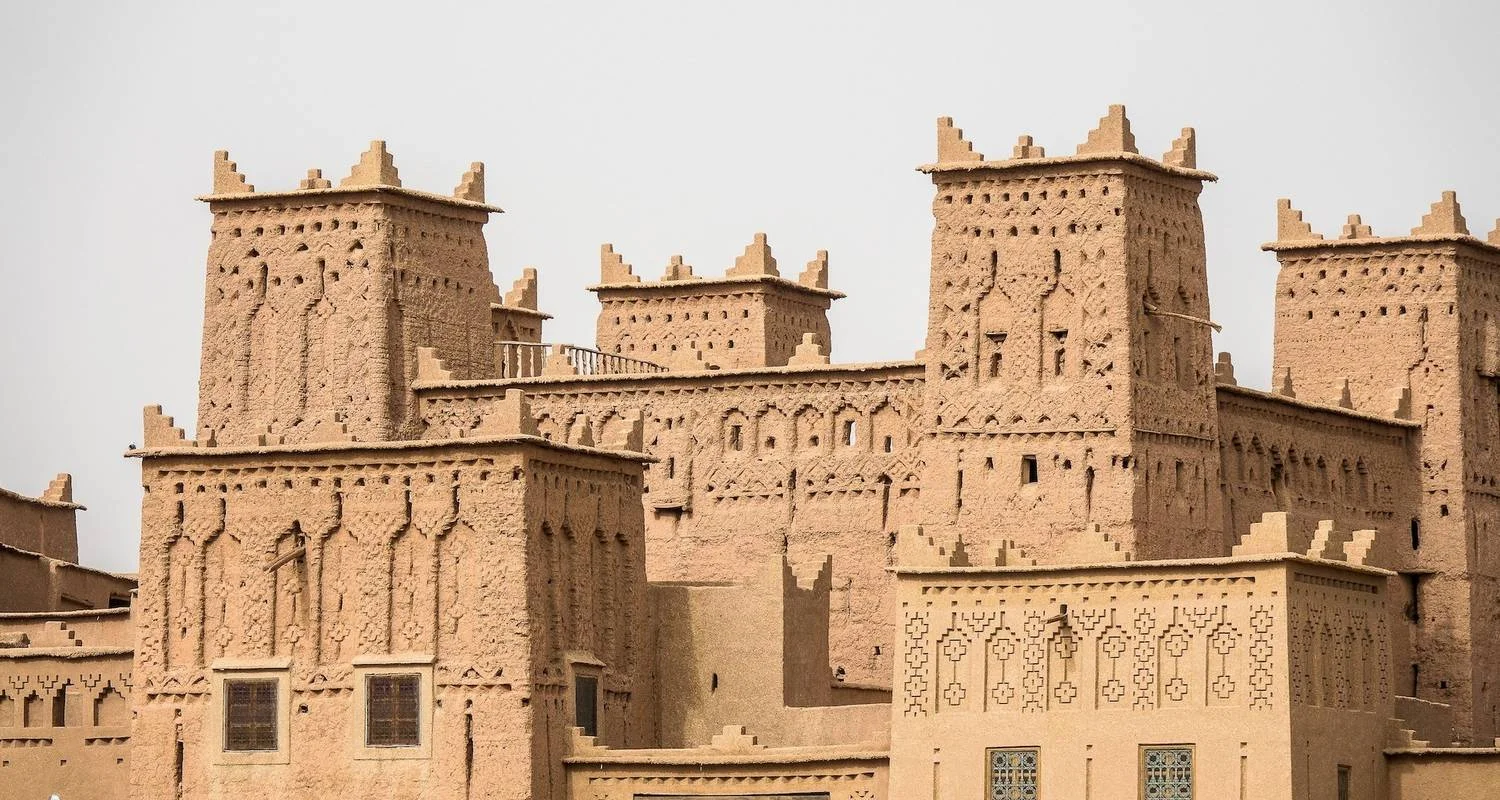
After breakfast, a visit to the Dades gorges and a short walk there is scheduled. Later we go off-road along the Boutarar piste to visit Berber nomads in their caves and have tea with them. This visit makes it clear to the visitor just how hard nomadic existence is, trying to feed their goats and bring up their children. From here we continue through the Valley of the Roses, famous for its Rose Festival in May. Cosmetics and toiletry items are produced and valued throughout the country. In Skoura and the oasis there, Kasbah Amredhil waits for a very worth-while visit. The kasbah has been beautifully restored and gives a clear idea of life within such housing. It is made entirely of adobe, an excellent building material; warm in winter and cool in summer, due to the thickness of the walls. 45 minutes later you reach Ouarzazate, where you spend the night in a guest house.
Day 8
Ouarzazate - Ait Ben Haddou - Marrakech
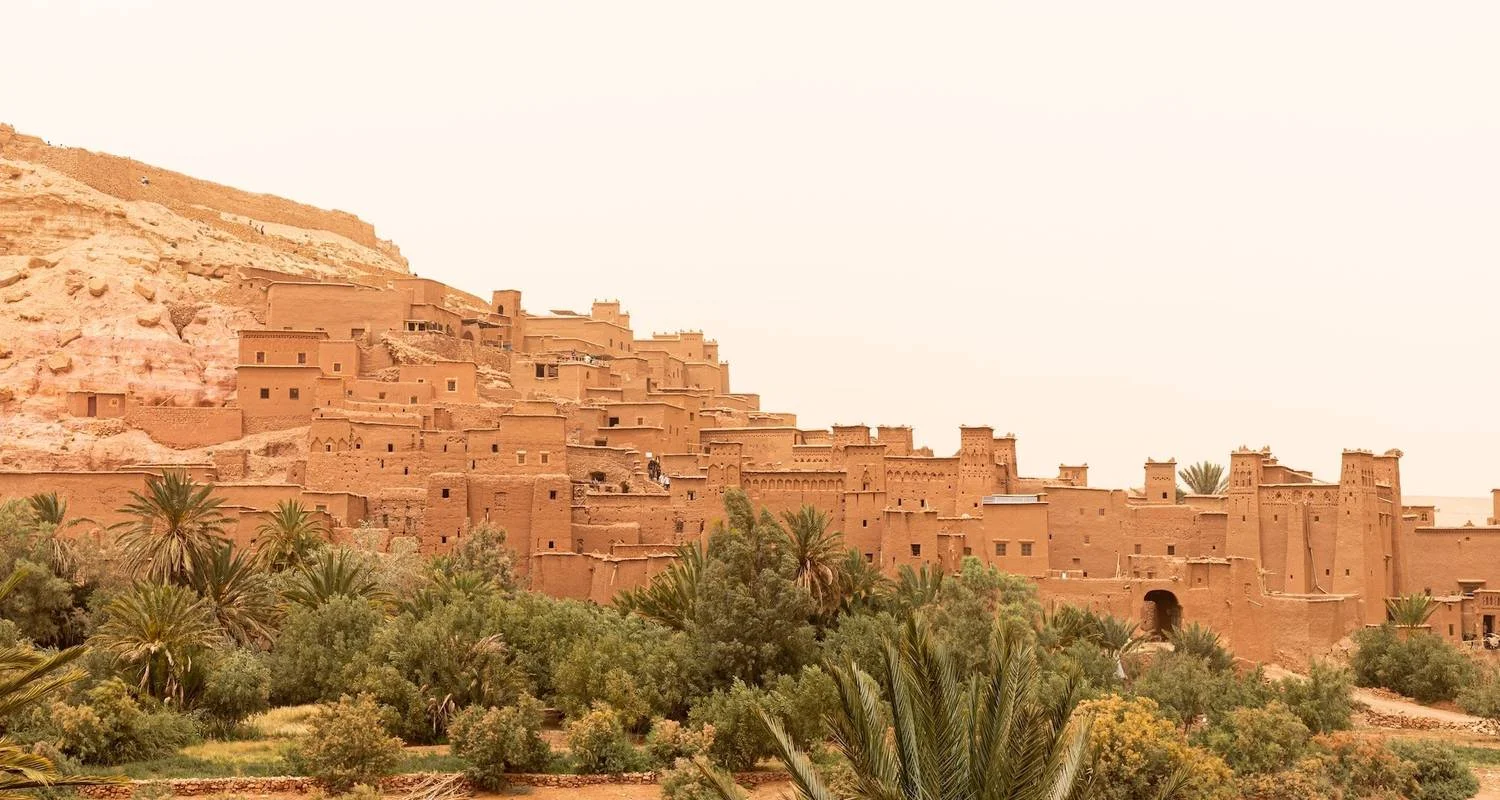
After breakfast, the route goes on to Kasbah Ait Ben Haddou, one of Morocco’s seven World Heritage sites, and the backdrop for many Hollywood blockbusters. It is the most famous Kasbah in Morocco and some of the buildings date back to the 17th century. From here you drive along the beautiful and awe-inspiring, winding Ounila Valley, full of surprises at the colors of the rock and soil and Berber villages and gardens. We continue to Telouet set right in the midst of the mountains. It was once the seat of the last Pasha of Marrakech, El Glaoui, from where the highest pass in Africa, Tizi-n-Tichka was controlled. Each addition to the building now stands in ruins exposed to the wind and the rain after it was abandoned and plundered when Thami El Glaoui, left the country following the departure of the French in 1956. Wait to be pleasantly surprised by the traditional interior decoration as you reach the farthest end of the Kasbah. At the end of the afternoon, having crossed the Tichka pass, we arrive in Marrakech.
Day 9
Marrakech
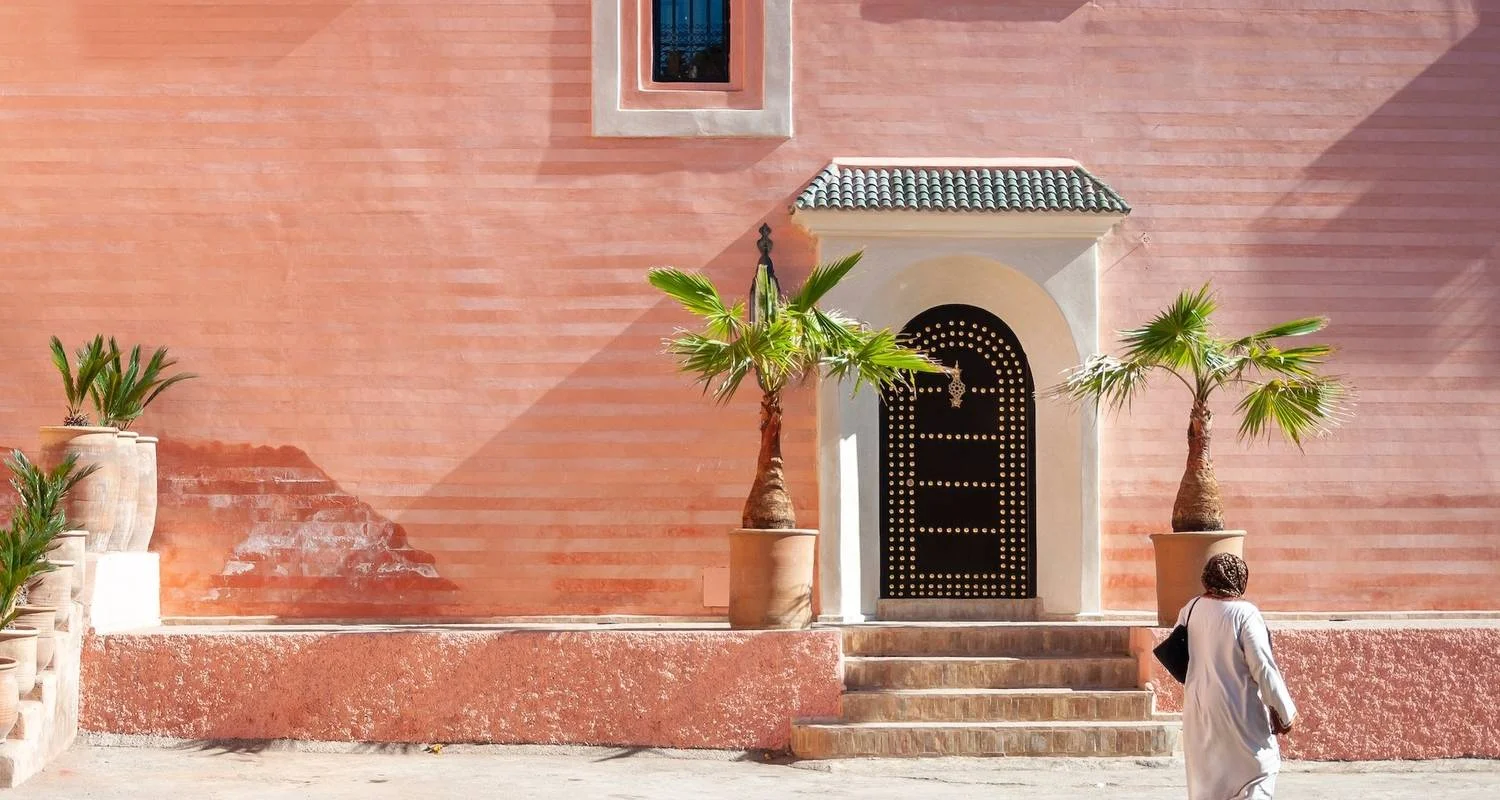
Marrakech Sightseeing Tour Marrakech is probably best known for central Djemma El Fna with its juice stalls, dried fruit and nut stalls, women applying henna, snake charmers, storytellers and the myriad of nightly food stalls. You will visit the following places according to time and inclination: the Majorelle Gardens which belonged to Yves St Laurent and is famous for its special shade of blue, the Koutoubia Mosque, the El Bahia Palace which means “the palace of the beautiful”, (don’t miss out the lovely garden right at the back), the Qoranic School – the Ben Youssef Medersa which used to house some 80 Qoranic students, the Saadian Tombs, the Jewish souk in the Mellah, and the paradise garden of le Jardin Secret. You spend another night in your riad. Instead of the walking tour of Marrakech, we could organise a cooking class for Moroccan cuisine. This would add an extra fee.
Day 10
Marrakech - Casablanaca
Détails du circuit
Hébergement
Hébergement Premium
Transport
Transport dans une camionnette 4×4 privée, climatisée et confortable, avec le carburant.
Facultatif
ATvs drive
Services supplémentaires
- Transport dans un véhicule privé, climatisé et confortable, avec le carburant.
- Prise en charge et retour à votre hôtel ou riad et transfert de et vers l'aéroport
- Chauffeur/guide berbère et nomade local expérimenté et parlant anglais
- Hébergement dans des chambres/suites climatisées avec salle de bain privée
- La nuit dans un campement de luxe dans l'Erg Chebbi avec toilettes et douche privées, lampes, mobilier artisanal traditionnel.
- Dîners et petits déjeuners
- Promenades à dos de chameau avec un guide, et planche à voile gratuite, si vous le souhaitez - il suffit de demander au personnel du camp
- Possibilité de se rendre au camp et d'en revenir en 4×4
- Service de bagages jusqu'au camp et à tous les hébergements
- Musique et tambours berbères
- Temps libre pour explorer les sites tels que Ait Ben Haddou, la vallée de l'Ounila, pour des promenades, des photos et des pauses thé/café.
- Possibilité de demander au chauffeur de s'arrêter quand et où vous le souhaitez
- Les droits d'entrée (sauf à Casablanca, Rabat, Fès et Marrakech)
- Les guides locaux dans les lieux concernés
- Thé, café et eau minérale dans le désert
Services supplémentaires
- Vol
- Déjeuner
- Boissons
- Pourboires
- Extra
Repas
Dîner et petit-déjeuner
Guide
Guides locaux
Bon à savoir
Devise
MAD
Moroccan Dirham
Maroc
Customer reviews
Overall
Itinerary
guide
Transport
Accommodation
Food
Operator
Faq Tour
How can I book a tour?
You can order a tour on our website by selecting the desired dates and clicking the “Confirm dates” button. You can also contact our sales department by phone or email.
Which payment options are available?
We accept credit cards, bank transfers and other popular payment methods.
Can I change or cancel my reservation?
Yes, changes or cancellations are possible, however penalties may apply depending on the time before the tour starts.
What documents are required to participate in the tour?
You will need a passport with a valid visa (if required) to visit countries along the tour route.
Photo gallery